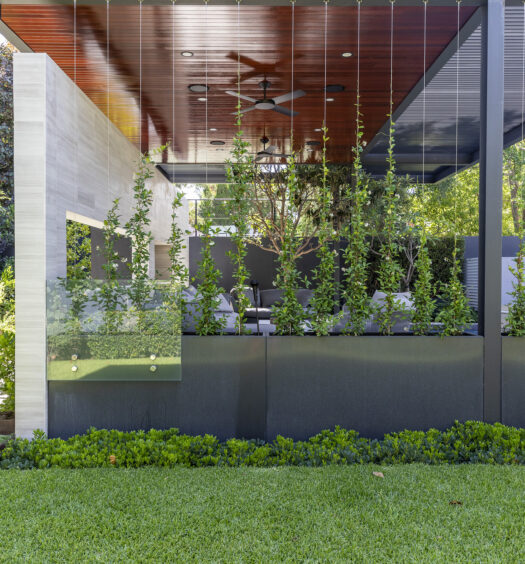
In luxury homes, glass does a lot of the heavy lifting – it opens interiors to natural light, frames views, and creates the connection to the outdoors that is so important to modern Australian living. Yet with all that glazing, privacy often becomes an issue, especially in homes where the aim is to maintain a clean, open aesthetic without introducing blinds, curtains or solid partitions.
Paragon Architectural Film Solutions is offering a refined answer to this problem with its reeded film – a finish designed to soften views while allowing natural light to continue moving through the home. Applied to glass, it diffuses sightlines in a way that feels subtle rather than obstructive, making it particularly effective in areas such as bathrooms, entry doors and room dividers where privacy is needed but openness still matters.
There are some design details that work hardest when they do not try too hard at all. Reeded film falls into that category. Elegant, understated and highly adaptable, it offers a way to introduce privacy into the home without compromising the light or sense of open-ness within the home.
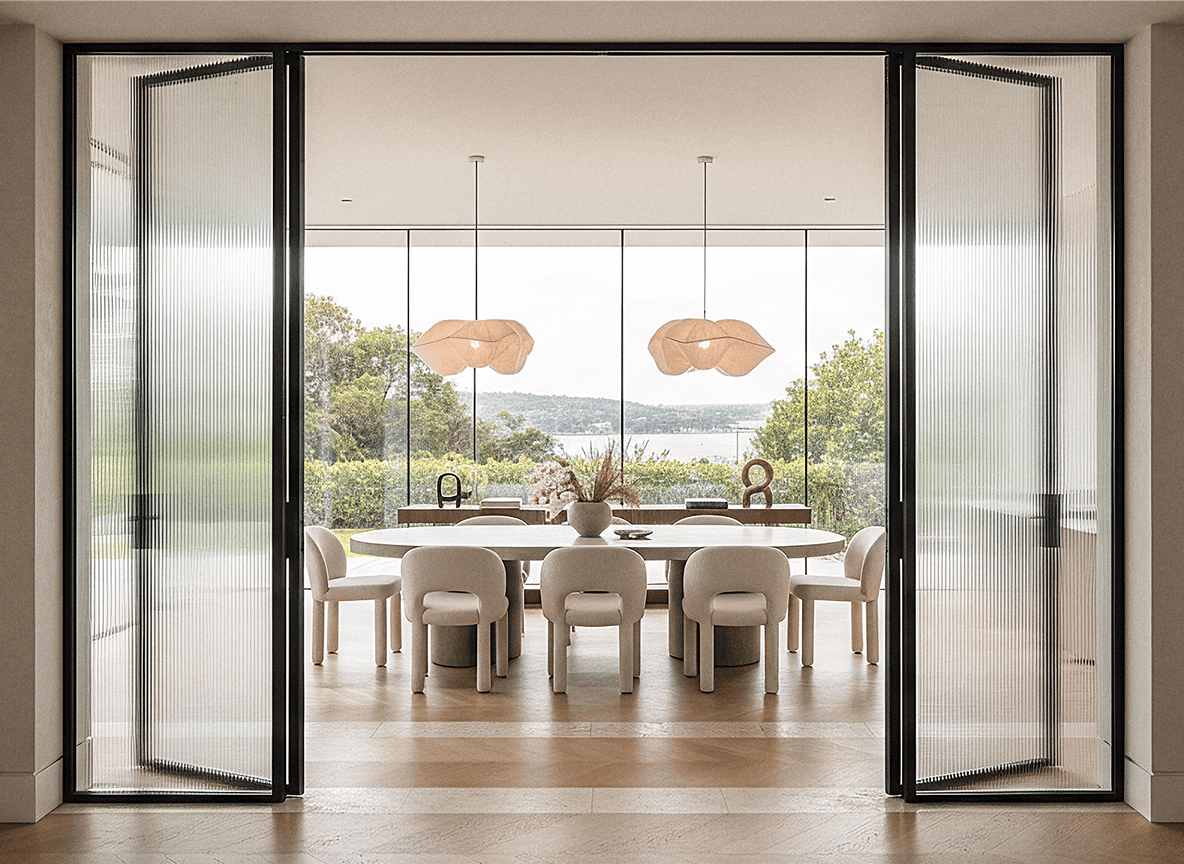
As part of Paragon’s decorative glass film / architectural finishes offering, the appeal of their reeded film lies in its visual quality. The linear texture adds another layer to a space, adding rhythm and softness to otherwise plain panes of glass. It has a timeless feel that works comfortably across a wide range of interiors, from contemporary homes with black steel framed doors to calmer, more pared-back spaces where texture carries much of the visual interest. Rather than overpowering a room, it becomes part of the architectural language.
In luxury homes, where glazing is often used generously and interiors are designed to feel connected, privacy can be a delicate thing to handle. Heavy window coverings can feel too blunt, while solid partitions can interrupt flow. Reeded film offers a lighter touch. Applied to glass, it diffuses and softens what sits beyond, blurring direct sightlines while still allowing daylight to filter through. That balance is what makes it such an appealing finish, particularly for those wanting privacy without relying on blinds or curtains.
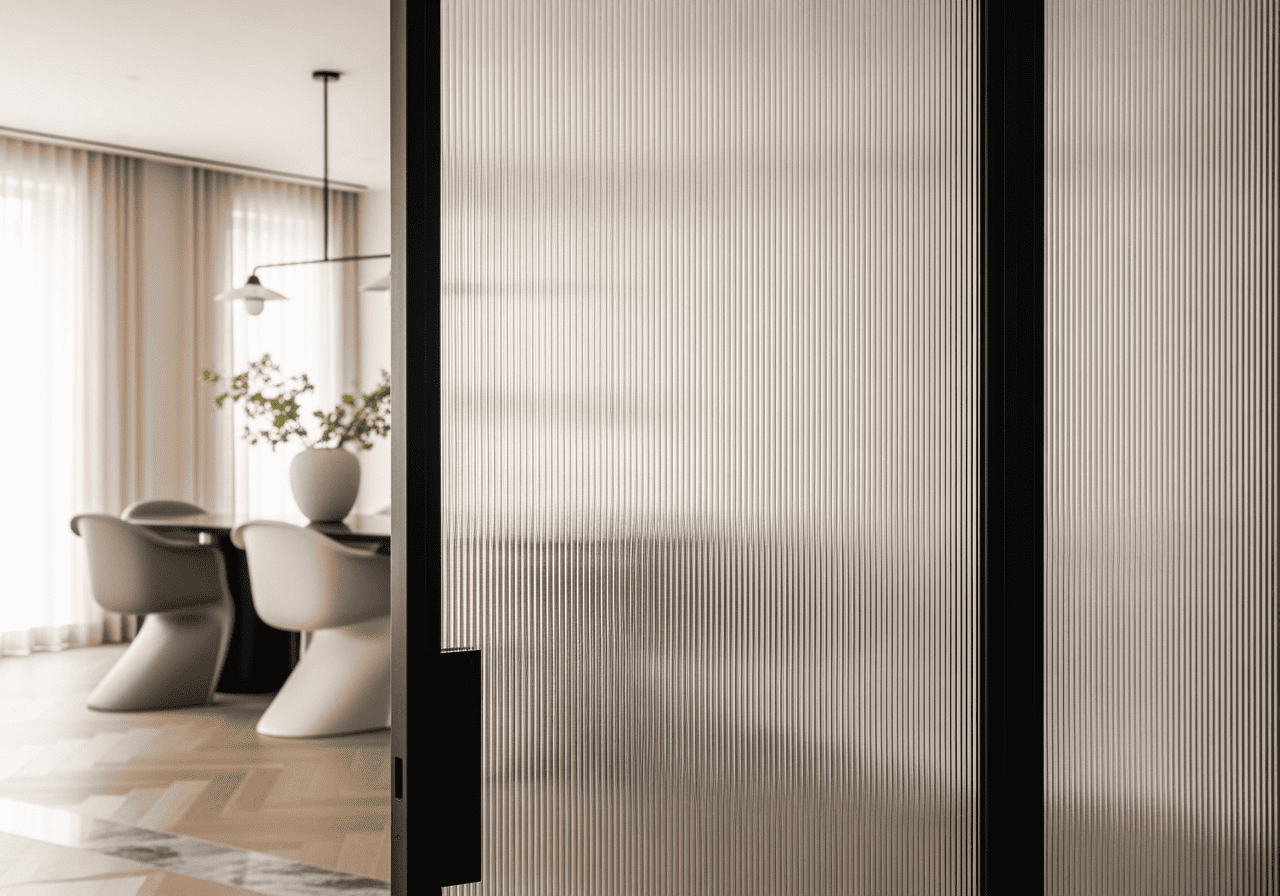
Bathrooms are one of the most natural places for reeded film to be used. Privacy matters, but so does light, especially in spaces where daylight can lift the feel of the room. Reeded film allows bathrooms to feel screened without becoming enclosed. On shower screens, bathroom windows or glazed doors, it can soften views in a way that feels refined rather than purely practical. It also creates a cleaner finish by avoiding the need for bulky blinds or curtains in spaces where a simpler solution often feels more in keeping with the architecture.
Entry doors are another strong application. The front entrance sets the tone for the home, and reeded film offers a way to maintain that sense of welcome while limiting direct views inside. It can be particularly effective on glazed front doors and sidelights, where natural light is valuable but privacy is equally important. From the street, it creates a softer threshold. From inside, it allows the entry to stay bright and open, without the need to dress the glazing with additional window furnishings.
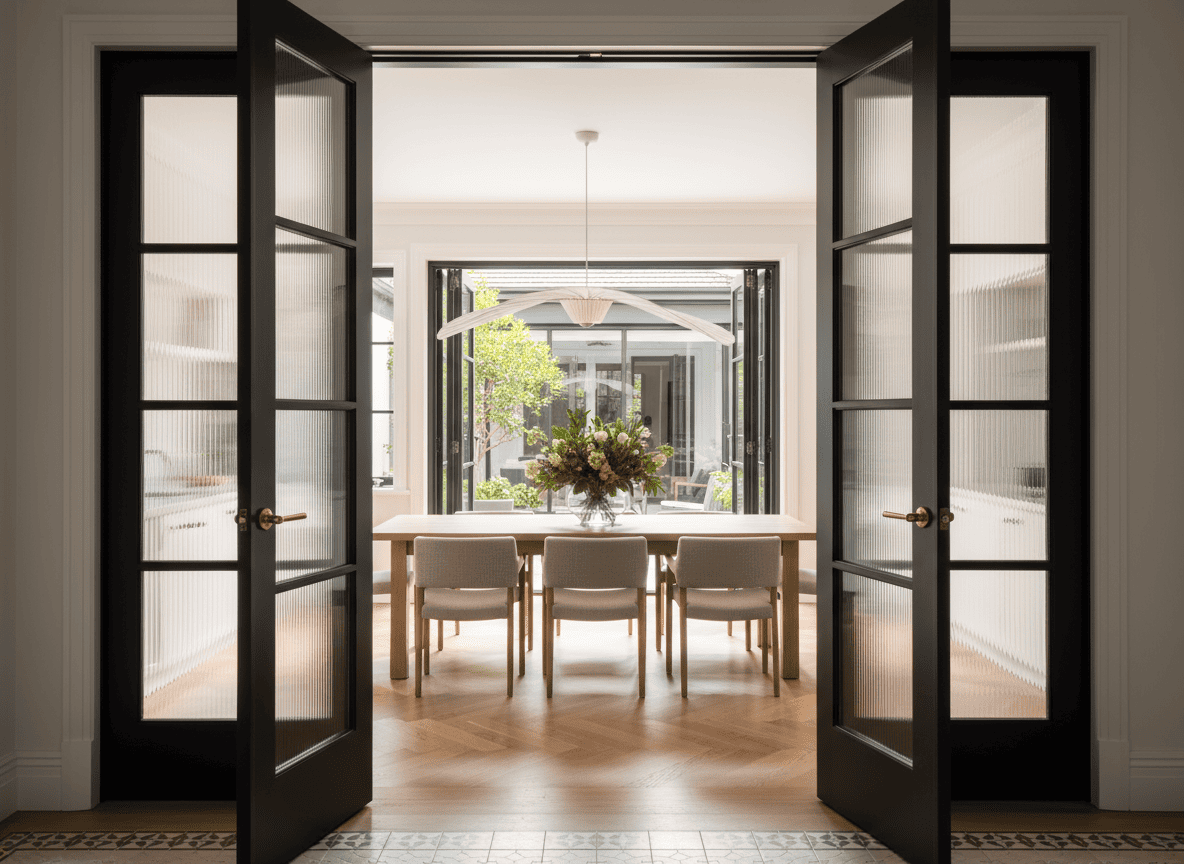
Room dividers and internal doors are where reeded film becomes especially interesting from an architectural perspective. Open-plan living has many strengths, but there are times when a degree of separation makes a home work better. A study nook, secondary living area, scullery or formal dining zone can all benefit from subtle definition. Reeded film helps create that distinction without introducing visual heaviness. Spaces remain connected, but not entirely exposed to one another. It is a small move that can change how a floorplan feels and functions.
For homeowners, part of the attraction is that it delivers an immediate update without the disruption of more extensive renovation work. It is a relatively simple way to refresh glazing, improve day-to-day privacy and introduce a more tailored finish to the interior. In homes where every detail matters, those smaller upgrades often have real impact.
For architects, designers and builders, reeded film offers another layer when shaping spaces that need to feel both open and protected. It supports the broader direction of contemporary residential design, where light is maximised, transitions are softened and materials are chosen not only for how they perform, but for how they contribute to atmosphere.
Paragon Films’ reeded film speaks directly to that shift. Used across bathrooms, entry doors and room dividers, it provides a clean and stylish way to soften views without sacrificing natural light. It is also an effective alternative to blinds or curtains, allowing the glazing itself to do more of the work while preserving the character of the space. In many ways, that is what makes it so effective. It does not fight for attention. It simply improves the experience of a space, making it feel more private, more refined and more polished.
For reeded film, contact www.paragonfilms.com.au
Tags
decorative film decorative glass Glass FIlm for Privacy Paragon Films privacy film privacy glass Privacy Glass Film Privacy Window FIlm Reeded film Reeded glass Reeded Glass FilmYou Might Also Like