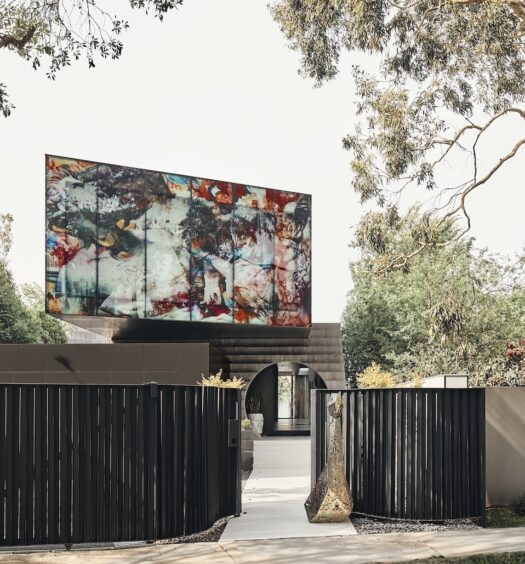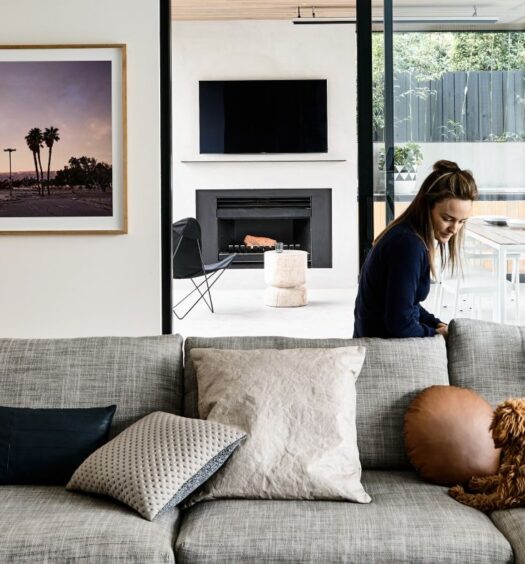

JARtB House is not a typical home – it is a lived work of art. With its bold sculptural façade, the play of geometric forms, and a floating upper volume wrapped in murals, the structure completely blurs the line between art and architecture. Designed by leading Melbourne architect Billy Kavellaris of KUD for his own family, every element of this extraordinary residence is composed with precision. It is a home defined by clean lines and deliberate geometry. Ceiling planes glide without interruption. Walls meet with sharp precision. Light moves through the space in a way that is entirely intentional, guided by the home’s sculptural composition.
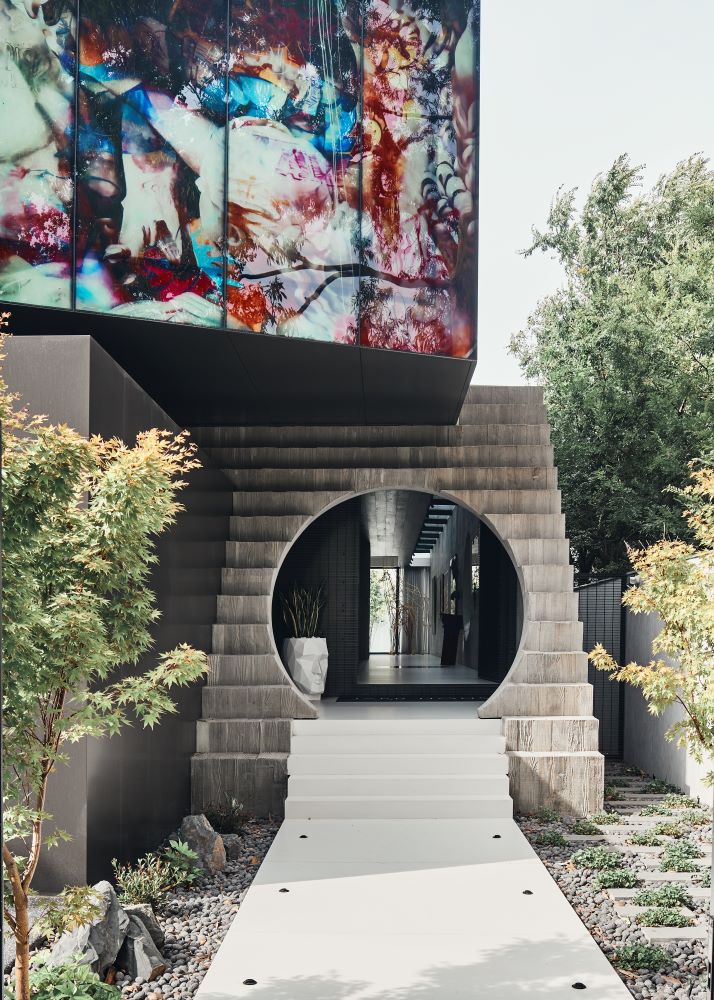
In a home built on purity of line and spatial discipline, traditional air-conditioning can easily undermine the architecture. Grilles, bulkheads, return vents and access panels all interrupt the very qualities the design depends on. As a result, AirSmart became a natural choice for Billy’s home.
“I chose it for several reasons, the Venturi effect, which is how the air moves through the system and the air purification properties but it also integrates architecturally so beautifully – most mechanical systems look ugly” Billy Kavellaris, KUD
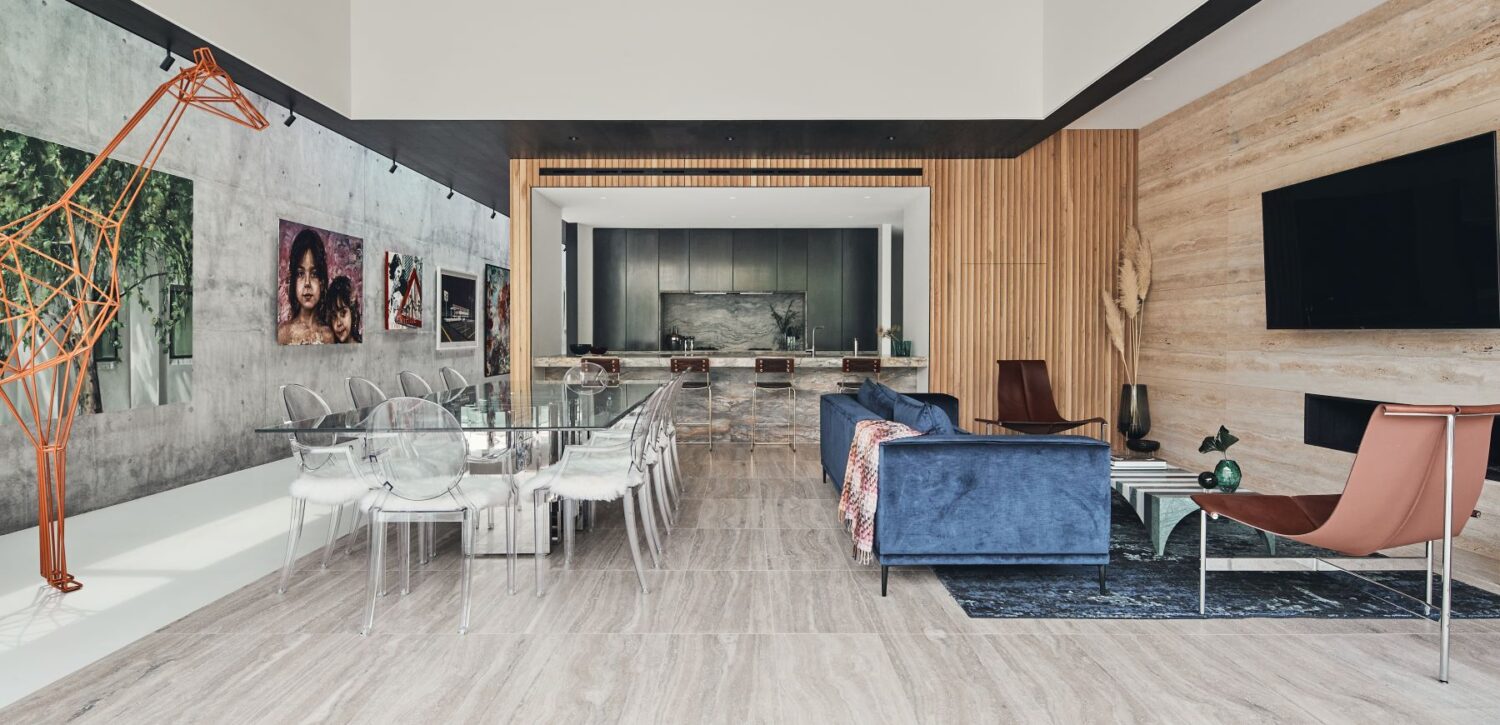
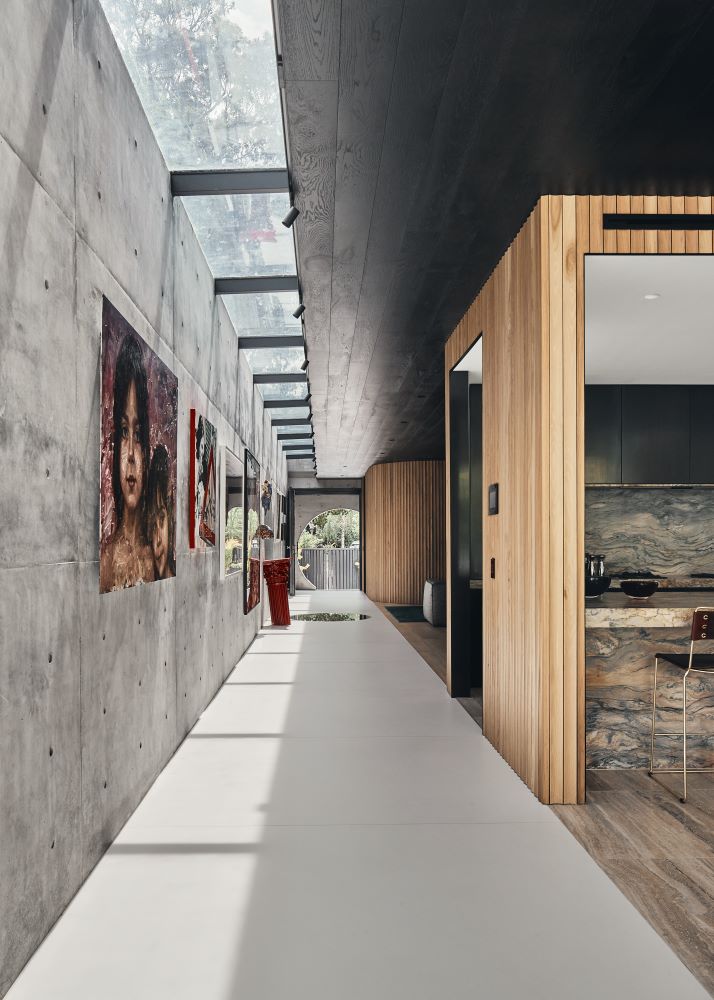
Inside, the house unfolds along a 55-metre ‘gallery’ that stretches from the front door through to the rear – a deliberate choreography of circulation and space, where every wall, opening and material has been considered as carefully as the art that lines the walls.
Along this uninterrupted axis, traditional grilles would have fractured the sightlines and weakened the gallery effect. AirSmart’s concealed slots and shadow-line outlets allowed air conditioning to run the full length of the spine without ever being seen.
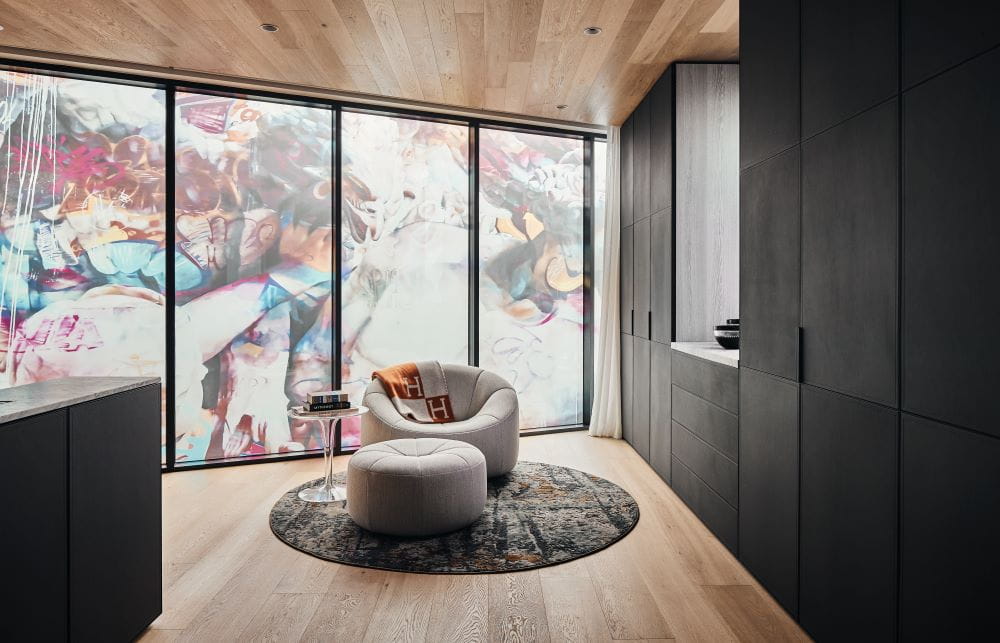
Upstairs, the ceilings are lined in warm timber battens. “We made the outlets look exactly like the downlights,” Billy explains. “They’re the same size, so when people walk through, they think they’re just lighting. You can’t see the air-conditioning at all.” Downstairs, linear slots disappear into black timber ceilings with the same effect. “It just vanishes,” Billy notes.
Beyond the visual discretion, the way the system performs is equally important in a home of this scale. AirSmart conditions each space gently and evenly, avoiding the drafts and “hot–cold pockets” common in large open volumes. Rather than blasting air, it creates a soft, ambient flow that’s barely felt yet instantly effective. Every room can be controlled independently, allowing the family to heat or cool only the spaces they’re actually using via a smart phone or wall control panel.
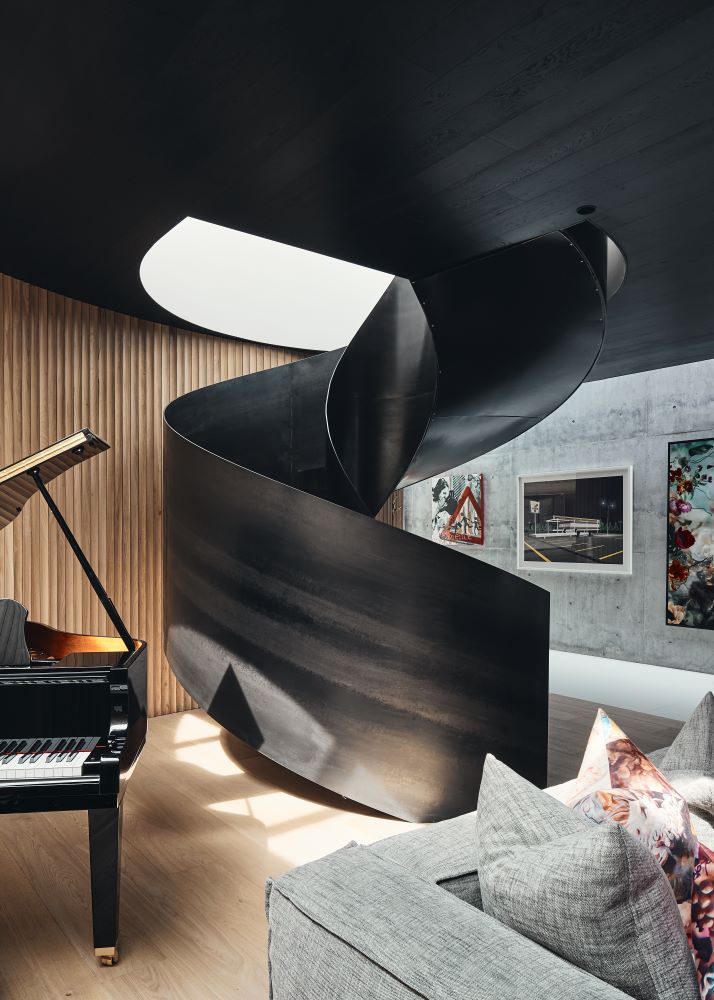
Large volumes are notoriously difficult to heat and cool evenly, especially so with double-height spaces like that at the rear of the home which has soaring ceilings over nine meters high.
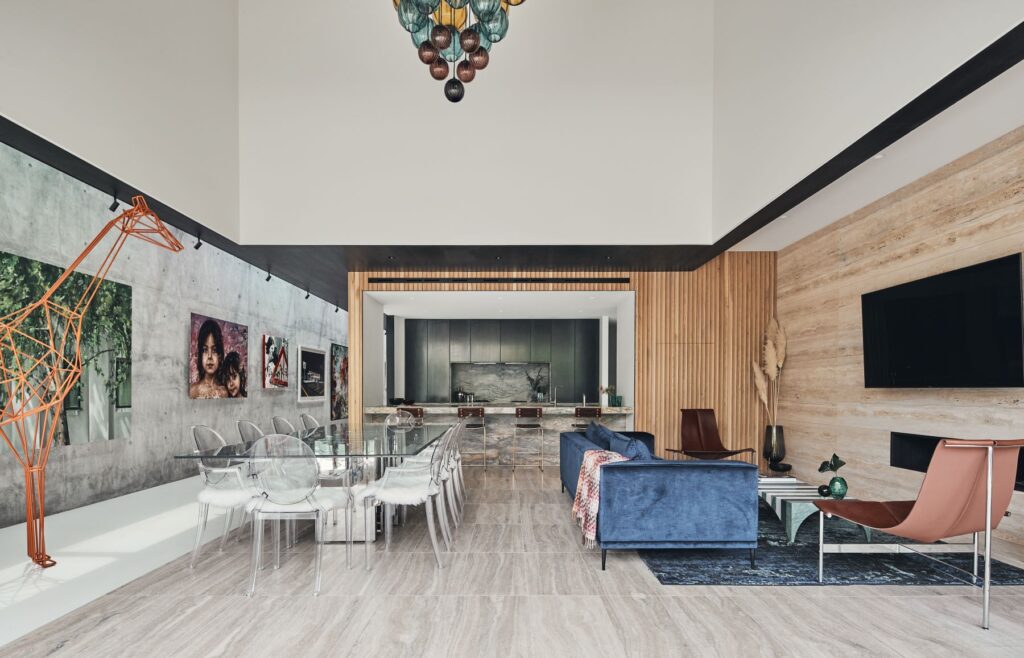
“With the AirSmart system, the entire space heats or cools quickly and efficiently,” says Billy. “Normally, that’s impossible with ceilings that high.”
As an architect, Billy also values the practicality of AirSmart:”It’s not space-hungry. The ducts are smaller, so we can run everything between structure and floors without lowering ceilings or adding bulkheads.” This is one of the many reasons he continues to specify AirSmart’s superior air conditioning system in KUD projects – including a luxury mansion in Kew due for completion in early 2026.
In JARtB House, as with all homes, AirSmart becomes a quiet collaborator, enabling comfort, control and performance without announcing itself. It preserves the purity of the architecture, respects the geometry, and supports the way the family lives, all while remaining invisible.
Find out more at airsmart.com.au