

One recent custom build pencilled out at $1.6 million, with $900,000 for land and $700,000 for the building contract.
The lender approved the construction loan, but the land deposit had to be paid before the first construction draw could happen. The builder would not hold the price past Friday.
That is the hard part of custom-build finance in Australia. The issue is rarely whether money exists. The issue is whether the right money lands at the right stage, in the right structure, for your credit profile.
Since 17 March 2026, the RBA cash rate has sat at 4.10% after a 25 basis point increase. That makes delays, redraws, and rate buffers more important than they were six months ago.
A workable plan covers land, deposit, staged progress payments, and a contingency fund for variations. It should also leave room for valuation gaps and a slower-than-expected approval.
Get the structure right before the slab goes down.
How Construction Finance Works in Australia
Construction finance works best when the lender’s release schedule matches the builder’s invoice schedule.
A construction loan does not arrive as one lump sum. The lender releases money in tranches, or smaller parts, as the build reaches agreed stages. During construction, repayments are usually interest-only on the amount already drawn.
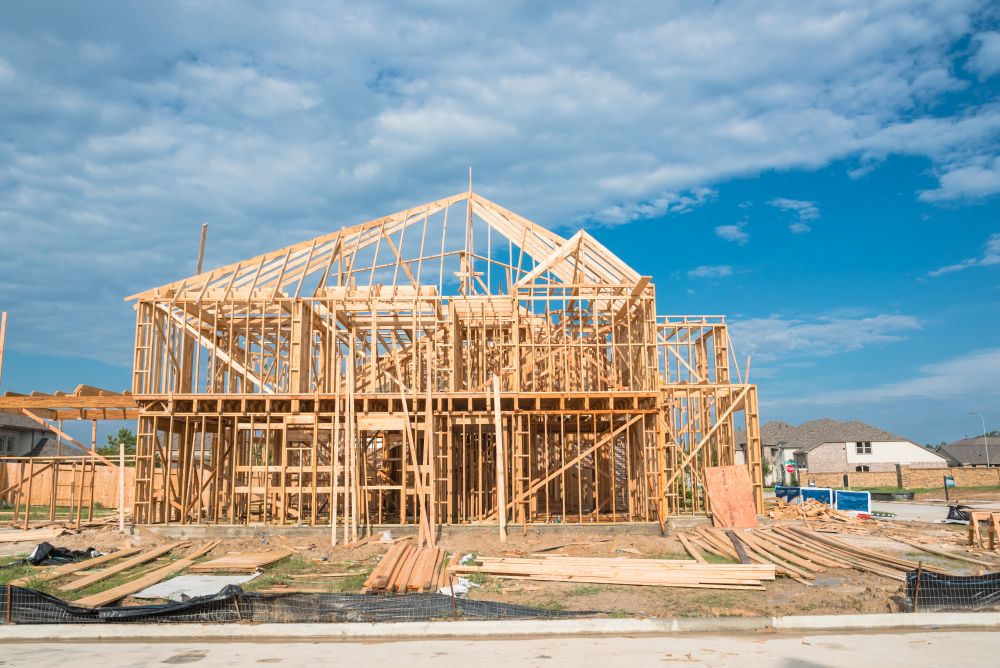
Most lenders use five or six stages: deposit, base or slab, frame, lock-up, fixing, and final. Your builder issues an invoice at each stage. The lender then checks that the work is complete, sometimes through a valuer or inspector, before paying the builder directly.
Approval depends on documents being clean and complete. Lenders usually want a fixed-price building contract, council-approved plans and specifications, builder licence details, and state-based insurance documents. In New South Wales, that means a Home Building Compensation Fund, or HBCF, certificate for eligible work before any payment is made.
The sequence is simple, but timing can still break it. You get pre-approval, sign the contract, settle the land if needed, then move through each draw as the build advances. If an inspection is delayed or a contract variation changes the scope, the next release can pause and the builder may slow work.
At practical completion, the construction facility usually converts to principal-and-interest repayments. That is the point where the easy cash-flow period ends, so the end-state repayment needs to be affordable from day one, not just after the keys are handed over.
Match the Loan to Your Equity, Credit, and Timing
The right product depends on three facts: your usable equity, your credit file, and how soon cash is needed.
If you have strong equity and a clean file, a refinance top-up or line of credit is usually the cheapest way to fund early costs. If your credit file has defaults or missed payments, the same equity may still help, but the lender pool gets smaller and the price rises.
If equity is limited but income is stable, a standard construction loan is often the right core facility. The key risk is LVR, or loan-to-value ratio. Once total borrowing moves above 80% of the lender’s value, LMI can apply and push your total cost up sharply.
Timing pressure changes the answer again. If land settlement is due before the construction loan can draw, or if you are paying a builder’s deposit while waiting for a valuation, you may need a short-term bridge or an equity release facility. If you already own the land, that land equity may form part of your deposit and improve your terms.
Owner-builders face tighter rules than borrowers using a licensed builder. A number of lenders cap owner-builder borrowing at roughly 60% to 70% LVR and ask for more evidence on budget, schedule, and experience. Serviceability, which means your ability to meet repayments from income, still matters even when your security is strong.
Use Home Equity to Cover Early Build Costs
Home equity is most useful when you need money before the first construction draw or outside the building contract.
When bank red tape or timing threatens your build start, some borrowers ask Mango Credit about a fast property-secured top-up for a land deposit, contract variation, or short settlement window while the main facility catches up. Because its second-mortgage structure can improve speed and flexibility for some borrowers under real timing pressure, equity loans may be worth comparing carefully.
The key figure is usable equity, not paper equity. Lenders usually calculate it as 80% of their valuation minus your current loan balance. If your home is valued at $800,000, 80% is $640,000. If your loan balance is $400,000, usable equity is $240,000.
That formula matters because small valuation changes have a big effect on available cash. If the lender values the same property at $750,000 instead of $800,000, the usable amount falls by $40,000. A land deposit, site cut, retaining wall, or variation can suddenly become harder to fund.
You can usually access equity through a top-up with your current bank, a line of credit, or a second mortgage. A top-up is commonly the cheapest route, but it can be slow. A line of credit gives flexibility, though it needs discipline. A second mortgage can settle faster because it leaves the first home loan in place.
That is why borrowers facing a short settlement window sometimes use a fast equity top-up instead of a full refinance. A property-secured second mortgage can cover a land deposit, contract variation, or brief cash gap while the main construction facility stays on its existing terms.
The trade-off is cost and risk. Faster equity money is rarely the cheapest money, so it needs a clear job and a clear end date. Keep an eye on total LVR, avoid unnecessary cross-collateralisation, and park released funds in an offset or separate account until they are actually needed.

Compare Construction, Equity, Bridging, and Specialist Loans
A custom build can use more than one loan type, but each one should have one clear job.
| Product | Funding Style | Typical Rate | LVR / LMI Impact | Best For
|
| Construction Loan | Staged draw-downs | Variable, IO during build | LMI if LVR >80% | Builder payments under a fixed-price contract |
| Equity Release | Lump sum or LOC | Variable or fixed top-up | Best kept at or below 80% LVR | Deposit, variations, and contingency funding |
| Bad Credit Loan | Lump sum, short term | Up to 48% APR (MACC) | Usually secured against property | Small shortfalls while credit improves |
| Bridging Finance | Lump sum, 6 to 12 months | Higher variable | Dual security is common | Overlap between sale, land, and build timing |
Choose by build phase, not by headline rate alone. Construction loans are designed to pay builders. Equity release is better for upfront costs the builder will not wait on. Bridging finance handles overlap when one property sale must support another project.
It is common to use two products on the same project. For example, equity may cover the land deposit and contingency reserve, while the construction loan funds the staged contract payments. That can work well if each facility has a clear purpose and the combined repayments still fit your budget.
A cheap product used at the wrong stage can still derail a build. The right question is not just, “What rate am I getting?” It is, “Will this money arrive when the builder, conveyancer, or lender needs it?”
Prepare Your Approval File and Model the Cost
Strong paperwork shortens approval times and reduces the chance of a valuation or compliance surprise.
Before you apply, gather the documents that lenders and valuers will ask for in the first round, not the third.
– Fixed-price building contract with staged progress payments
– Council-approved plans and detailed specifications
– Builder licence details and state insurance certificate
– Proof of land ownership or settlement timetable
– Recent payslips, tax returns, or other income evidence
– Bank statements showing surplus cash and living costs
– An itemised list of site works and out-of-contract items
– A buffer plan for variations and delayed progress claims
Now model the cash flow, not just the loan size. On a $700,000 construction facility, you might have only $140,000 drawn at slab stage and $490,000 drawn by lock-up. Interest is charged on the drawn balance, usually calculated daily, so the repayment burden climbs as the build advances.
Do not limit the budget to the building contract alone. Temporary rent, council charges, utility connections, landscaping, window coverings, and minor upgrades can sit outside the formal contract. If the valuation comes in below cost, that gap usually has to be covered from your own cash or available equity.
Rate sensitivity matters as well. A 0.5% move over a 12-month build changes the interest bill on every dollar already drawn. A 10% to 15% contingency buffer in an offset account gives you room to absorb variations without reaching for expensive emergency credit.
Use Specialist Credit Carefully When Your File Has Problems
Bad credit narrows your choices, so the loan has to be small, short, and tied to a firm exit plan.
When a recent default or thin file blocks mainstream funding, the loan should stay small, tightly controlled, and genuinely temporary, with repayments modeled at MACC-rate cost before anything is signed. City Finance is one example some borrowers review while rebuilding stronger habits, protecting cash flow, and planning a realistic refinance after completion, so bad credit loans only make sense when that exit is clear.
Australian lenders look at more than your income and deposit. They also review your repayment history, defaults, court judgments, and recent credit enquiries. Equifax consumer credit scores run from 0 to 1,200, and a lower score usually means fewer mainstream options.
Defaults generally stay on a credit report for five years, while repayment history information remains for two years. That means one old mistake can shape lender choice long after your day-to-day finances have improved. For some borrowers, strong equity helps. For others, the timing of the blemish matters just as much.
Specialist lenders usually focus on security and exit strategy more than a major bank would. That can help when a recent default blocks a standard loan, but it does not remove the need for proof of income, a realistic budget, and a believable refinance plan once the build is complete.
For that narrow job, this type of specialist finance can cover a modest short-term shortfall that a bank will not touch. It fits best when the gap is small, the repayment plan is clear, and a mainstream refinance is realistic after completion or after a cleaner run of repayment history.
The cost can be steep. Medium Amount Credit Contracts, or MACCs, offered by specialist lenders can carry interest up to 48% APR, and fees can add pressure if the loan runs longer than planned. Model repayments weekly or fortnightly, not just monthly, and write down the date and method of exit before you sign.
While the build is underway, protect your refinance path. Pay every bill on time, avoid fresh credit enquiries, correct reporting errors, and keep card balances low. Even a few months of clean conduct can improve the range of lenders available at completion.
Control Risk During the Build
Good finance controls protect you from delays, blown budgets, and a half-funded build.
Start with the contract. A fixed-price contract limits variation risk and gives the lender a clear base for valuation. Check that the progress payment schedule is clear, plain, and not heavily front-loaded in the early stages.
Verify state insurance before any money changes hands. In New South Wales, that means confirming the HBCF certificate. In Victoria, it means checking Domestic Building Insurance, or DBI, where required. These protections matter if the builder dies, disappears, becomes insolvent, or cannot finish the work.
Use independent stage inspections before each draw and keep your contingency reserve separate from everyday spending. If non-bank or short-term money is part of the structure, document the exit strategy in writing. That usually means refinancing into a cheaper loan once the dwelling is complete and the credit file or valuation is stronger.
If the builder becomes insolvent mid-build, contact your state’s fair trading authority, notify the lender at once, and pause further draw requests until a replacement builder is appointed. Fast action helps preserve insurance rights and stops more debt being loaded onto an incomplete project.
FAQ
The most common questions come back to contract structure, LVR limits, and how long a temporary finance gap should last.
Can I Fund a Custom Build Entirely With Equity?
Possibly, if your usable equity is large enough and the total debt stays within the lender’s LVR limits. In practice, many borrowers use equity for the deposit and contingency, then rely on a construction loan for staged builder payments.
Do I Need a Fixed-Price Contract?
In most cases, yes. Lenders prefer fixed-price contracts because they reduce cost uncertainty and make staged valuations easier to approve.
How Do Progress Payments Work?
Your builder invoices when a stage is complete, the lender or valuer confirms the work, and the lender pays that stage amount. You usually pay interest only on the total amount drawn so far.
What Is LMI and When Is It Charged?
Lenders Mortgage Insurance applies when the LVR goes above 80% with many lenders. It protects the lender, not you, and it can add a meaningful upfront cost.
What Changes if I Am an Owner-Builder?
Expect fewer lender options, lower LVR caps, and more documentation. The lender will want tighter control over budget, schedule, and evidence that the project can actually be finished.
How Long Do Defaults Stay on a Credit Report?
Defaults generally remain for five years, while repayment history information stays for two years. That timeline matters when you are planning to refinance out of a specialist loan after completion.
You Might Also Like