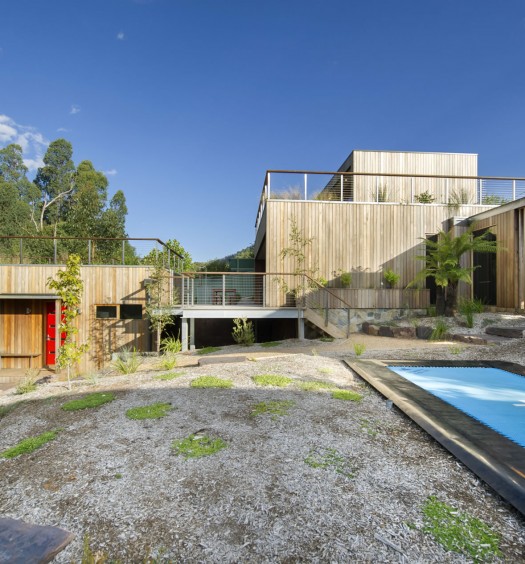

In today’s competitive real estate market, first impressions matter more than ever. Buyers and investors make rapid decisions about properties based on visual presentations, and the quality of these presentations directly influences how they perceive value. The transformation from empty spaces to beautifully staged environments through three-dimensional visualization has become a game-changer in the real estate industry. Furnished 3D renderings are no longer considered a luxury marketing tool reserved for premium projects. They have evolved into a strategic necessity for developers, agents, and property marketers who want to maximize their competitive advantage and demonstrate the true potential of their properties to prospective buyers and investors.
The power of furnished visualization lies in its ability to bridge the gap between architectural possibility and lived reality. A bare architectural rendering shows structure and form, but it fails to inspire emotional engagement or help viewers imagine themselves in the space. Professional 3d rendering service Melbourne providers have recognized this critical distinction and now emphasize the importance of staged, furnished environments in their deliverables. When a property is presented with carefully selected furniture, textures, lighting, and lifestyle elements, viewers experience a fundamentally different emotional response. They are no longer looking at a hypothetical structure, but rather a tangible home or investment opportunity that feels real, desirable, and worth the asking price. This psychological shift in perception directly translates to increased property valuations and faster sales cycles.

The Psychology of Furnished Spaces
Human psychology plays a crucial role in how we perceive value. When someone enters an empty space, their brain struggles to process potential. They must imagine the layout, estimate room sizes, visualize furniture arrangements, and mentally populate the environment with life and activity. This cognitive load creates uncertainty and makes it difficult to form emotional attachments to properties. By contrast, furnished and staged environments require minimal mental effort to comprehend. The brain immediately recognizes the space as livable, functional, and appealing.
Neuroscience research has shown that people make purchasing decisions based largely on emotional responses, with rational justifications applied afterward. A furnished 3D rendering triggers positive emotional responses by presenting a lifestyle vision rather than just a structure. When a buyer sees a beautifully rendered living room with tasteful furniture, warm lighting, art on the walls, and carefully arranged decor, they are not simply evaluating the room dimensions. They are imagining themselves entertaining guests, reading a book on the couch, or relaxing after a long day. This emotional connection is powerful and difficult to achieve with unfurnished renderings.
Creating Confidence in Design and Spatial Quality
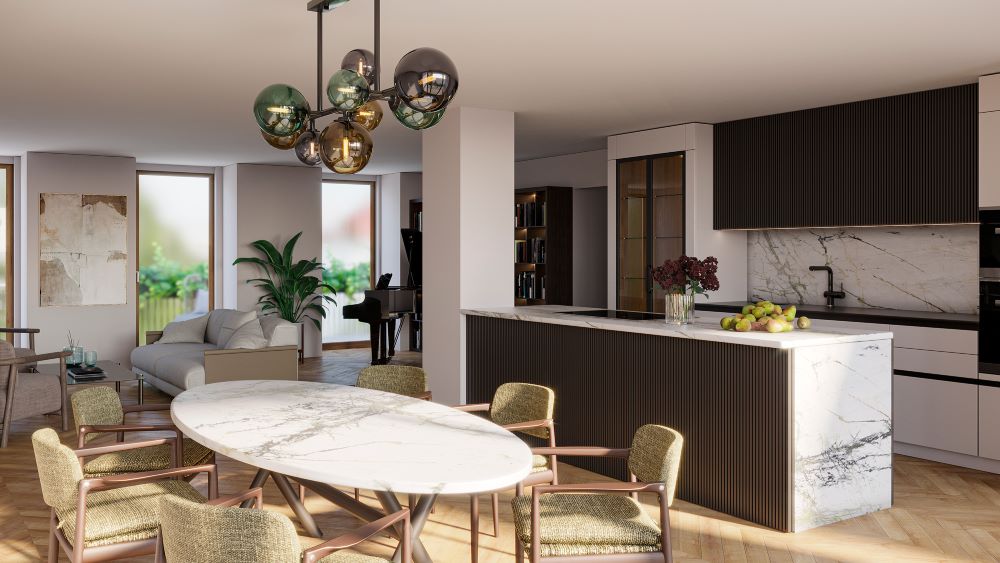
One of the most significant challenges in real estate marketing is communicating spatial quality. An empty room can appear smaller or larger than it actually is, depending on perspective and available context clues. Proportions become ambiguous without reference points. Finished renderings with thoughtfully placed furniture provide these crucial reference points. A designer sofa establishes scale. Kitchen appliances and island counters communicate usable space. Bedroom furniture shows how easily a queen bed fits in the room. These reference points eliminate guesswork and allow viewers to accurately assess whether a property meets their needs.
Furnished renderings also communicate the designer’s intent and the quality standards of the project. If a property is rendered with high-end furniture selections, premium materials, and sophisticated color palettes, buyers immediately understand that this is a quality development. Conversely, sparse or outdated furnishings can undermine perceived value regardless of the actual quality of construction. The furnishings themselves become a statement about the overall caliber of the project, influencing buyers’ willingness to pay premium prices.
The Impact on Marketing Reach and Engagement
In digital marketing, engagement metrics are critical. Social media platforms, real estate websites, and online advertising channels reward content that generates clicks, shares, and comments. Furnished 3D renderings consistently outperform unfurnished renderings in these metrics. Professional photographers and marketers have long known that styled spaces generate more engagement than empty rooms. The same principle applies to three-dimensional digital renderings.
When a developer or agent shares a furnished rendering on Instagram, Facebook, or LinkedIn, it is more likely to stop the scroll of a potential buyer. The image conveys lifestyle, aspiration, and beauty. It tells a story. Unfurnished renderings, while architecturally important, are essentially technical drawings presented as images. They do not inspire the same level of engagement or emotional response. In markets where competition is intense, the difference in engagement between furnished and unfurnished renderings can mean the difference between a property that generates dozens of qualified leads and one that generates minimal interest.
Demonstrating Return on Investment for Buyers
For investment property buyers, furnished renderings serve a specific strategic purpose. They help investors visualize the finished product and understand what rental appeal their investment will have. When an investor sees a beautifully furnished apartment with modern design elements and premium finishes, they immediately recognize the market positioning of the property. They can estimate what monthly rent such a property might command. They can envision the target tenant profile. This clarity accelerates investment decision-making and increases the perceived investment quality of the property.
Real estate investors often evaluate multiple opportunities simultaneously. Properties presented with clear, attractive furnished renderings communicate professionalism and attention to detail. Investors gain confidence that the developer or property seller has thoughtfully considered the finished product and market positioning. This confidence premium often translates directly into higher offer prices or faster purchase decisions. Investors are willing to commit capital more readily when they have a clear vision of what they are investing in.
Enhancing Perceived Luxury and Lifestyle Appeal
The furnishing choices made in 3D renderings directly influence how buyers perceive the luxury level of a property. A modest one-bedroom apartment rendered with IKEA-style furnishings will be perceived differently than the same apartment rendered with designer furniture and premium finishes. This is not simply about snobbishness or brand recognition. It is about communicating lifestyle positioning and quality standards through visual language.
Wealthy buyers shopping for premium properties expect to see renderings that reflect luxury standards. This includes expensive furniture selections, high-end art, premium materials, and sophisticated spatial arrangements. These rendering choices communicate that the property is positioned at the upper end of the market. Similarly, mid-market properties rendered with contemporary, stylish furnishings that are accessible to the target buyer profile communicate appropriate value positioning. The furnishing selections become part of the marketing narrative, telling buyers exactly where this property fits within the market landscape.
Building Confidence in Layout and Functionality
One of the most common concerns buyers have about new constructions is whether the layout actually works. Does the kitchen have adequate counter space? Will the living room feel cramped with a full furniture set? Does the bedroom allow for both a bed and a dresser? These practical concerns are difficult to address with floor plans alone. Furnished renderings eliminate this uncertainty by showing exactly how a well-designed lifestyle fits into the space.
Professional furniture placement in renderings is not random. It follows design principles that maximize space perception and functionality. A skilled renderer positions furniture to highlight the room’s best features, demonstrate traffic flow, and show how inhabitants will actually use the space. This level of detail instills confidence that the layout is practical and well-conceived. Buyers who can visualize functional living arrangements are much more willing to pay premium prices than those left guessing about practicality.
The Speed-of-Sale Advantage
Time is money in real estate. Properties that sell quickly command premium prices while also reducing carrying costs and uncertainty. Furnished 3D renderings contribute significantly to faster sales by eliminating purchase hesitation. When a buyer sees a property and immediately understands its appeal, sees themselves living there, and recognizes the lifestyle it offers, they move through the decision-making process more quickly. Properties presented with compelling furnished renderings often receive higher offer volumes and close deals faster than comparable unfurnished properties.
This speed-of-sale advantage has a measurable financial impact. A property that sells one month faster due to superior marketing reduces carrying costs, financing expenses, and marketing overhead. The investment in high-quality furnished renderings pays for itself through faster sales velocity and reduced project timeline expenses.
Flexibility in Marketing Multiple Target Segments
Furnished renderings provide flexibility in market positioning. A developer can render the same property in different furnished styles to appeal to different buyer segments. One rendering might emphasize family-friendly functionality with casual furnishings and warm colors. Another might emphasize a young professional lifestyle with contemporary minimalist design. A third might emphasize luxury and sophistication with high-end furnishings and professional styling.
This flexibility allows marketing teams to test different positioning strategies and tailor their messaging to different audience segments. Some of these furnished renderings might be featured in family-oriented marketing campaigns, while others appear in luxury publications or young professional forums. This strategic flexibility maximizes the property’s appeal across multiple buyer segments.
Building Trust Through Professional Presentation
In an industry where deceptive marketing practices unfortunately occur, a professional presentation builds trust. A property presented with professionally executed furnished renderings signals that the developer or seller has invested in quality marketing and takes buyer communication seriously. This investment in professional presentation builds confidence that other aspects of the project have received similar attention to quality and detail.
Buyers are more willing to engage with sellers who present properties professionally. They perceive lower risk of misrepresentation or disappointment. They trust that what they see in the rendering closely aligns with the finished product. This trust foundation is essential for closing sales and commanding premium prices.
Conclusion
Furnished 3D renderings have fundamentally transformed how real estate properties are marketed and perceived. By combining architectural accuracy with lifestyle visualization, these renderings demonstrate the true potential of properties in ways that unfurnished renderings simply cannot achieve. They trigger emotional responses, clarify spatial functionality, build buyer confidence, accelerate decision-making, and support premium pricing. In competitive real estate markets, the difference between properties presented with furnished renderings and those presented without often determines market success.
The investment in high-quality furnished renderings pays dividends through multiple channels: faster sales, higher prices, increased buyer confidence, and superior marketing engagement. Whether marketing to individual homebuyers, investment professionals, or corporate clients, furnished renderings communicate professionalism, quality, and vision. For developers and agents seeking to maximize property value perception and market performance, professionally furnished 3D renderings are no longer optional extras. They are essential marketing infrastructure. Platforms like VisEngine have made access to sophisticated rendering capabilities more available, enabling more market participants to leverage the powerful value-building potential of furnished visualization. In today’s visual-first real estate environment, properties presented without furnished renderings are simply leaving value on the table.
You Might Also Like