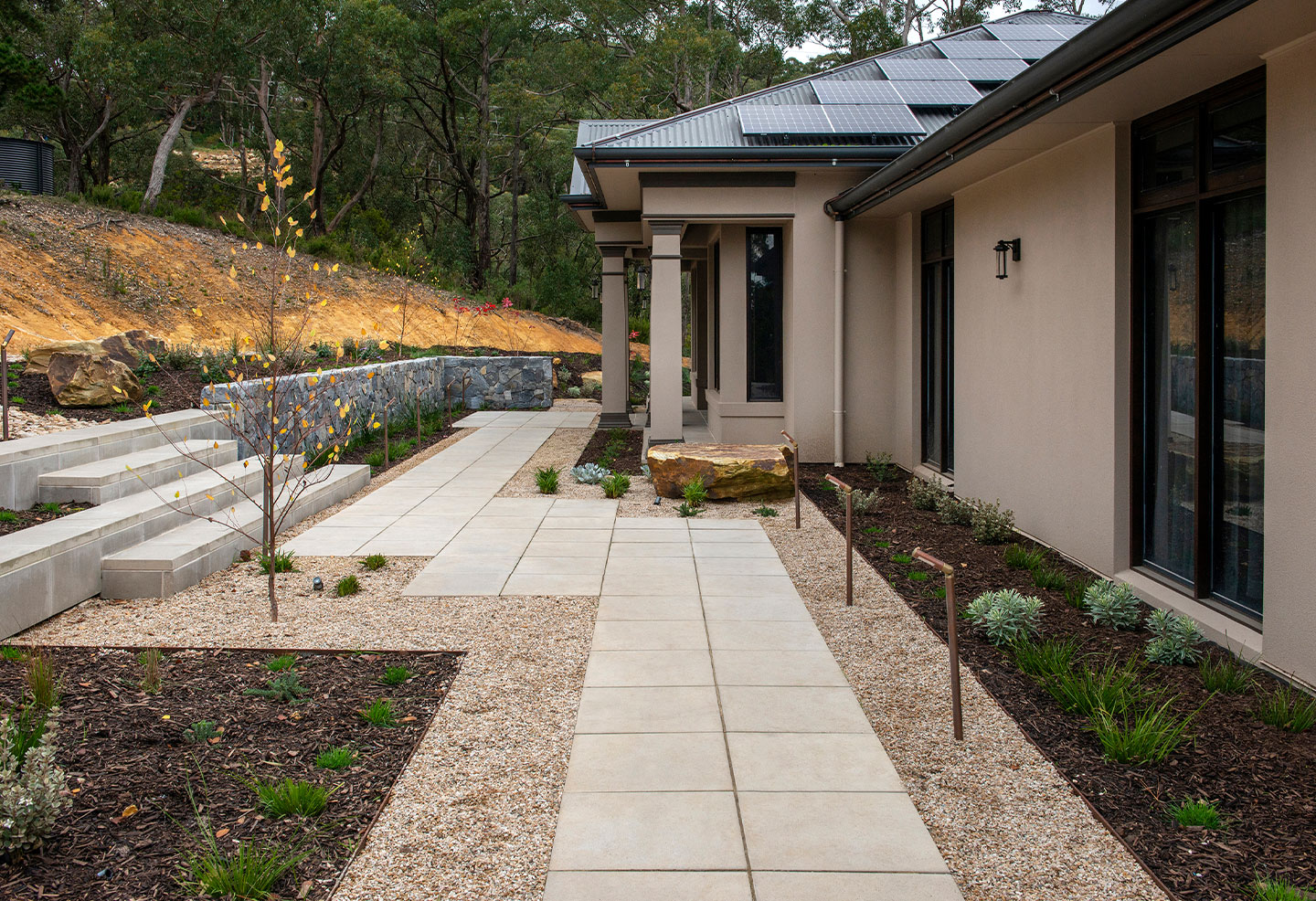

The way we use outdoor space has changed. It’s no longer an afterthought or a purely decorative zone but part of the home’s daily rhythm. Somewhere to gather, to slow down, to stretch living beyond four walls. Morning coffee spills onto patios. Evenings drift outdoors without much planning. As that shift continues, the materials we choose outside start carrying more weight. They have to look right, feel right, and hold up over time. That is where concrete pavers keep earning their place.
They’re practical, yes. But there’s more going on than durability alone. There’s a sense of intention in how they sit within a space, reinforcing the way modern homes are designed and lived in.
Enhancing Outdoor Appeal with a Modern Edge
Concrete pavers suit modern homes almost instinctively. Their proportions are deliberate. The lines are tidy without feeling rigid. Finishes tend to sit comfortably in neutral territory, from soft greys to warm charcoals and muted stone tones, making them easy to pair with contemporary architecture and layered planting schemes.
Used across patios, pathways, or internal courtyards, they introduce structure without dominating the space. The geometry feels intentional and calm. Even understated, when done well. Rather than demanding attention, they provide a visual framework that allows furniture, greenery, and surrounding materials to stand out.
Designers often lean on that flexibility. Modular formats allow for precise layouts, while custom sizing or edge treatments can subtly change the mood of a space. A narrow path can feel expansive with the right pattern. A large entertaining area can be broken up visually without adding clutter.
Practical Benefits that Withstand the Elements
Outdoor surfaces have to earn their keep. Sun, rain, foot traffic, shifting temperatures, there’s no avoiding it. Concrete pavers are made with this in mind. Their strength helps prevent cracking and surface wear, even in high-use areas like walkways, drive-adjacent zones, or frequently used entertaining spaces.
Textured or slip-resistant finishes add confidence around pools and wet zones, where safety matters just as much as appearance. Over time, this practical consideration becomes part of how comfortably a space is used, particularly in households where outdoor areas see daily activity rather than occasional use.
One often overlooked advantage is how forgiving they are over time. If a single paver chips or stains, it can be replaced without disturbing the rest of the area. That’s a small detail that makes a big difference years down the line, especially compared to poured concrete, where repairs are rarely subtle and often visually disruptive.
Customisation for Unique Outdoor Experiences
As outdoor areas become more personal, materials need to adapt. Concrete pavers do that effectively. Surface finishes can shift from lightly textured to smooth and honed, depending on the look and feel you’re after. Some finishes lean tactile and raw. Others are refined, almost architectural, changing how light moves across the surface throughout the day.
Layout choices play an equally important role. Tight joint spacing and linear patterns tend to suit structured gardens and minimalist designs. Introduce varied patterns or subtle colour contrasts, and the same pavers can take on a more relaxed, expressive tone. This makes them suitable across a wide range of settings, from compact urban courtyards to open, contemporary landscapes where scale and proportion matter.
Making Informed Choices for Long-Term Value
Choosing outdoor materials is as much about foresight as style. Concrete pavers offer consistency on both fronts. They perform reliably under regular use while supporting a visual connection between indoor and outdoor areas, a quality modern homes rely on more than ever as boundaries between spaces continue to blur.
The outcome, though, depends heavily on execution. Experienced suppliers and installers understand how format, finish, and installation methods interact. Base preparation, edge restraints, and jointing are what ensure the surface still looks right years later, not just when it’s new.
Takeaways
For homeowners aiming to create outdoor spaces that feel considered rather than overdesigned, concrete pavers strike a convincing balance. They are visually restrained, structurally sound, and flexible enough to evolve with changing needs.
When chosen thoughtfully and installed properly, they don’t just complete an outdoor area but also support how it’s used, day after day, season after season.
You Might Also Like