

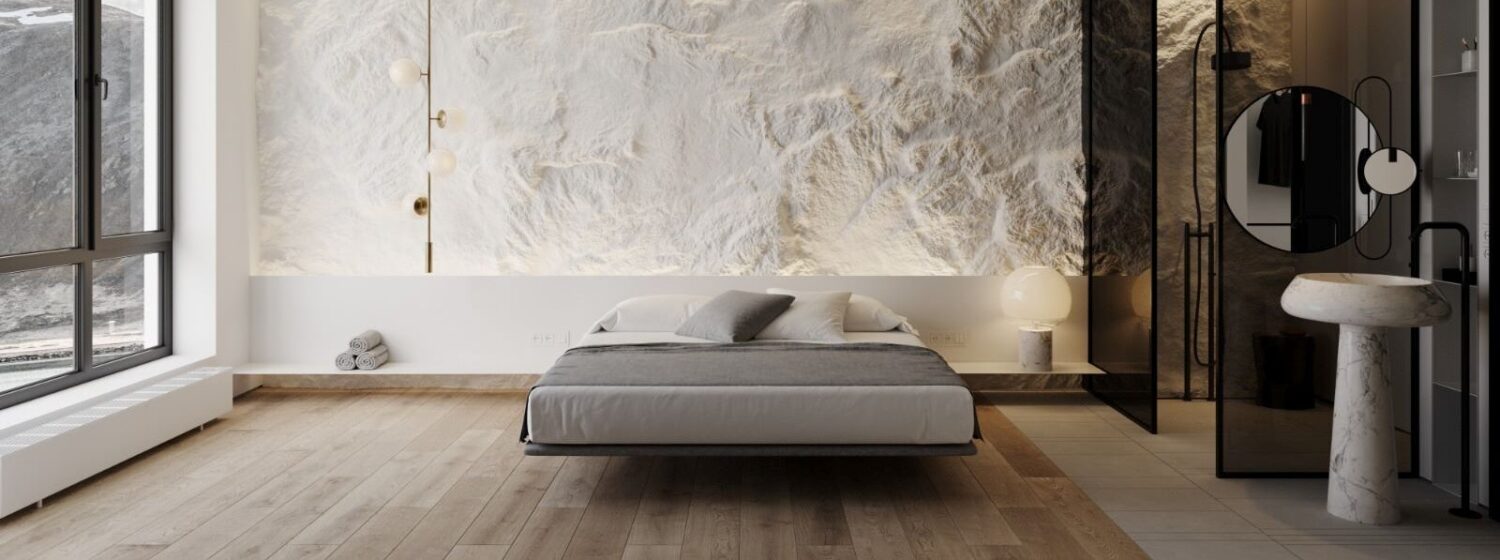

Bedrooms have shifted from being purely functional spaces into something far more personal. Designers are treating them less like a place to crash and more like a private retreat that reflects how people actually live, unwind, and recharge. What stands out right now is not excess or over-design, but a kind of intentional restraint. Every choice, from the mattress to the lighting, is doing real work, either for comfort, aesthetics, or both. The result feels layered, thoughtful, and quietly confident without trying too hard.
Elevated Minimal Layers
There is a noticeable move away from overly styled bedrooms packed with decorative pieces. Instead, designers are building rooms through layers that feel natural rather than staged. Think soft textiles, subtle tonal differences, and materials that look better the closer you get. Linen, brushed cotton, and wool blends are showing up in ways that feel lived-in rather than showroom perfect.
What makes this approach work is balance. A neutral palette does not mean flat or boring. It means the textures carry the weight. A slightly rumpled duvet, a woven throw that looks like it has a story, and curtains that actually soften the light instead of blocking it entirely. These choices create a sense of ease, which is what people are really after at the end of the day.
Statement Beds First
Designers are building entire rooms around the bed again, but not in the old dramatic canopy way. The focus is on proportion, comfort, and presence. A well-scaled king size mattress instantly changes how a room feels, giving it a grounded, almost hotel-level sense of luxury without needing much else.
Headboards are getting more attention too, but not in a flashy way. Upholstered designs with clean lines, warm wood frames, or even subtly curved silhouettes are taking over. The goal is to make the bed feel like the obvious centerpiece without it screaming for attention. When done right, you walk into the room and your shoulders drop a little. That is the test designers seem to be using now.
Natural Materials Everywhere
There is a strong pull toward materials that feel honest and tactile. Wood that shows its grain, stone that is not overly polished, and fabrics that breathe. One of the biggest shifts is the growing emphasis on organic bedding, not just as a sustainability talking point, but because it actually feels better to sleep in.
Designers are leaning into this because clients notice the difference immediately. Sheets that are softer without that synthetic slickness, duvets that regulate temperature more naturally, and textures that age well instead of breaking down. It is less about chasing trends and more about choosing materials that hold up over time, both visually and physically.
This approach extends beyond the bed. Nightstands, benches, and even lighting fixtures are moving toward natural finishes. Nothing looks overly processed or artificial. The room feels grounded, which has a calming effect that is hard to fake.
Lighting That Feels Human
Overhead lighting is no longer doing the heavy lifting on its own. Designers are treating lighting like a layered experience, and it changes everything about how a bedroom feels at night. Instead of one bright source, there are multiple softer ones that create a more relaxed environment.
Table lamps with warm bulbs, wall sconces placed at just the right height, and even subtle floor lighting are all part of the mix. The goal is to avoid harshness entirely. You should not feel like you are under a spotlight when you are trying to wind down.
There is also more attention being paid to how light interacts with materials. Soft shades, textured glass, and even fabric-wrapped fixtures help diffuse light in a way that feels flattering rather than clinical. It is a small shift, but it changes the mood of the entire room.
Personalized Quiet Luxury
The idea of quiet luxury has stuck around, but it has evolved. It is less about following a specific aesthetic and more about making the space feel personal without cluttering it. Designers are encouraging clients to include pieces that actually mean something, whether that is a vintage chair, a stack of books, or artwork that is not trying to match the color scheme perfectly.
What you do not see are overly coordinated sets or rooms that look like they were copied from a catalog. There is more individuality now, but it is edited carefully. Every item earns its place.
Color is being used sparingly but intentionally. Instead of bold walls, you might see a muted olive throw, a soft rust accent pillow, or a piece of art that introduces depth without overwhelming the space. It keeps the room interesting without making it feel busy.
A Space That Works
Function is finally getting the attention it deserves in luxury design. A beautiful bedroom that does not support real life falls apart quickly, and designers know it. Storage is being integrated in ways that do not interrupt the aesthetic, whether through built-in wardrobes, under-bed solutions, or streamlined furniture.
Seating areas are also making a comeback, but they are practical. A chair you actually sit in, not one that becomes a laundry drop zone. A bench at the foot of the bed that serves a purpose. These details make the room feel complete without adding unnecessary extras.
Technology is present, but it is subtle. Charging stations are hidden, cords are managed, and nothing distracts from the overall calm of the space. It is there when you need it and invisible when you do not.
The current direction in luxury bedroom design is less about impressing someone else and more about how the space feels when you are in it. Designers are stripping things back just enough to let quality, comfort, and personality carry the room. When those elements come together, the result does not need explanation. It just works.
You Might Also Like

