
Spend time in any well-designed Australian home and one thing stands out: the outdoor area carries as much weight as the interior. Architecture and materials are carefully considered, yet seating layout is often an afterthought.
Straight-line sofas can look refined, but they tend to spread people out. Conversations split and guests angle their bodies toward one another rather than settling naturally into the arrangement. Curved and modular seating addresses that tension by organising the space around interaction instead of lining people up along an edge.
Why Curves Change the Dynamic
People rarely choose to sit in rows when given the option. Around a circular table or firepit, everyone remains within view and conversation flows more easily.
Designers refer to this as sociopetal space, seating arranged toward a shared centre. Rather than pushing occupants outward, the layout draws them inward. There is no obvious end seat and no hierarchy. It’s a principle frequently seen in Australian homes featured by Custom Homes, where seating arrangements favour gathering over formality.
Integrating Seating with Architecture
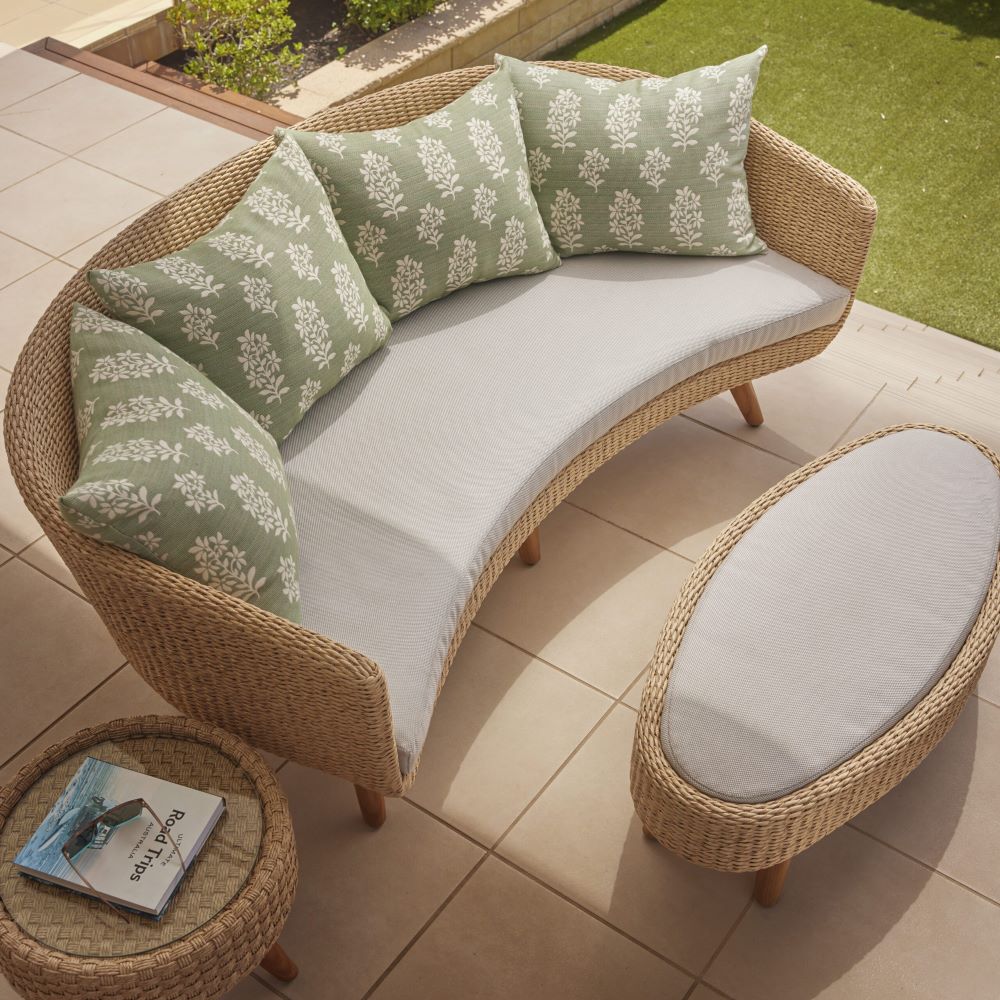
In outdoor settings, a curved sofa introduces that logic without overpowering the architecture. It eases strong lines and adds a sense of containment to expansive terraces or pool zones. In homes defined by glass, stone and bold geometry, that subtle arc provides a softer counterpoint, an approach regularly seen in residential projects showcased by Custom Homes.
Positioned around a coffee table or fire feature, a curved configuration establishes a clear centre of gravity. The furniture anchors the space without competing with it.
When proportion and material selection are handled carefully, the seating feels intentional rather than added later.
Modular Flexibility for Real Entertaining
As any seasoned entertainer knows, gatherings rarely follow a fixed script. Guest numbers grow, conversations split and merge and what begins as a relaxed afternoon can easily become a larger evening crowd. Outdoor seating needs to move with that rhythm.
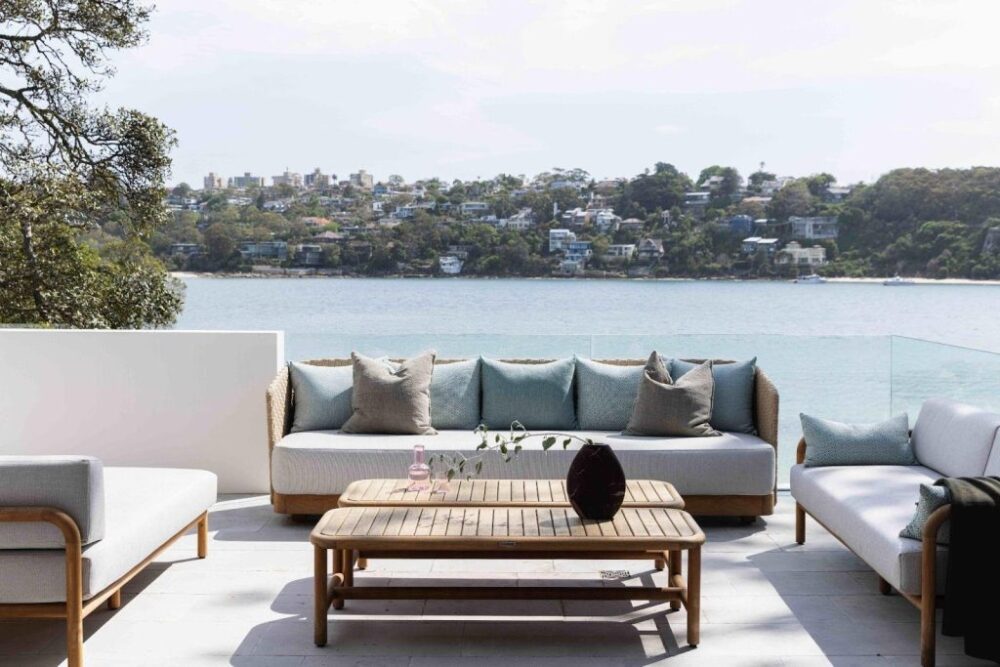
Modular outdoor furniture and bespoke designer pieces like Osier Belle sofas allow the layout to expand or contract as the occasion shifts, without looking improvised. An L-shape can open into a wider U-formation for a larger group or tighten inward for something more intimate. Modules can separate slightly to ease circulation, then draw back together as the crowd settles.
In well-made systems, concealed connectors and engineered frames keep everything aligned and secure, so adapting the layout feels seamless rather than disruptive.
Comfort That Encourages People to Stay
Layout shapes interaction, but comfort decides whether people stay.
Seat depth, back angle and cushion density quietly influence how long guests remain comfortable. Too upright and the setting feels formal. Too low and movement becomes awkward. Insufficient support leads to constant adjustment.
Australian conditions add another layer of complexity. UV exposure, salt air and heavy rain demand materials that maintain their integrity. Properly engineered frames, marine-grade hardware and high-resilience foams ensure the sofa performs well beyond the first few seasons.
With the right build quality, outdoor seating ages alongside the home rather than needing regular replacement.
Defining Outdoor Rooms Without Walls
Expansive terraces offer scale, but without anchor points they can feel undefined. The way seating is arranged brings structure to that openness without closing it in.
A curved lounge facing inward naturally establishes a gathering point. A modular grouping angled toward a landscape view creates a secondary zone within the same footprint. Orientation alone can shift how the space functions. Rather than filling square metres, the seating organises them.
Designing for Connection
None of this is about chasing a curve because it’s fashionable or choosing modular because it sounds flexible. Outdoor spaces are used differently to interiors and the layout needs to reflect that.
Inward-facing seating draws people into conversation without effort, while adjustable modules allow the space to expand as the occasion grows. Durable materials ensure it continues to perform season after season.
Get those fundamentals right and the outdoor area stops feeling styled and starts feeling lived in. Guests settle. Conversations extend. No one checks their watch.
That shift is subtle, but it’s the difference between a space that looks impressive and one people genuinely gravitate toward.