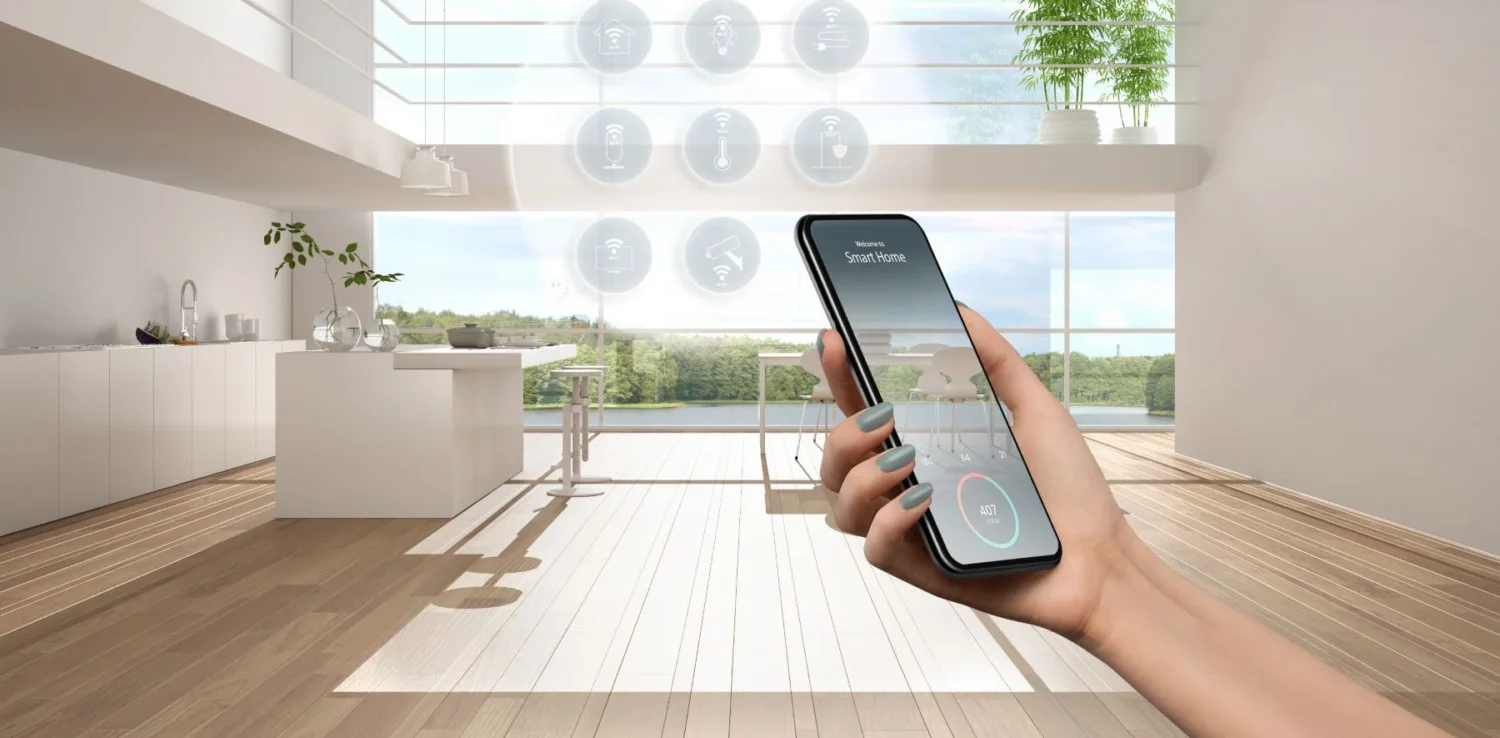

The smart home has evolved from a collection of gadgets into a unified ecosystem. The days of juggling fifteen different apps just to turn on a light are largely behind us. In 2026, your smartphone acts as the central nervous system for a home that increasingly anticipates your needs — coordinating devices, managing energy, and securing your connection without you having to think about it.
1- Unified Control via “Matter” Standards
The fragmentation that plagued smart homes for years, where a Philips Hue bulb wouldn’t talk to a Google lock and an Apple-native sensor was useless on a Samsung hub, is being steadily resolved. Matter 1.5, published in November 2025, is now the gold standard for smart home interoperability, allowing devices from different brands to work together natively across Apple Home, Google Home, and Samsung SmartThings from a single dashboard on your phone. Whether you’re controlling your smart locks, lights, or EV charger, you no longer need a separate app for each brand. It also means switching from an iPhone to an Android no longer upends your entire home setup since your devices come with you.
2- Connectivity, Privacy, and the VPN for iPhone
With your entire home with security cameras, smart locks, and thermostats connected to your network, the security of your phone’s connection matters more than ever. When you’re controlling your home remotely from a café in Melbourne or an airport lounge, you’re potentially on an unsecured public Wi-Fi network, which is a prime target for man-in-the-middle attacks. Using a VPN for iPhone that encrypts your connection creates a secure tunnel between your device and your home hub, preventing anyone on the same network from intercepting your login credentials or accessing private camera feeds. Modern iOS VPN apps in 2026 also offer Siri integrations and auto-connect features that activate the moment you leave your home Wi-Fi, keeping your smart home’s digital front door locked even when you’re not paying attention.
3- Intelligent Energy Management
Australia leads the world in rooftop solar adoption, with panels now on nearly one in three homes, and smart automation is what turns that generation into meaningful savings. Rather than simply producing solar energy and exporting the excess at low feed-in tariff rates, a properly automated home uses real-time energy alerts to act on overproduction intelligently. Smart home automation systems can automatically trigger high-consumption appliances like dishwashers and EV chargers to run during peak solar generation windows, shifting the household from reactive to predictive energy use. For Australian households facing electricity prices exceeding 40 cents per kWh during peak periods in some states, this kind of optimisation can deliver substantial bill reductions.
4- “Local-First” Control for Speed
One of the more significant advances in 2026 smart home design is the shift away from cloud dependency for everyday tasks. Thread networking allows your smartphone to communicate directly with devices over your local network, bypassing the round trip to a remote server entirely. The practical result is near-zero latency, like tapping your phone to unlock the front door is instant, not the one-to-three second delay of cloud-dependent devices. Crucially, it also means that if your internet goes down, your smart home keeps working and your phone retains full local control.
5- Biometric Seamless Access
The physical key is rapidly becoming redundant. Ultra-Wideband (UWB) technology, combined with digital keys stored in your phone’s secure wallet, allows your home to detect your proximity and respond before you’ve even reached for your handset. The front door unlocks as you approach; your preferred lighting scene activates automatically. The same Face ID or biometric authentication you already trust secures every interaction, making your entry points both more convenient and more resistant to compromise than a traditional deadbolt.
When all of these systems work in concert, such as unified device control, encrypted remote access, intelligent energy management, local-first speed, and frictionless entry, the smart home stops being a novelty and starts being genuinely useful.
You Might Also Like