

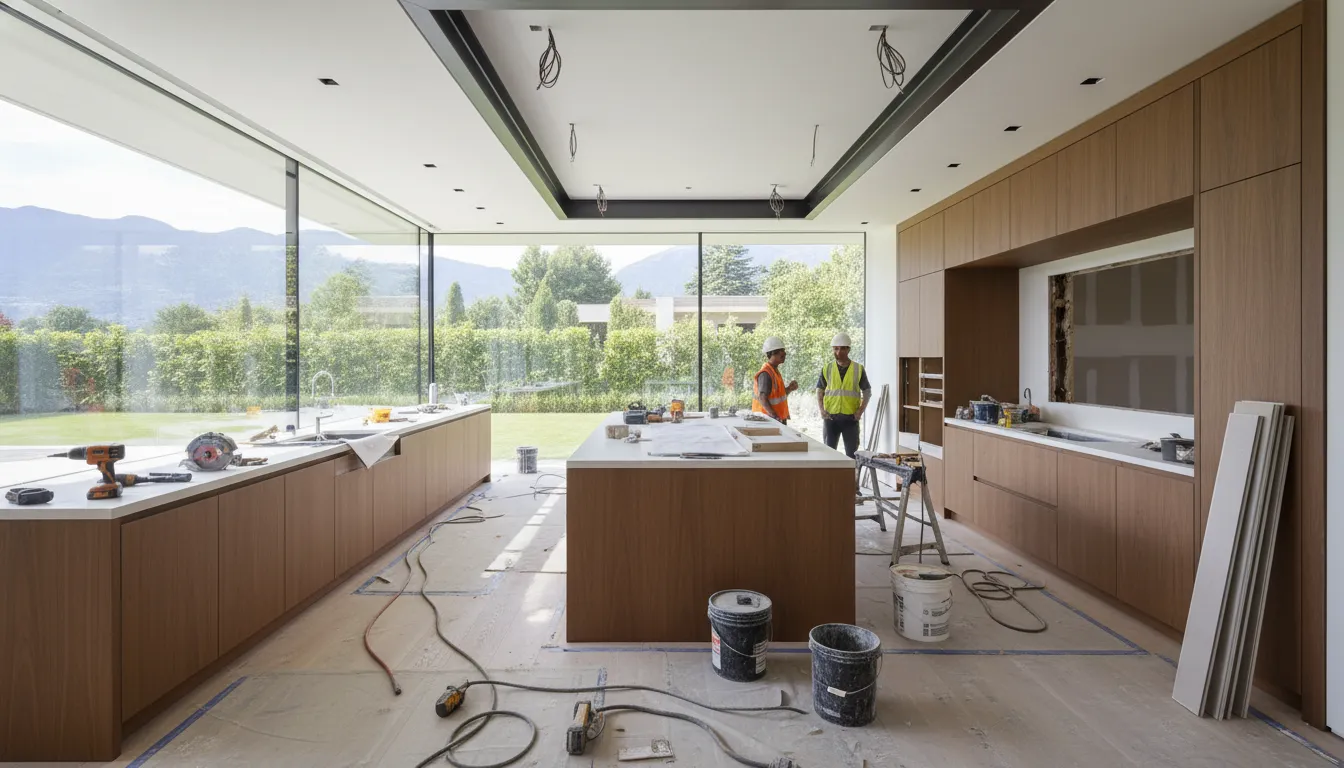

Australia’s renovation market hit $48 billion in 2025. One in three households took on a project of some kind, according to Housing Industry Association data – and the ambitions driving those projects have never been bigger. Open-plan extensions, indoor-outdoor living spaces, custom kitchen rebuilds, whole-floor transformations. The scale and sophistication of what Australian homeowners want have never been more apparent.
But here’s what rarely gets discussed in renovation coverage: the projects that go wrong don’t usually fail because of a bad architect or a poor choice of materials. They fail because of what wasn’t known before the first decision was made.
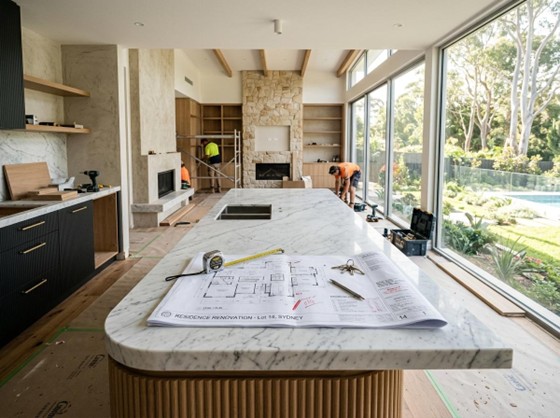
A luxury renovation in progress: the quality of the finished result depends on decisions made long before any surface is touched.
The best custom home builders in this country treat a specific phase as non-negotiable – one that happens entirely before the design work begins, before trades are booked, and long before a single tile is lifted. It’s not glamorous. It won’t make the feature spread in a magazine. But it’s what separates a renovation that transforms a home from one that burns through a budget and delivers stress instead of beauty.
The Part Most Luxury Builders Always Do First
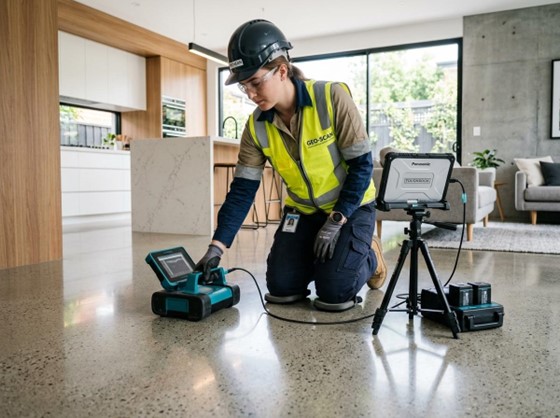
A GPR technician scanning a residential concrete slab before renovation work begins – locating reinforcing steel, post-tension cables, and buried conduits without breaking the surface.
The difference between a $250,000 renovation that finishes on time and one that blows out to $400,000 isn’t always the marble or the joinery. Often, it comes down to what the project team knew before they started cutting.
Experienced custom builders and renovators run a structured pre-construction phase before any physical work begins. That means an existing services survey, a structural inspection, and – for any project where concrete drilling or cutting is involved – concrete scanning, a non-destructive diagnostic step that maps everything hidden inside a slab or wall. The technology sends electromagnetic pulses into the concrete and returns a precise picture of what’s embedded within: reinforcing steel, post-tension cables, electrical conduits, water pipes. All of it, mapped before anyone picks up a drill.
Why does it matter so much? Hitting a post-tension cable mid-cut can compromise structural integrity across an entire slab. Striking a live electrical conduit is a serious safety incident. Puncturing a water pipe sets off a cascade of damage that takes weeks and significant money to fix. Industry data published by Cutcore puts the average cost of a single utility strike at around $56,000 when emergency repairs, site downtime, and potential shutdowns are factored in. That’s a number that tends to concentrate the mind.
Understanding What’s Inside Your Concrete
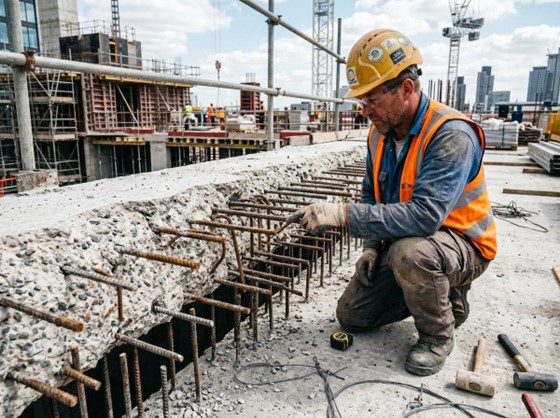
A typical residential concrete slab can contain multiple hidden services – reinforcing steel, electrical conduits, and plumbing – all needing to be mapped before any drilling or cutting begins.
Most homeowners assume a concrete slab is a solid, inert mass. It isn’t. In Australian residential construction, a slab might contain reinforcing steel (rebar), post-tension cables – common in multi-story builds and many modern single-story slabs – electrical conduits, drainage and plumbing, and, in older homes, legacy infrastructure that was never formally documented. Some homes built before the 1990s have asbestos-lined ducts sitting inside walls or beneath floors, completely invisible until something cuts through them.
When You Actually Need a Scan
Not every renovation triggers the need for a concrete scan – but plenty do. The situations where it’s genuinely necessary include:
- Installing a new bathroom, laundry, or wet area that requires drilling through a slab for drainage
- Mounting structural fixings, heavy cabinetry anchors, or a kitchen island into a concrete floor
- Cutting new openings for indoor-outdoor living areas or room extensions
- Any drilling into an existing concrete wall, particularly in apartments and multi-story homes
What the Process Looks Like
The scan itself is non-destructive. A technician brings a handheld GPR unit and works across the surface section by section. Results are overlaid onto the floor plan with exact depths and object types identified. Most residential scans are completed within a few hours, and results are available the same day or the following morning.
Safe Work Australia’s Excavation Code of Practice recommends locating buried services before any drilling or excavation begins – a standard that professional builders treat as a baseline, not a box-ticking exercise.
Planning a Renovation the Way Luxury Builders Do

Luxury custom builders approach every renovation with a structured pre-construction phase that addresses site conditions before the first trade is engaged.
The pre-construction phase isn’t a single step. It’s a sequence. Site survey first, then structural inspection, then services mapping (which includes concrete scanning where cutting or drilling is planned), then permits and approvals, then – finally – design finalization. Compressing or skipping steps in that sequence is exactly how renovation budgets fall apart.
The numbers bear this out. A 2024 Statista survey of Australian renovators found that 73% cited hidden or unexpected costs as their main barrier to renovation. Over 60% of renovators who experienced budget problems exceeded their original estimate by 20 to 30%, most commonly due to structural surprises found after work had already started. According to industry data compiled by HouseAce, structural issues uncovered mid-renovation – rotten timber joists, water damage inside walls, non-compliant stud walls, load-bearing elements that weren’t on any plan – cost between $2,000 and $12,000 or more to resolve, with none of it in the original budget.
Consumer Affairs Victoria publishes pre-build renovation checklists that exist precisely because the compliance and safety side of renovation has real financial and legal consequences. These aren’t bureaucratic documents – they’re a map of where projects go wrong.
Smart home integration falls into the same category as subsurface services: it must be planned before construction begins, not bolted on afterward. The publisher’s feature on home automation in custom designs makes this point clearly – every sophisticated system, from climate control to security wiring, depends on knowing what’s already embedded in walls and slabs before a single cable is pulled.
The Difference Planning Makes to the Finished Result
The reason elite custom projects achieve the results they do isn’t purely architectural talent. It’s the pre-construction investigation that removes uncertainty and gives the design team full creative confidence. When you know exactly what’s in your slab, your walls, and beneath your floor, you’re not designing around unknowns. You’re designing without compromise.
Projects like the Mosman knockdown-rebuild featured in the publisher’s modern coastal luxury showcase demonstrate this well. Geotechnical monitoring and foundation reinforcement were built into the planning process from the beginning, not addressed as problems discovered mid-build. That thoroughness is what allows architectural ambition to actually become reality.
For a detailed look at what serious renovation work costs across different project types in Australia, the publisher’s own guide to renovation costs in Australia is a useful reference when setting realistic budget expectations before any project begins.
HIA Economics data confirms that renovation activity in Australia neared record highs in 2025, with kitchen renovation costs averaging $18,000 to $35,000 above base specification in major markets. At that level of investment, a pre-construction scan – typically a few hundred dollars for a standard residential job – is negligible compared to the risk it eliminates.
Luxury isn’t only what you see in the finished result. It’s the process that protects the investment behind it.
Starting Your Renovation on Solid Ground

The result of thorough planning: a completed luxury renovation where every detail – from the structure beneath the floor to the custom joinery above it – was considered before the first trade arrived.
Before you finalize material selections or book the first trade, take the time to understand exactly what you’re working with. That means a proper structural inspection, an existing services survey, and – where concrete work is involved – a subsurface scan. Not because something is likely to go wrong. Because knowing in advance is the smarter way to build.
The projects that deliver on their promise aren’t the ones that got lucky. They’re the ones that were planned properly from the beginning. Great renovations start below the surface – that’s the part most homeowners never see, and it’s almost always the most important part of all.
You Might Also Like


