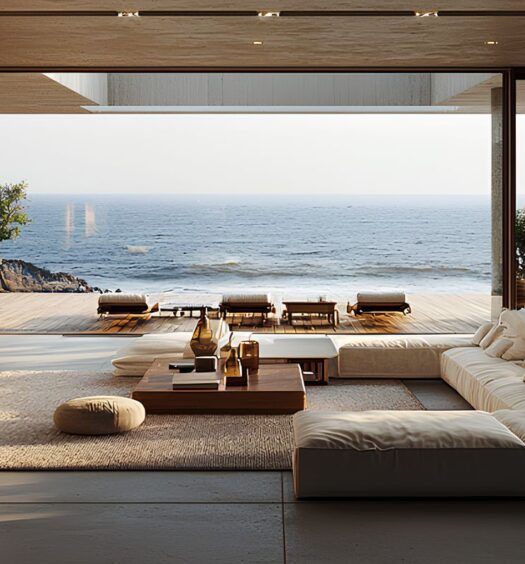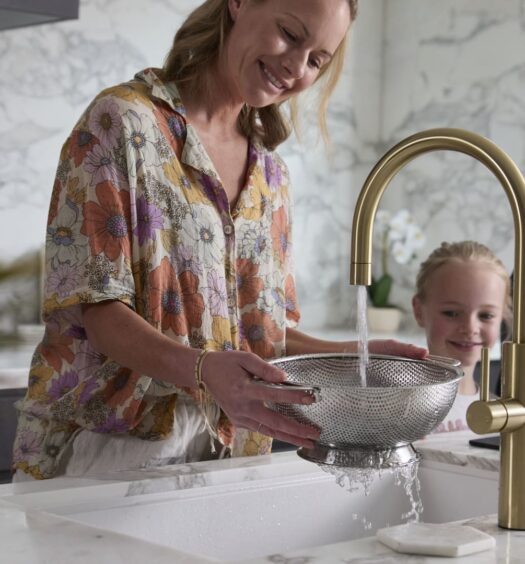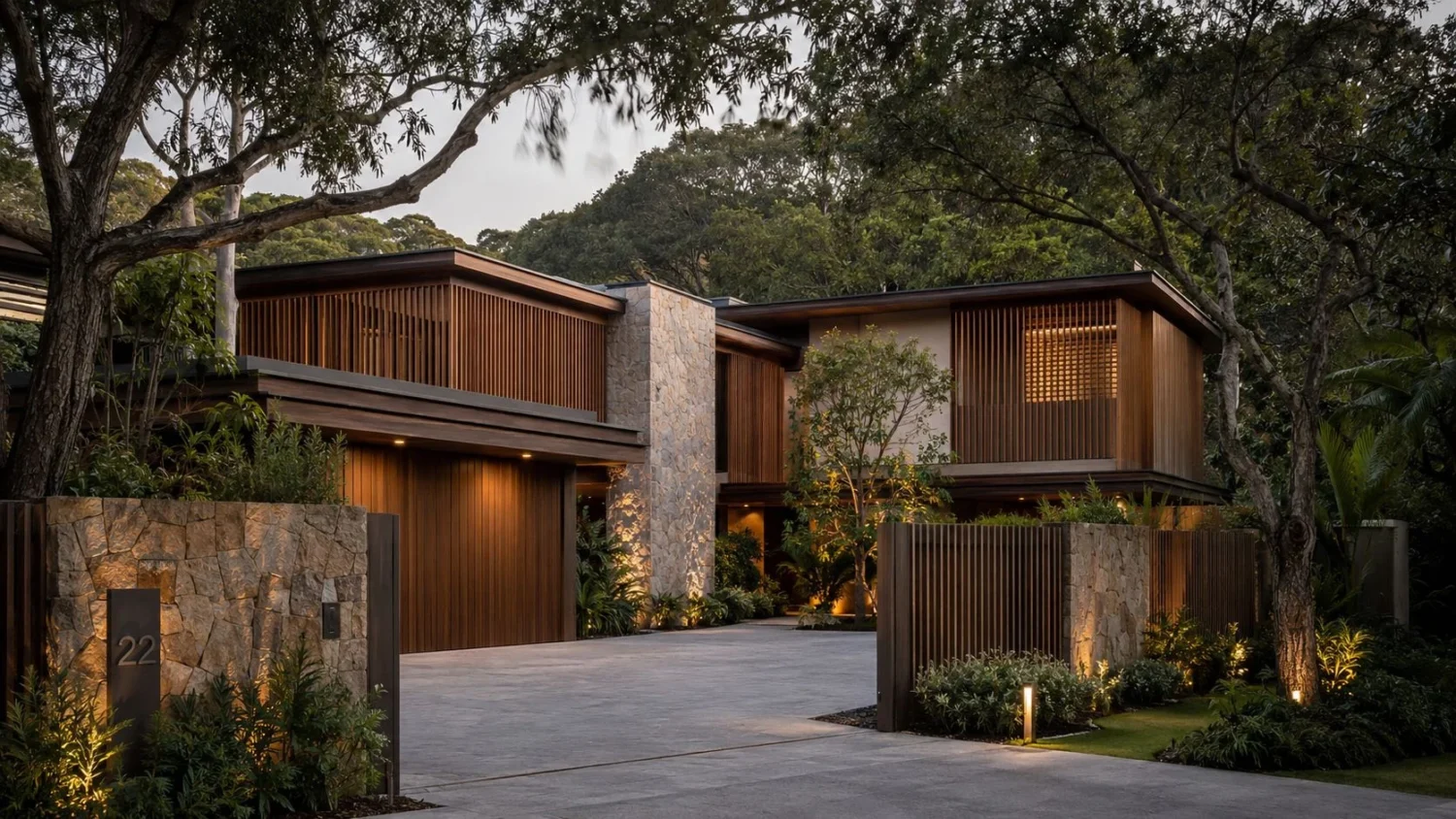

For years now, luxury in Australian residential design has been associated with size. Larger floor plans, bigger windows, bigger statements. These days, when walking around some of the homes that the best architects design in Australia, one rarely sees any mention of size. What architects do focus on, however, is layering, how light travels through a filter of some sort before hitting a floor, how a woven finish stands out from a painted plaster, how a courtyard is shielded from the prying eyes without closing it off.
This shift may seem insignificant at first glance, but it has huge implications when it comes to creating homes.
From Size to Layers
For a while there, the brief for a luxury home would not surprise anyone. Open up. Maximize views. Let the glass speak for itself. This concept still works in some cases, but today architects who are active in the highest tier of the Australian housing market are looking for something else. Something that cannot be defined easily in depth.
In this context, depth is not related to size. It has to do with a number of sensory layers that are present in a space. Hallways filtering light through timber battens, walls of bedrooms covered in woven texture rather than a paint finish, courtyards that feel private despite being open to the sky none of these things are really loud, yet together, they are what makes a home luxurious.
That is because pure openness tends to wear thin pretty quickly. A house of glass and open sightlines may come to feel exposed once it is already inhabited instead of toured by potential buyers. The solution to this problem is simple: introduce a sense of privacy without making the space closed.
Creating Privacy Without Sacrificing Openness
This is, perhaps, the most difficult aspect of the entire brief. Clients want an open space, yet they also want privacy from neighbours, the street and other areas of the sprawling house. Architects managed to find a way of handling this situation without sacrificing the sense of openness.
Flexible layout and modern architectural elements help create privacy while maintaining a sense of space. For example, click-on screens can be used by designers as a tool for introducing a filtering element into a space. While a solid wall will cut everything in half, a screen allows privacy from certain angles and full openness from others.
This is also a great way of creating the connection between the house and its surroundings. Instead of a clear division between inside and outside, a screened structure can create a gradient zone. The shadows will travel along the screen throughout the day, and it will look different during the morning than it will look at dusk. That is the kind of detail that makes a home feel alive, and that is why screening structures have become a popular tool for dissolving the boundary between architecture and landscape.
Building a Sense of Depth Through Textures
While screening has its place in achieving depth architecturally, textures are responsible for doing the same thing inside.
The house can be perfect when it comes to floor planning, yet, without proper interior finishes, it can feel shallow. Wallcoverings and other interior finishes play a very important role when it comes to defining the atmosphere of a house.
Premium wallcoverings by Thibaut can help interior designers introduce texture, colour, and pattern to create spaces with greater warmth and visual interest. The brand offers a wide range of wallcovering styles, including textured and woven designs that add depth and character to interior spaces. When paired with carefully considered architectural elements, these layered finishes can enhance the way natural light interacts with a room, contributing to a more cohesive and inviting design.
This is where most beautiful homes fail. They have perfect architecture, yet interior finishes are just plain and do not provide anything extra. A truly layered home uses its wallcoverings, fabrics and finishes as seriously as its architectural elements and picks up the options that have a presence yet do not overwhelm the room.
Designing Interior and Exterior at Once
One of the greatest shifts in the way luxury homes are being designed is timing. Until recently, exterior screening and interior finishes were picked separately, by separate groups of people and not discussed much.
Nowadays, architects prefer to select both interior and exterior finishes simultaneously, often at the same design stage, thus ensuring that a house’s screening, cladding and structural rhythm correspond to wallcoverings, fabrics and finishes inside. A screen of timber battens in a north-facing courtyard, for example, will match the texture of the woven finish in an adjacent living space. Finishes are different, yet, the principle is the same layers, texture and consideration.
This is what ensures a sense of completeness of a home. When interior and exterior are designed at the same time, the transition between two becomes seamless.
Conclusion
The most successful luxury homes designed in Australia nowadays are not always the largest and most expensive in terms of per sqm price. These are the homes that understand depth as a design principle and not just a buzzword. Privacy achieved through screens, not walls, warmth created with textures, not size, exterior and interior decisions made together instead of being separate.
When it comes to architects and clients considering their next projects, the main advice is to not add more but add better.
You Might Also Like