
The luxury bathroom has undergone a remarkable transformation over the past decade. Once viewed as a purely practical room, it is now designed with the same level of attention as the kitchen or living areas, creating a place to unwind as much as prepare for the day ahead. At the heart of this evolution is the luxury bathroom vanity, a feature that has grown from a functional necessity into one of the defining architectural elements of the space.
Rather than blending into the background, today’s bathroom vanity often establishes the room’s character from the moment you walk through the door. Its proportions, materials and detailing influence everything that follows, making it the natural starting point for a thoughtfully designed luxury bathroom.
Why the Vanity Now Leads the Design
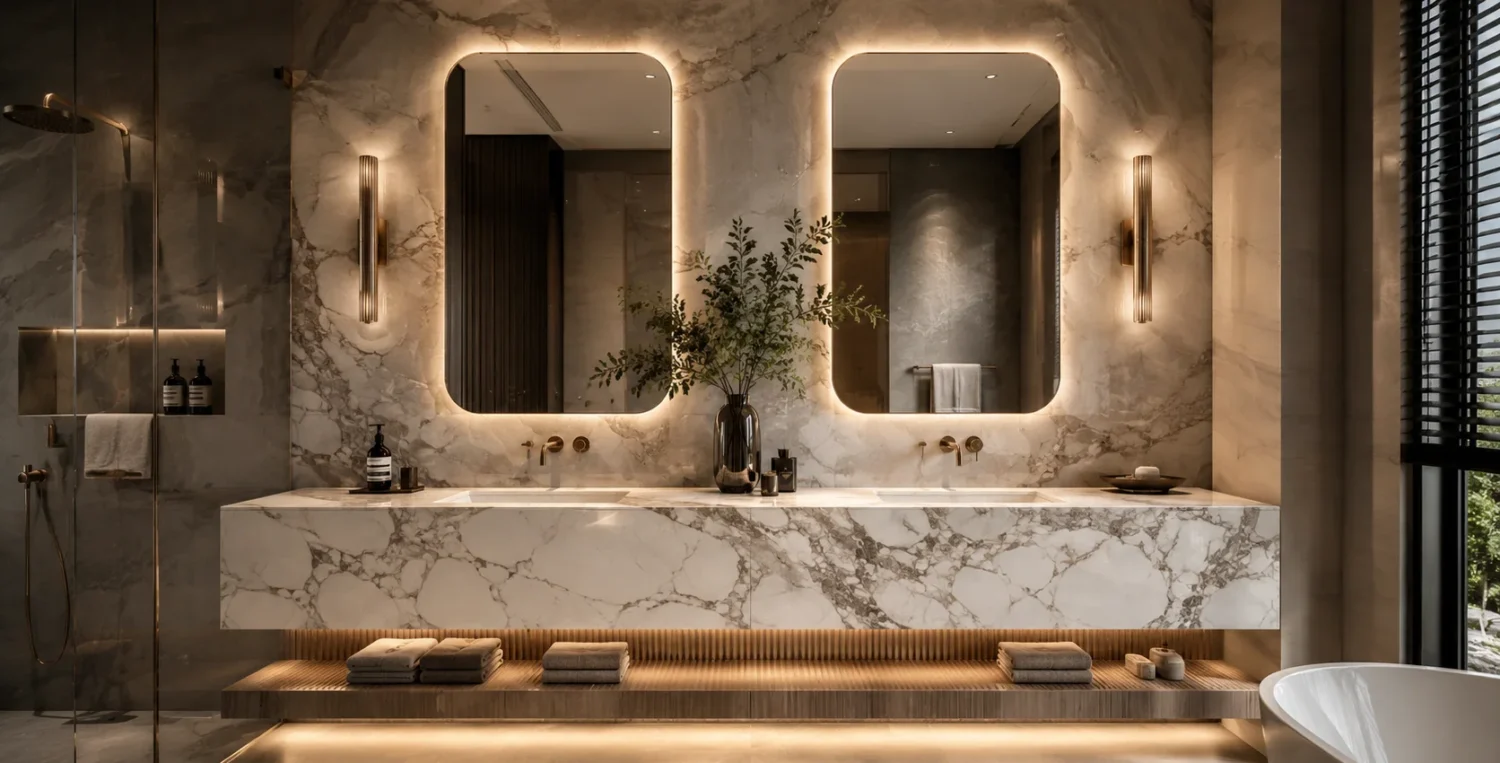
In many contemporary homes, the vanity is one of the first features your eye is drawn to. Whether floating effortlessly above the floor, wrapped in natural stone or crafted as a bespoke furniture piece, it immediately sets the tone for the entire bathroom.
Architects and interior designers are increasingly selecting the vanity early in the design process because it influences the layout, lighting, mirror selection, tapware and surrounding finishes. When these elements are planned together, the bathroom feels more cohesive and considered rather than assembled from individual products.
Materials That Make a Statement
One of the biggest reasons the vanity has become such a focal point is the growing use of premium natural materials. Marble, travertine, limestone and quartzite introduce texture, movement and individuality, while timber cabinetry adds warmth and balances the harder surfaces typically found in bathrooms.
Curved cabinetry, fluted detailing and thicker stone benchtops further reinforce the vanity as a sculptural feature. Rather than relying on decorative embellishments, luxury bathroom design is increasingly defined by craftsmanship, material quality and refined proportions.
Choosing the Right Bathroom Vanity Basin
The basin is no longer simply a practical addition sitting on or within the vanity. Its shape, installation method and scale all contribute to the overall appearance while influencing everyday functionality.
Vessel basins create a bold architectural statement, integrated basins deliver a seamless finish, while undermount and inset designs each offer their own practical and aesthetic advantages. Understanding The 6 Types of Bathroom Vanity Basins Explained can help homeowners select a basin that complements both the design of the vanity and the way the bathroom will be used for years to come.
Choosing the basin early also allows cabinetry, tapware, storage and plumbing to be planned around it, producing a more refined and practical outcome.
The Details That Complete the Vanity
A beautifully designed vanity is enhanced by the elements surrounding it. Wall-mounted tapware creates a cleaner, more architectural appearance, while oversized mirrors help establish balance and proportion. Layered lighting, including backlit mirrors, wall sconces and concealed LED strips beneath floating cabinetry, highlights the natural beauty of stone and timber while creating a softer atmosphere throughout the room.
These finishing touches elevate the vanity from a functional fixture into the visual centrepiece of the bathroom.
Investing in Timeless Bathroom Design
Luxury bathroom design continues to move away from unnecessary decoration and towards carefully selected features that combine beauty with everyday practicality. More than almost any other element, the vanity brings together craftsmanship, premium materials and intelligent functionality in a way that defines the entire space.
Whether creating a new home or planning a renovation, investing in a well-designed bathroom vanity is about far more than storage. It is an opportunity to introduce a sculptural focal point that gives the bathroom its identity while delivering lasting value for years to come.
You Might Also Like