
There is something missing from this kitchen.
Minimalist design has been stripping our homes back for years, concealing everything from televisions and sound systems to refrigerators and entire appliance cupboards, but there are some things that simply have to remain visible – or at least, that’s what we thought.
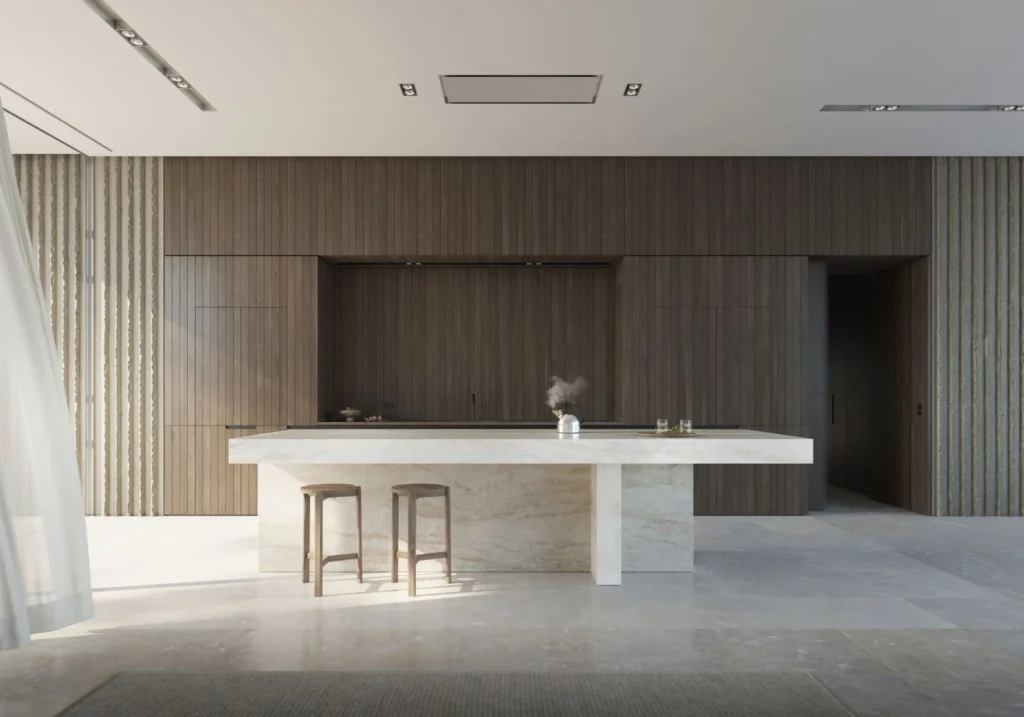
No matter how sophisticated the kitchen, somewhere amongst the beautiful stone, custom cabinetry and carefully selected finishes sits an appliance that looks unmistakably like an appliance. It might be slim, flush-mounted and beautifully designed, but there is still no mistaking what it is. Which makes the latest innovation from Gaggenau rather extraordinary – the invisible cooktop!
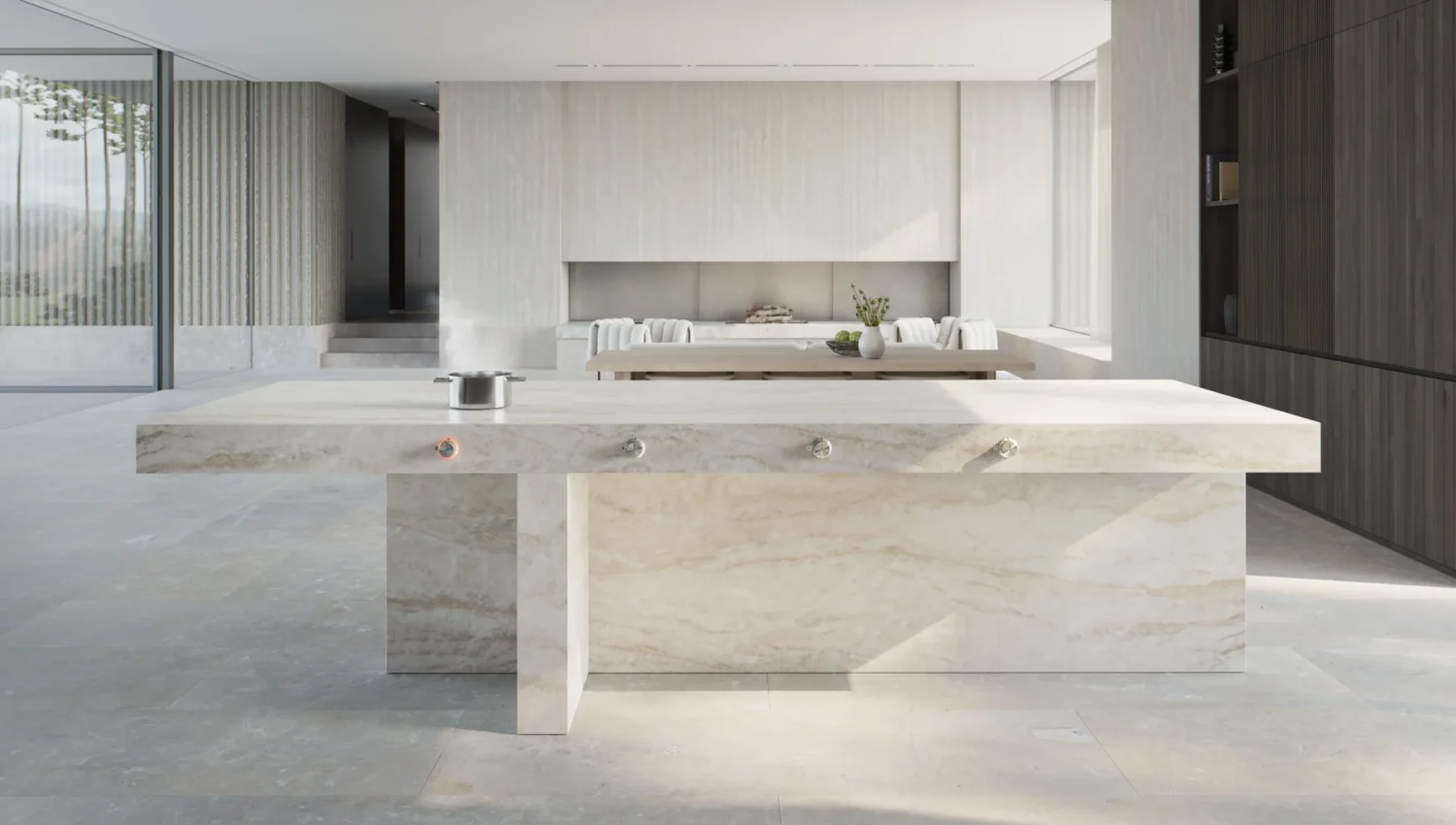
With the Gaggenau Essential Induction, the technology has been moved beneath the countertop leaving only a tiny illuminated dot and Gaggenau’s signature control knobs to suggest that anything is happening at all. Place a pot directly onto the Dekton surface and the worktop becomes the cooktop; remove it when dinner is done and, visually, the kitchen gives almost nothing away. Gaggenau has reduced the entire idea to what it calls “a dot, a surface, a knob.”
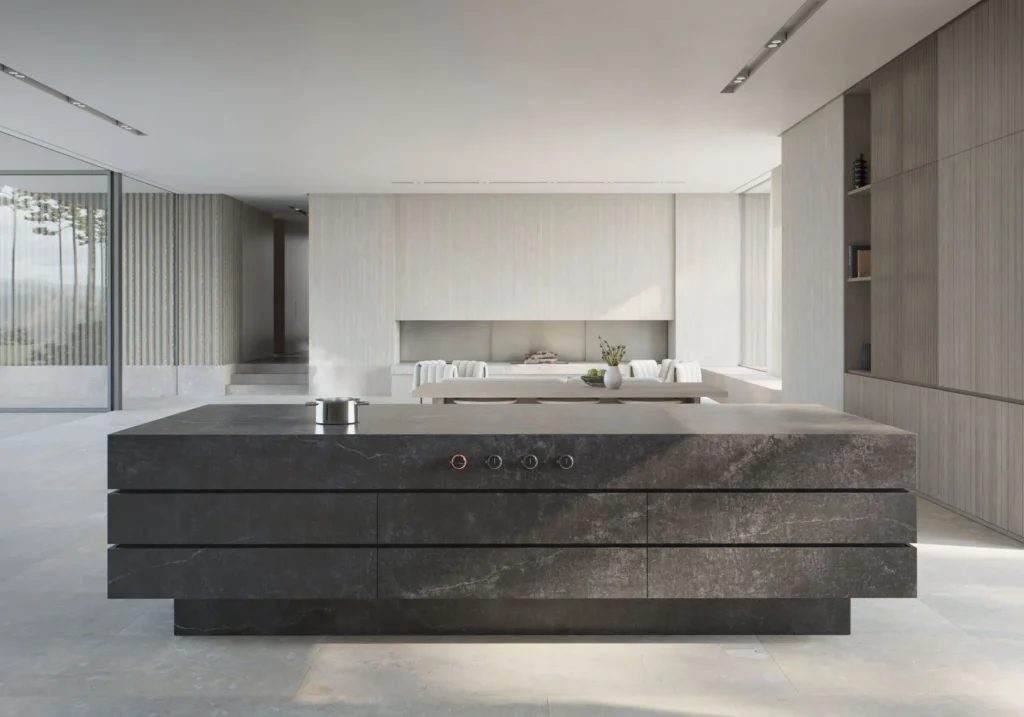
It sounds deceptively simple, but this is where the Gaggenau Essential Induction starts to become really clever. Instead of designing a better-looking appliance to sit within the kitchen, Gaggenau questioned whether we needed to see the appliance in the first place. It is an idea the brand describes as “shy tech” technology that remains highly sophisticated but retreats from view rather than competing with the interior around it.
And in an open-plan home, that matters. The kitchen is now often fully exposed to the dining and living areas, with an island functioning as much as a social hub as somewhere to cook. Once a conventional cooktop no longer permanently occupies part of that surface, the distinction starts to disappear too. Dinner can be cooking there one moment and, once the cookware is removed and the tiny indicator light switches off, the same area is available for serving food, pouring drinks or pulling up a stool.
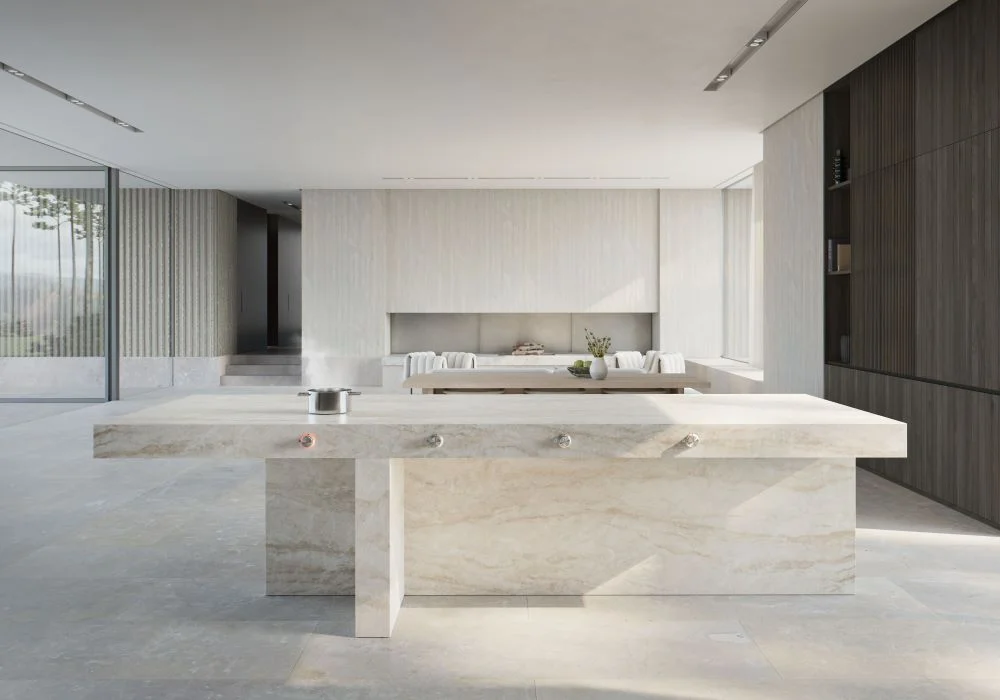
There’s a lovely bit of theatre to the way it works, too. A pot is placed directly onto what appears to be a stone benchtop and the small dot of light indicates exactly where it needs to sit. That dot does more than point the way; variations in its intensity, colour and state communicate whether the module is operating, whether residual heat remains or whether the required surface protector is missing. Once it is no longer needed, the light switches off and the technology effectively disappears again.
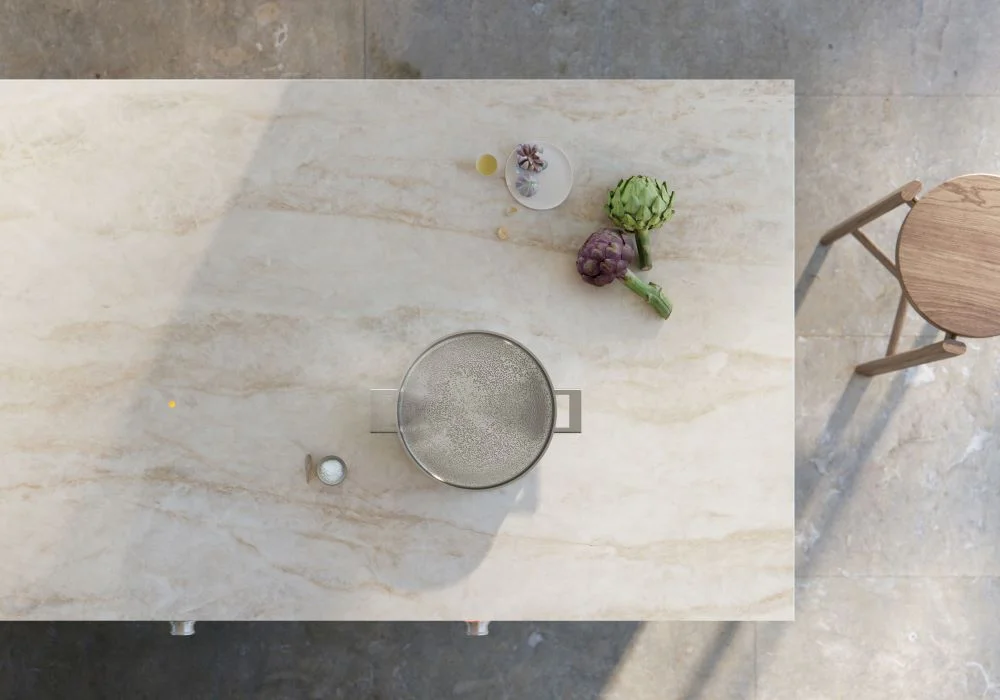
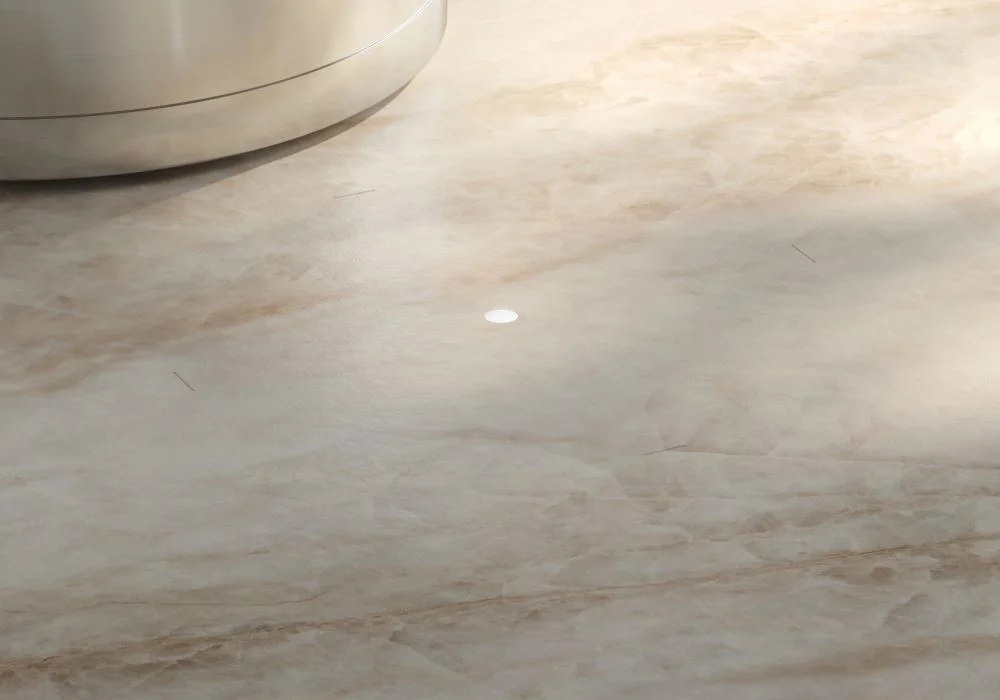
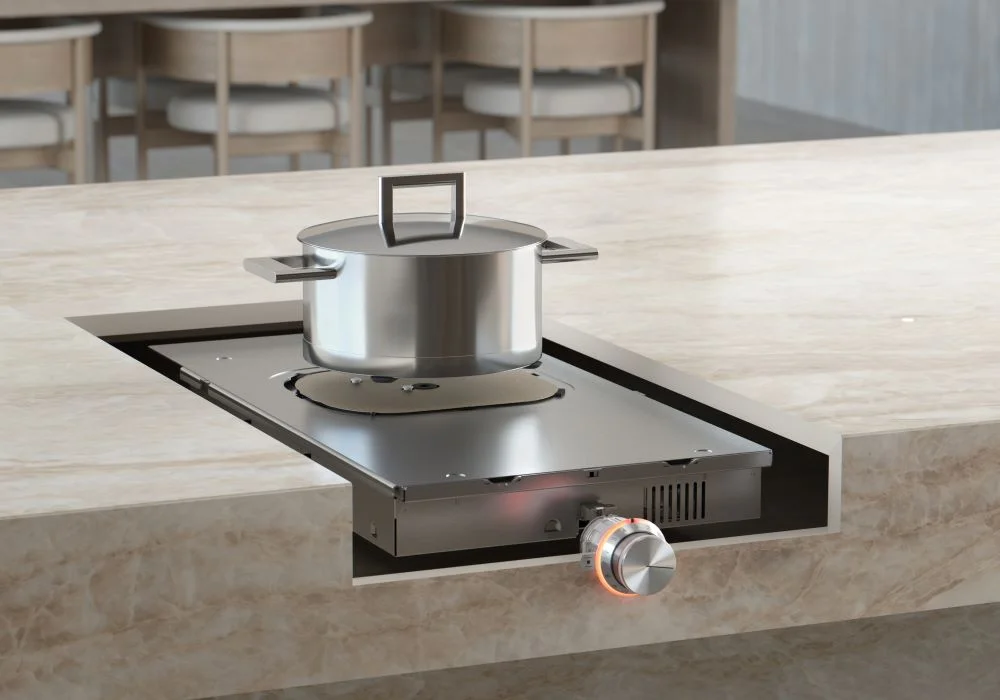
Beneath the 12mm Dekton surface, two sizes of induction module can be combined to suit the way the kitchen will actually be used. The 21cm module accommodates cookware between 10 and 21cm in diameter, while the larger 28cm version caters for cookware between 15 and 28cm. Rather than restricting designers to the dimensions of a conventional cooktop, the modules can be configured to suit the kitchen and the needs of its owners.
Another clever piece of the system sits between the cookware and the stone. Gaggenau’s removable magnetic surface protectors connect to the cookware and activate the induction modules beneath, while also protecting the worktop from scratches and softening the sound of pots and pans moving across the surface. It’s an important part of how the system works, but like so much of the technology involved, it attracts very little attention to itself.
One element Gaggenau hasn’t tried to hide is the control. Its distinctive 400 series front mounted knobs remain deliberately tactile, with a choice of stainless steel or black and direct access to 12 power levels, boost and keep-warm functions. Against a kitchen that has been stripped of the usual visual cues of cooking, the knobs become an elegant little clue to what is concealed beneath the surface.
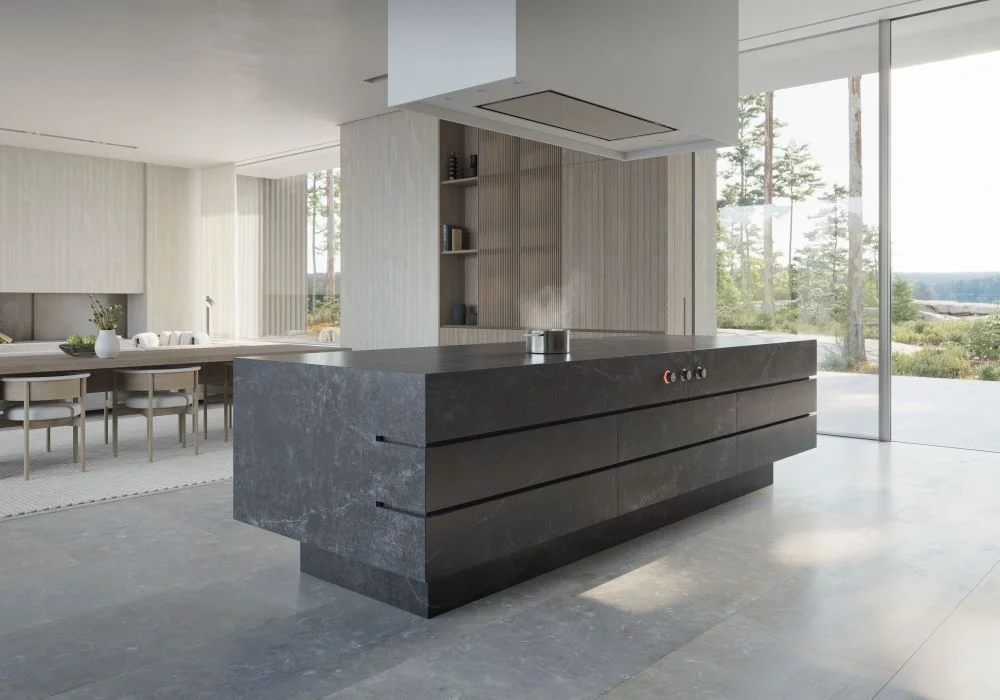
The choice of Dekton is equally important. Available across an extensive selection of colours and finishes, the surface gives architects and designers far greater freedom to make the island part of the overall interior rather than having its material interrupted by a separate black-glass appliance. The Essential Induction can also be paired with Gaggenau ceiling ventilation, taking another traditionally prominent kitchen appliance away from the immediate cooking area and making the concept particularly interesting for open-plan homes.
Perhaps the best indication of how different the idea feels came during Gaggenau’s own development process. Chief designer Piotr Szpryngwald noticed that people using the cooktop instinctively began placing ingredients, spoons and everything else they needed around their cookware rather than working within the rigid divisions of a conventional cooktop and separate preparation area. The change happened naturally, without users consciously thinking about it.
For all the technology hidden beneath the surface, that may be the most interesting thing about the Gaggenau Essential Induction. It doesn’t simply make a cooktop less visible; it challenges the idea that a kitchen needs to look like a kitchen at all. As our cooking, dining and living spaces continue to merge, Gaggenau has taken one of the last appliances we assumed had to be seen and made it almost disappear.
See more at www.gaggenau.com
Tags
Best Induction Cooking Dekton induction cooktop Gaggenau cooktop Gaggenau Essential Induction Gaggenau invisible cooktop Induction Cooktops invisible induction cooktopYou Might Also Like