
Mauritius is renowned for its crystal-clear aqua-marine lagoons and idyllic beaches. But the tropical island also sits squarely in the Indian Ocean cyclone belt. Homes built along its breathtaking coastline must withstand extreme wind loads, the risk of airborne debris and the relentless assault of salt-laden air during extreme weather events.
A luxury multi‑million‑dollar villa project, perched just metres from the shoreline, needed a screening solution that protected the home and its occupants from the full force of a tropical cyclone, while preserving the uninterrupted ocean views that define the property’s luxury appeal.
The challenge is one Australians know well. From Far North Queensland to the Pilbara, coastal homes in cyclone‑rated regions face similar environmental pressures.
It’s why Australian standards for cyclonic performance are among the most rigorous in the world, and why products proven in these environments are trusted internationally.
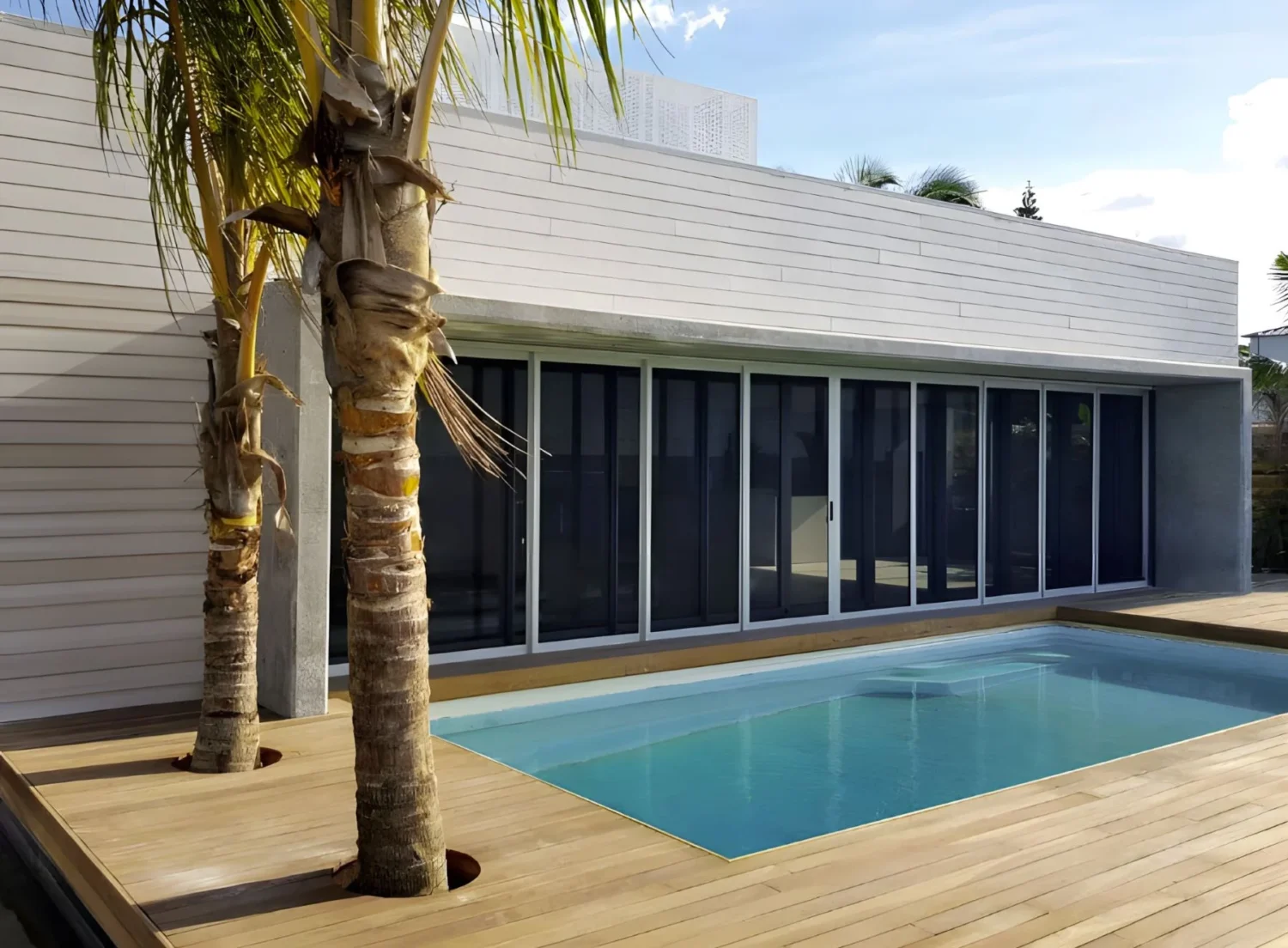
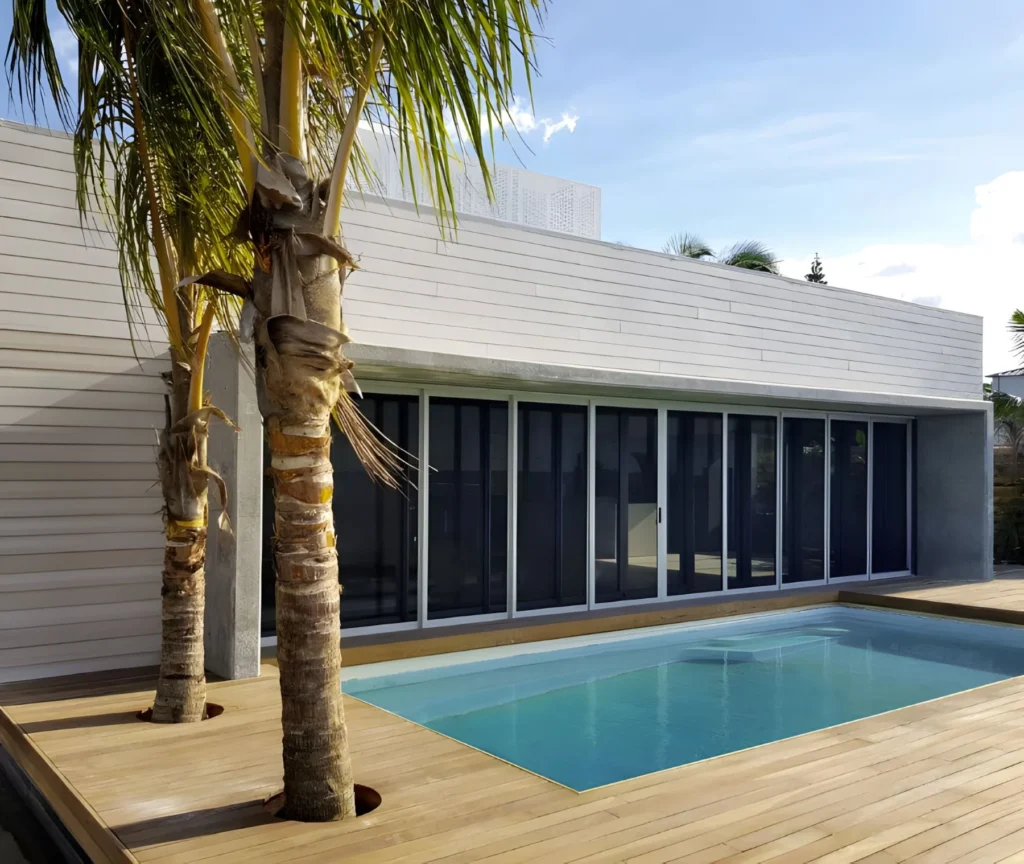
To achieve this, the owner turned to a specialist team based in Sydney. Their expertise in high‑performance architectural screening was central to the success of the build. Working from Australia, they engineered more than 50 custom Amplimesh SupaScreen doors and windows, including a bespoke 10‑panel sliding system designed specifically for the villa’s vast openings.
Every element – from the custom tracking system to the marine-grade frames – was crafted in Sydney before being shipped to Mauritius for installation. Their Sydney workshop became the testing ground for every junction, movement and alignment, with full‑scale mock‑ups used to ensure the oversized panels would glide effortlessly even in the humid, salt‑rich climate. The result is a seamless integration of Australian engineering and island architecture.
For the client it was important that the screening system could integrate with the expansive glazed openings, allowing the home to stay open to the ocean – the breezes, the light, the soundscape – while offering the kind of protection that brings peace of mind during cyclone season.
Amplimesh SupaScreen was the brand of choice as it is engineered specifically for harsh coastal environments and tested to some of the highest wind‑borne debris requirements in the security industry. Aesthetically, the panels present as finely resolved architectural elements, with crisp sightlines and a uniform mesh that reads as a subtle extension of the home’s glazing rather than an added layer.
Coastal architecture demands materials that resist corrosion. SupaScreen is manufactured from 316 marine‑grade stainless steel mesh, a material chosen for its exceptional durability in salt‑rich environments. Unlike standard stainless steel, it contains molybdenum, which significantly improves resistance to pitting and corrosion, two of the most aggressive threats to coastal structures.
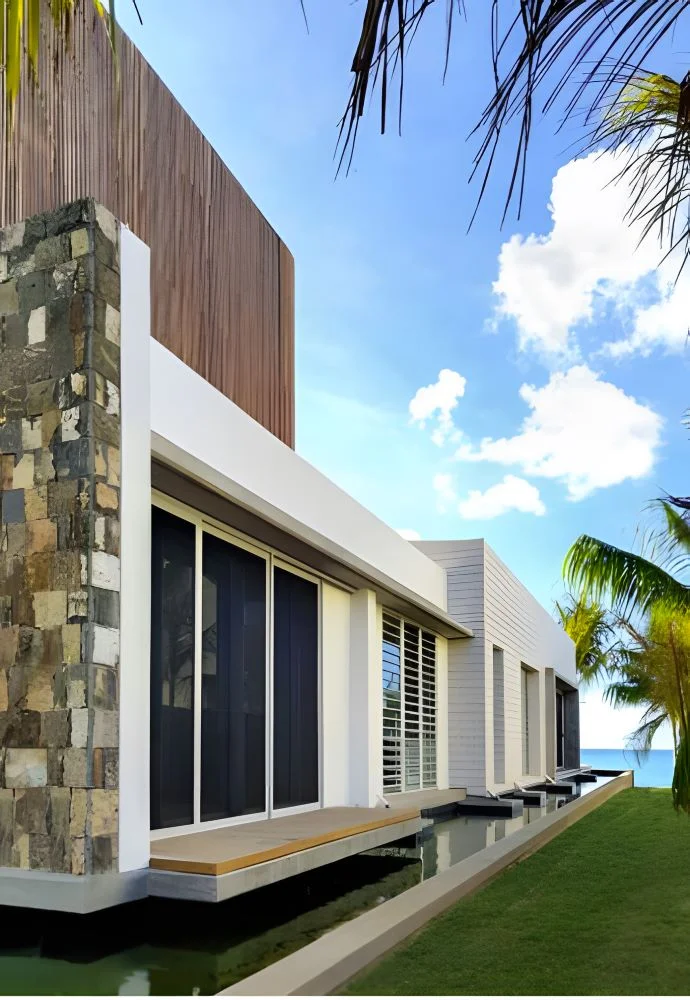
In a location where airborne salt can degrade inferior products within months, the long‑term performance becomes a critical component of the home’s longevity. The mesh maintains its structural integrity and refined appearance even under constant exposure, ensuring that the villa’s clean architectural lines remain uncompromised.
In Mauritius, where the sea is both beautiful and destructive, this villa stands as a testament to what’s possible when design, engineering and landscape work in harmony. The home is deeply connected to the natural world yet resilient enough to withstand it. The screens preserve the villa’s panoramic ocean views, allow natural airflow, and maintain a minimalist aesthetic – while delivering world‑class protection. This is the new standard for coastal luxury: homes that embrace the beauty of their environment without being vulnerable to it.
For further information, visit www. https://amplimesh.com.au/