
Outdoor living has become part of everyday life for many Australian households. A pergola is no longer just somewhere to put a barbecue or an outdoor setting. For plenty of families, it’s where birthdays are celebrated, weekends are spent with friends and long summer evenings naturally drift outdoors.
That is one reason the style of pergola you choose matters just as much as the materials it’s built from, and lately, gable pergola is becoming a popular choice.
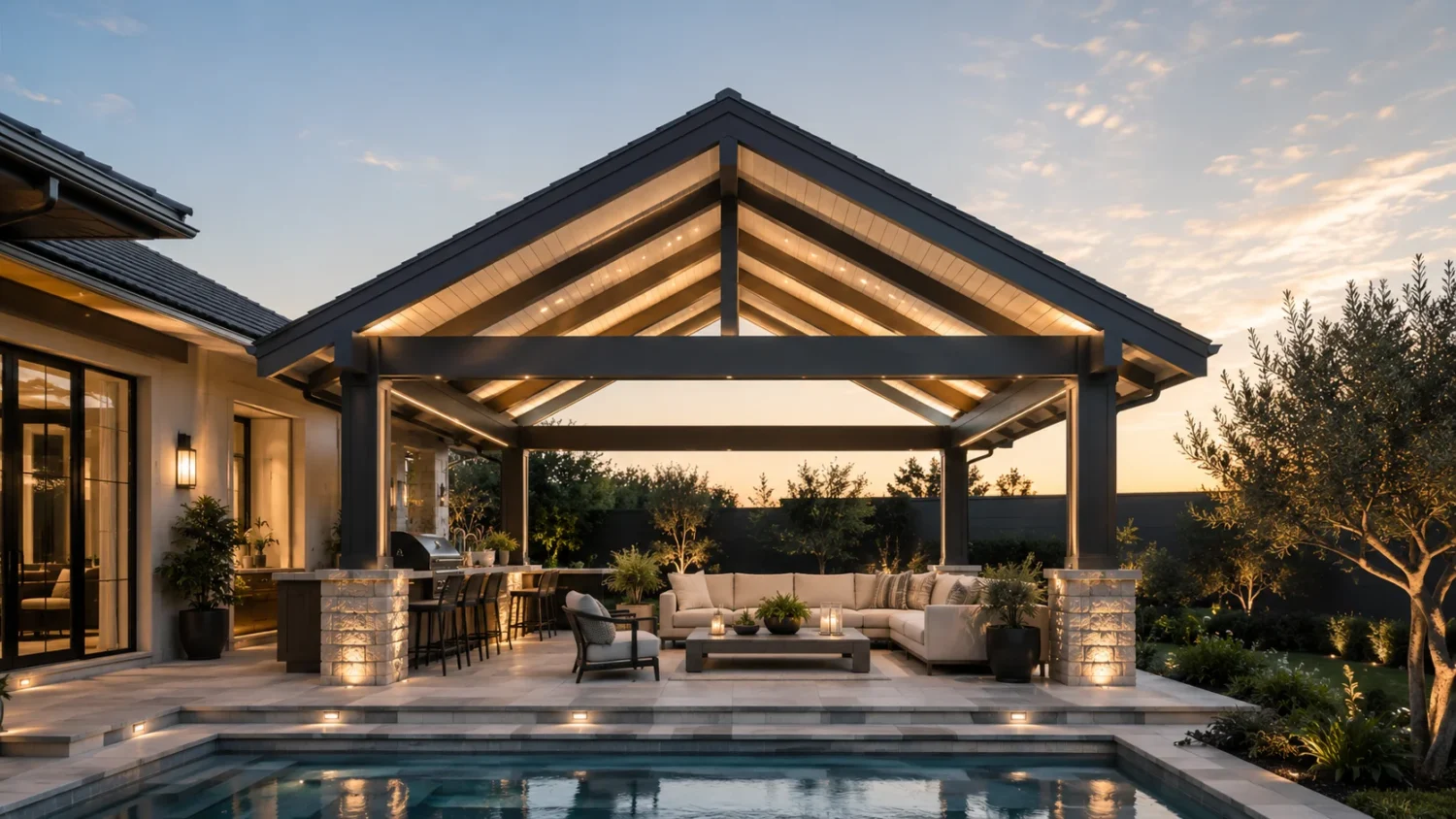
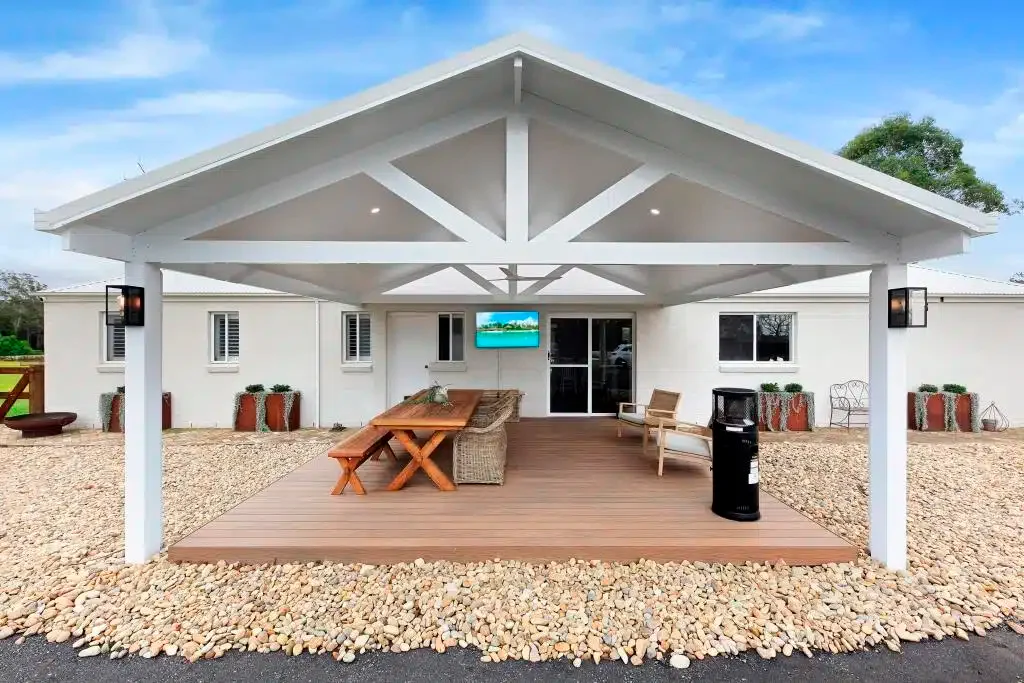
A gable pergola is recognised by its pitched roof, where two roof sections slope upwards to meet along a central ridge. From either end, the roof forms the familiar triangular shape that gives the design its name.
Unlike a flat-roof pergola, the raised centre creates a much taller ceiling. Even before furniture or lighting is added, the space tends to feel more open and less confined. That extra height is one of the biggest reasons homeowners choose this design, particularly when the pergola is intended to become a regular entertaining area rather than occasional weather protection.
Why Are Gable Pergolas Well Suited to Australian Backyards?
Here are reasons why gable pergolas feel like the natural choice for Australian backyards:
More Natural Light Without Feeling Closed In
One concern with some covered outdoor areas is that they can make part of the backyard noticeably darker.
Because of the raised roof profile, a gable pergola often feels brighter and more open than lower, flatter alternatives. Light can filter through the surrounding space without creating the impression that you’re sitting underneath a heavy roof.
That balance between shelter and openness is one reason the design continues to appeal across a wide range of Australian homes.
A Sloping Roof Helps Manage Rainwater
Heavy rain isn’t unusual in many parts of Australia, so roof design matters. A pitched roof naturally encourages rainwater to run off instead of collecting overhead. Good drainage finishes the job. Like any outdoor structure, though, good results come down to proper planning as much as the roof itself.
Suitable for Different Backyard Sizes
A gable pergola isn’t only suited to large backyards. It can work just as well over a smaller patio as it can above a larger entertaining area. When it’s planned properly, the pergola feels much like it belongs with the rest of the home.
Many homeowners building or renovating homes in Sydney also use a pergola to create a smoother transition between the house and the backyard.
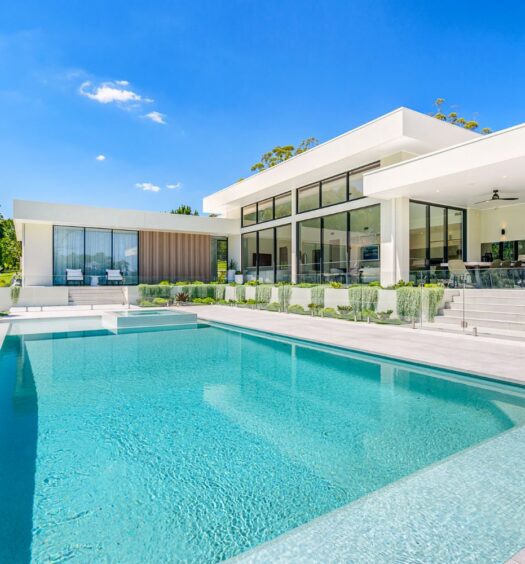
Perfect Shade Structure for Swimming Pools
A gable pergola can work particularly well beside a pool, offering welcome shade without making the area feel closed in. The higher roof helps keep the space light and open, whether it’s used for relaxing, dining or keeping an eye on the kids.
To get the best result, the pergola should fit comfortably with the pool’s layout, paving, drainage and a well-designed fence that maintains the required safety barrier.
How Does a Gable Pergola Improve Airflow Outdoors?
Australian summers can make covered outdoor areas surprisingly warm, particularly if the roof sits low or traps heat. A higher roofline won’t change the weather, but it can make the area noticeably more comfortable when combined with good positioning and an open design.
Of course, airflow isn’t determined by roof height alone. Sunlight, prevailing winds, nearby buildings and surrounding trees all influence how comfortable a pergola feels throughout the year.
For that reason, many homeowners speak with experienced pergola builders in Sydney before settling on the final position and design.
Nonetheless, here’s how a gable pergola improves airflow outdoors:
Extra Ceiling Height Gives Warm Air Somewhere to Go
Warm air naturally rises. Because a gable pergola has a raised centre rather than a flat ceiling overhead, there’s more room for that warmer air to collect above the occupied part of the space.
The higher roof simply gives the space more room to breathe. It feels lighter and less confined, particularly when the sides remain open and fresh air can move through naturally.
Open Sides Help Air Move More Freely
A raised roof can make an outdoor area feel noticeably less enclosed. Combined with open sides, it allows air to circulate more freely instead of becoming trapped beneath the roof. When a breeze reaches the structure, it can pass beneath the roof rather than becoming trapped inside.
That becomes particularly useful around outdoor kitchens and barbecue areas, where cooking heat and smoke can otherwise linger. Good airflow won’t eliminate heat altogether, but it can make the area more pleasant to use over longer periods.
Do You Need Council Approval for a Gable Pergola?
Approval requirements vary between states, councils and even individual properties. The approval process isn’t the same for every pergola. Details such as the roof, size and placement often determine what’s required.
The table below provides a general comparison only.
| State | General exemption thresholds | Important conditions for gable pergolas |
| New South Wales | Generally up to 25m², no higher than 3 metres, positioned behind the building line and at least 900mm from most boundaries. | Extra conditions may apply in heritage, bushfire-prone and rural areas. Some rural properties require larger setbacks. |
| Victoria | Unroofed pergolas up to 20m² and 3.6 metres may be exempt under the Building Regulations 2018 | Roofed structures may be treated differently and often require a building permit. |
| Queensland | Small structures up to 10m² may qualify for exemptions under certain height limits. | Larger roofed pergolas generally require assessment. Cyclone-prone regions may have additional structural requirements. |
| Western Australia | Some open or permeable-roof pergolas up to 20m² may be exempt. | Roofed structures are often classified as patios and may require approval. |
| South Australia | No single statewide exemption applies in every situation. | Requirements depend on planning rules, roof type, zoning and property characteristics. |
Keep In Mind
Every property comes with its own planning considerations. Setbacks, overlays, drainage and pool safety requirements can all affect what’s possible, so confirming the current rules before construction is time well spent.
A well-designed gable pergola isn’t just about appearance. It should suit the way you use your outdoor space, feel comfortable throughout the year and fit naturally with the rest of your home.
Choosing A Pergola That Works for the Way You Live
A gable pergola offers more than a distinctive roofline. The additional height can improve airflow, the pitched design helps with rainwater runoff, and the open layout often creates a brighter, more comfortable place to spend time outdoors.
Every property is different, though. The orientation of the home, available space, local planning requirements and the way your family uses the backyard should all influence the final design.
Taking the time to plan those details early usually leads to an outdoor area that feels comfortable today while remaining practical for years to come.