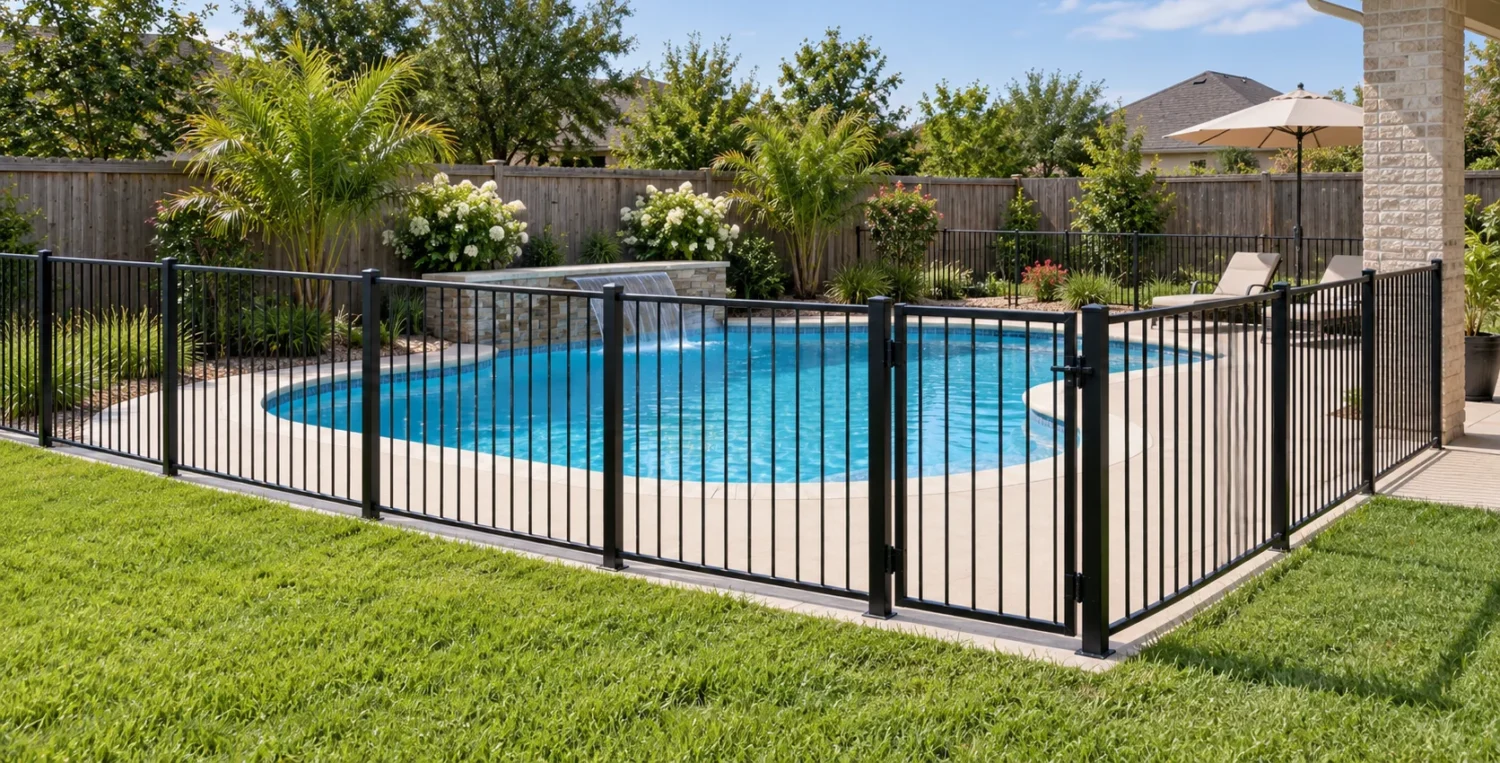

Beyond the compliance requirements every pool barrier must meet, there’s genuine room for style and personal preference in how that barrier actually looks. The right pool fencing Melbourne homeowners choose does more than tick a safety box, it complements the overall look of the backyard and pool area rather than looking like an obligatory afterthought bolted around the edge.
Here’s how to think through the style decision once compliance requirements are understood as the non-negotiable baseline.
Glass Panels for Uninterrupted Views
Frameless or semi-frameless glass panelling remains the most popular choice for Melbourne pool areas precisely because it preserves the visual connection between the pool and the surrounding garden or entertaining area. Unlike a solid or heavily framed fence, glass lets you watch children swimming from anywhere in the yard without an obstructed view, which is both a genuine safety benefit and a significant aesthetic advantage over more traditional fencing styles.
Glass also tends to suit a wider range of architectural styles than other fencing materials, working equally well alongside a modern minimalist home or a more traditional weatherboard property, which is part of why it’s become the default choice for many Melbourne renovations rather than just new pool installations.
Matching Fencing to Your Overall Landscape Design
Pool fencing shouldn’t be considered in isolation from the broader landscaping around it. Post spacing, gate placement and even the colour of fittings like spigots and handrails all interact with paving, planting and outdoor furniture choices. Thinking through the pool area’s overall design holistically, rather than choosing fencing as a final, separate decision, tends to produce a far more cohesive finished result.
Black Fittings Are Having a Moment
While traditional brushed stainless steel fittings remain popular, black powder-coated fixtures have become an increasingly common choice for Melbourne pool fencing, offering a more contemporary, high-contrast look against the glass. This styling choice pairs particularly well with dark-toned pool coping or modern architectural homes, though it’s worth checking maintenance requirements, since darker fittings can show water spots more readily than lighter finishes in some conditions.
– Frameless glass: maximum visibility and a premium, modern aesthetic.
– Semi-frameless glass: strong visual openness at a more moderate cost.
– Glass and aluminium combination: cost-effective compliance with a lighter overall look than solid fencing.
– Black fittings: a contemporary alternative to traditional stainless steel finishes.
Getting an Accurate Quote for Your Specific Yard
Pool fencing costs vary considerably based on total linear length, ground conditions, gate hardware, and the specific glass configuration chosen. Rather than relying on a rough online estimate, an on-site measure and quote from an experienced local installer gives a far more accurate picture of cost, and often surfaces site-specific considerations, like sloped ground or existing paving, that affect both installation approach and final price.
Don’t Forget About Gate Placement and Traffic Flow
Beyond the fencing material itself, where you position the gate has a real impact on how naturally the pool area gets used day to day. A gate placed too far from the main entertaining area or awkwardly positioned relative to how people actually move through the yard tends to encourage shortcuts, like propping the gate open, which undermines the entire safety purpose of the barrier in the first place.
Thinking through daily traffic flow, from the back door to the pool, alongside where visitors are most likely to enter the yard, helps determine the most sensible and genuinely usable gate position before installation begins, rather than adjusting it afterward once the rest of the fencing is already in place.
Considering Future-Proofing Your Design
If you are planning other backyard renovations down the track, such as a deck extension, outdoor kitchen or landscaping overhaul, it is worth discussing these future plans with your pool fencing installer now. Designing the barrier with reasonable flexibility, rather than locking in a layout that would need costly modification for a future project, can save considerable expense and disruption further down the line.
This kind of forward planning is particularly relevant for young families, where backyard needs often change significantly over just a few years as children grow. A fencing configuration that allows for future gate relocation or a straightforward extension gives genuine flexibility without needing to replace the entire barrier as your outdoor space evolves.
Balancing Style Preferences With Your Household’s Needs
Style choices should also reflect who actually uses the pool area day to day. A young family with small children might prioritise maximum visibility above all else, while a household without young children might place relatively more weight on a particular aesthetic or material finish that suits their broader outdoor entertaining style.
Discussing these priorities honestly with your installer, rather than simply choosing whatever looks best in a display photo, leads to a finished result that genuinely suits how your household actually lives day to day around the pool.
Final Thoughts
The best pool fencing choice balances genuine compliance with a style that complements your specific backyard, rather than treating the barrier as a purely functional necessity. Taking the time to consider glass configuration, fitting colour and overall integration with your landscaping pays off in a finished pool area that feels intentionally designed rather than simply fenced off.
Booking a measure and quote early in your broader landscaping or renovation planning also helps ensure the pool fencing timeline aligns with other trades working in the same area, avoiding the frustration of a finished garden that then needs to accommodate fencing works after the fact.