

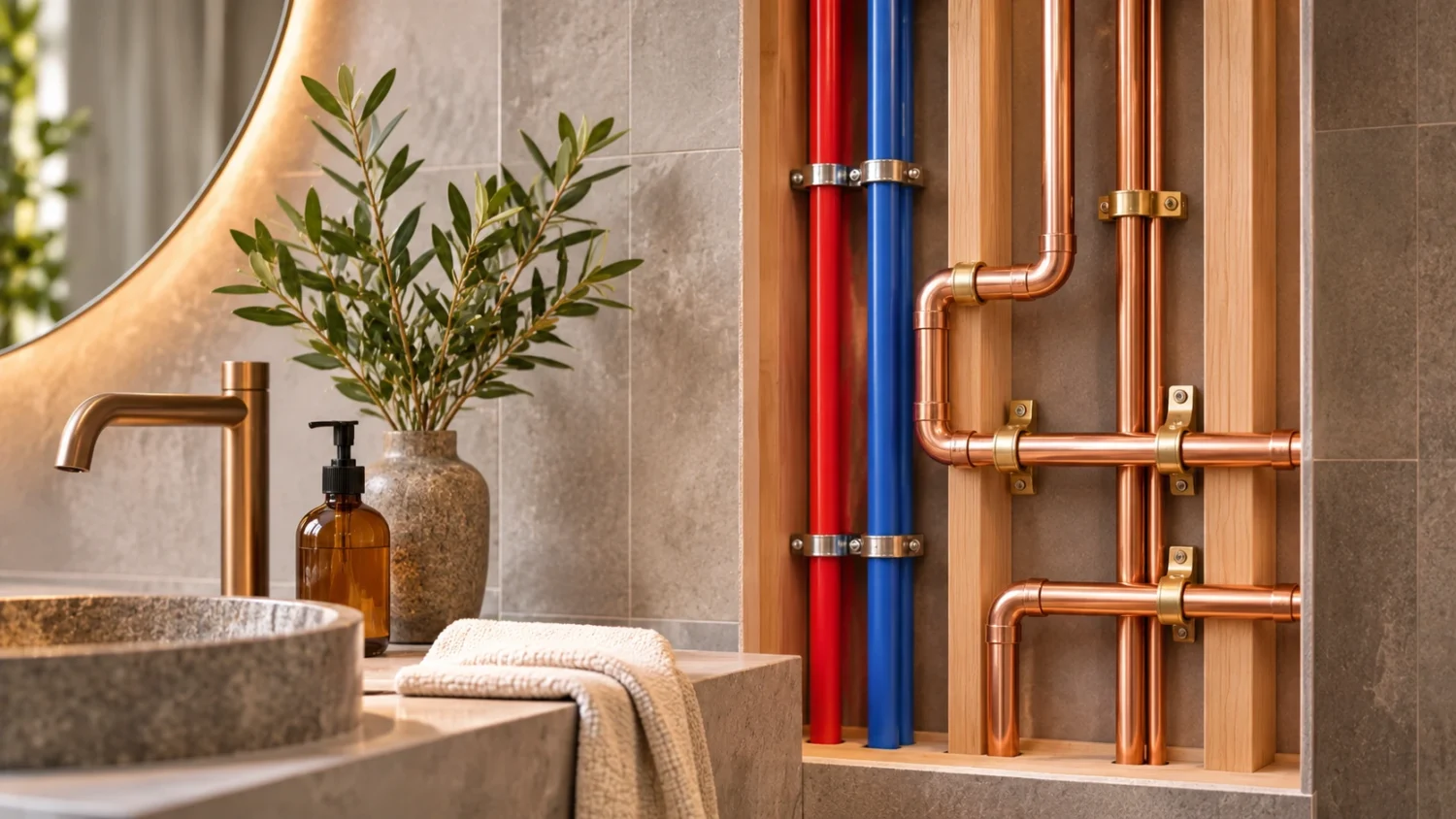

Neither PEX nor copper is automatically the more sustainable choice for every home. PEX uses a lightweight material and can require fewer fittings during installation, while copper has a major advantage when it comes to recycling and material recovery.
Infrastructure Australia found that embodied carbon from construction activity accounted for 10% of Australia’s national carbon emissions in 2023, with material manufacturing responsible for 75% of upfront embodied carbon.
To compare PEX vs copper pipes fairly, you need to look at their entire lifecycle, from manufacturing and installation. Problems such as pipe leaks at home can also shorten the useful life of parts of your plumbing system and lead to repairs, replacement materials and additional waste.
What Makes a Pipe a More Sustainable Choice?
Manufacturing construction materials accounted for 75% of upfront embodied carbon from Australian buildings and infrastructure. So when you’re choosing pipes for your home, it’s worth looking at more than how the material performs once it’s installed.
Sustainable plumbing aims to reduce water, energy and material use over the life of your home. For your pipes, that means choosing materials that suit the application, can remain in service for as long as possible and do not require unnecessary materials, repairs or replacement. It also means considering how much waste is created and what can be recovered when the plumbing is eventually removed.
That’s why a lower carbon footprint doesn’t automatically make one pipe more sustainable overall. Looking at the full lifecycle gives you a better way to compare your options.
PEX vs Copper Sustainability Comparison
Several factors affect the environmental impact of PEX and copper pipes. You’ll find that each material performs differently depending on the sustainability measure you consider. Here’s how PEX and copper compare across the main areas.
| Sustainability Factor | PEX | Copper |
| Material weight | Lightweight | Heavier |
| Installation | Flexible runs can reduce the number of fittings | Rigid pipe requires more fittings for changes in direction |
| Durability | Can be affected by heat, pressure, UV exposure and physical damage | Corrosion can be affected by water chemistry and operating conditions |
| Drinking-water considerations | Products used for drinking water must meet Australian requirements | Water chemistry and stagnation can affect copper corrosion and leaching |
| End-of-life recycling | More difficult to recycle | Highly recyclable |
| Circularity | Limited compared with copper | Strong potential for material recovery and reuse |
Looking at these differences can help you decide which material better suits your home and your sustainability priorities.
How Does PEX Compare on Environmental Impact?
PEX is made from cross-linked polyethylene, so its environmental considerations are different from those of metal pipes such as copper. Its low weight and flexible construction can reduce some of the materials involved in transporting and installing a plumbing system, but those advantages need to be considered alongside how PEX is manufactured, used and eventually disposed of.
Flexible Installation Can Reduce Fittings
PEX can bend around corners and change in direction where a rigid pipe would require additional joints or fittings. For example, a suitable PEX installation can mean:
✓ Longer continuous pipe runs with fewer connections along the route.
✓ Fewer elbow fittings where the pipe can safely bend to change direction.
✓ Less joining when running pipes through walls, floors and other building spaces.
✓ Simpler routing during renovations where access to existing spaces is limited.
But using fewer fittings does not automatically make a plumbing system more sustainable. It simply means the installation can require fewer individual components in some layouts.
How Does Copper Compare on Environmental Impact?
Copper pipe starts with copper ore. In Australia, most copper ore comes from underground mines, where the ore is brought to the surface, crushed and finely ground. Copper-bearing minerals are then separated from waste material before the concentrate moves on for further processing, which can include smelting.
For new copper, the production pathway can include:
→ Mining copper-bearing ore from the ground
→ Crushing and grinding the ore for processing
→ Concentrating copper-bearing minerals and separating waste material
→ Smelting or other processing to recover copper metal
→ Manufacturing the refined copper into products such as plumbing pipe
Copper Can Be Recycled Again and Again
Commonwealth Scientific and Industrial Research Organisation (CSIRO) describes copper as highly recyclable and reports that about two-thirds of all copper produced over the past century is still in use. It also reports that recycled sources supplied around 32% of annual global copper use over the past decade.
Old copper pipes can retain value after they are removed from your home. The copper can be recovered and recycled for use in new products.
How Water Conditions Affect Copper Pipe Durability
The condition of the water flowing through copper pipes can affect how they perform over time. The Australian Drinking Water Guidelines identify low pH, low hardness and prolonged water stagnation as factors that can contribute to copper corrosion and copper entering drinking water. Water flow also matters, as excessively high velocities can contribute to erosion-corrosion under certain conditions.
Making a More Sustainable Plumbing Choice
PEX makes the stronger case when you want lightweight pipe, flexible routing and fewer fittings, particularly for renovations where pipes need to run through existing walls, floors or tight spaces. Copper makes the stronger case when recyclability and material recovery are higher priorities. It can also suit homes where the pipe will be exposed or installed in locations where physical damage from rodents is a concern.
Australia has a goal to double its circularity by 2035, but reaching it also comes down to the choices made in individual homes. You don’t need to replace working pipes just to make your plumbing more sustainable. Keeping serviceable pipes in use, choosing the right material when replacement is needed and making sure old materials are recovered where possible are practical ways you can reduce waste and get more life from the resources already in your home.
You Might Also Like

