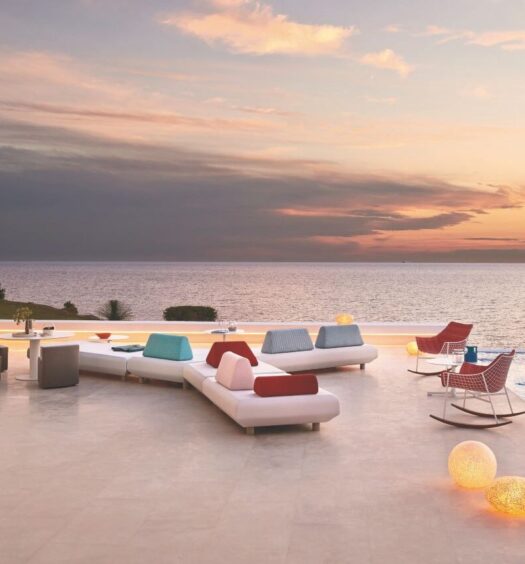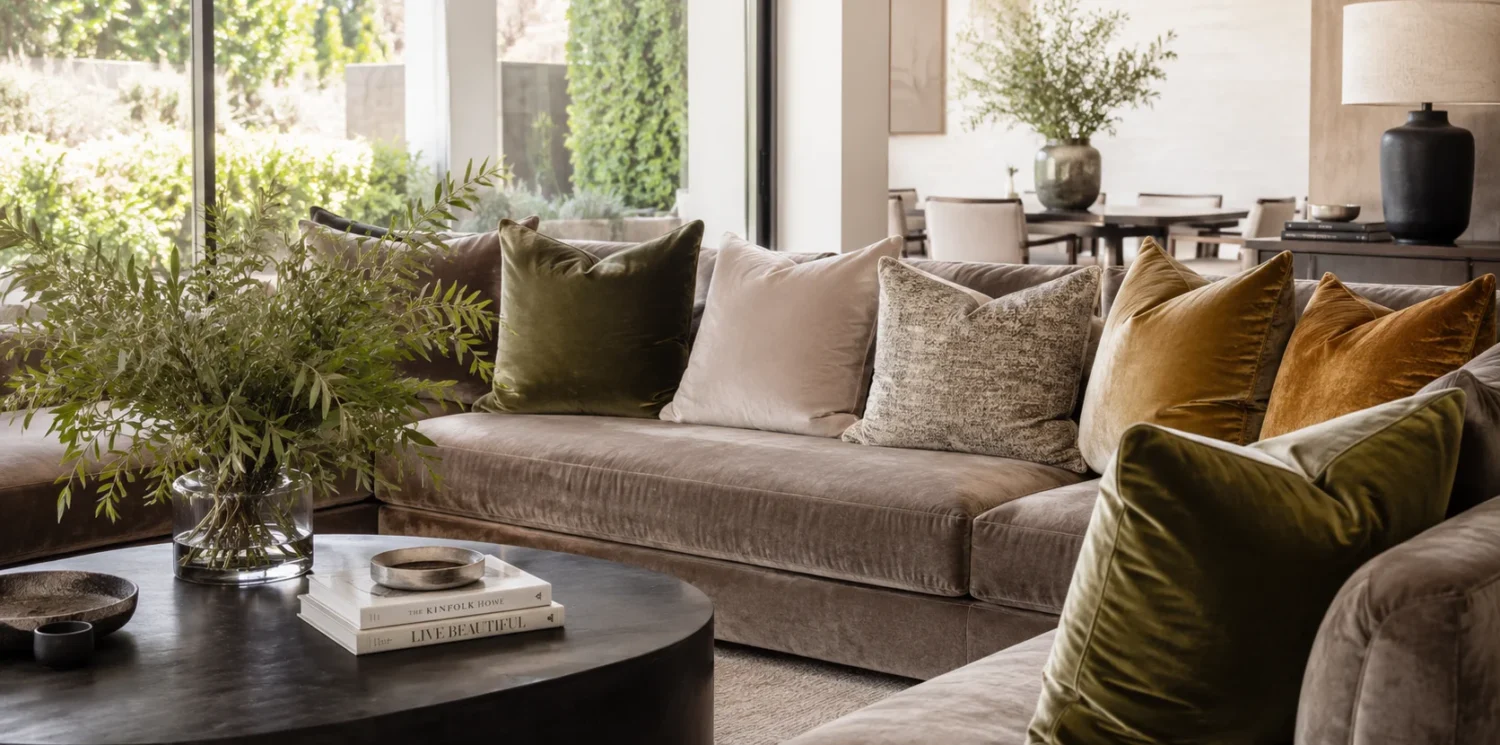

Walk into most new Australian homes and you will notice the same thing: walls have disappeared. Kitchen, dining, and living zones now flow into one shared space, and the humble sofa has become the room’s centrepiece from every direction. That shift changes the way we should think about soft furnishings. A cushion can no longer just look good from the doorway; it needs to hold its own from the kitchen bench, the dining table, and the hallway all at once. Before layering colour and texture into your own space, it is worth browsing a dedicated range to see what actually works in a light-filled, multi-angle Australian living room.
The Open-Plan Effect
In a traditional lounge room, a cushion only really needed to look right from one viewpoint. Open-plan living removes that comfort. Because the sofa often sits in the middle of a combined kitchen, dining, and living zone, every side of it is on show. As a result, off-centre motifs or one-directional prints can look unbalanced when viewed from the dining table or the breakfast bar. A better approach is to choose symmetrical patterns, solid colours, or all-over textures that read well from any angle in the room.
Open-plan zones also see more foot traffic than a closed lounge ever did. Kids, pets, and weekend guests move through the same space, so durability matters just as much as style. Tightly woven fabrics, such as cotton-linen blends or performance weaves, resist pilling and keep their shape after months of everyday use.
Living With North-Facing Light
Many Australian homes are designed around north-facing windows, which flood living areas with warm afternoon sun. This makes a room feel bright and welcoming, but it also fades fabric faster than most people expect. For that reason, colourfastness deserves a moment of thought before you commit to a shade. Deep, saturated tones like navy, forest green, and terracotta tend to show fading first, while muted neutrals and earthy hues age far more gracefully.
If a bold colour is non-negotiable, rotate cushions between sun-drenched and shaded corners of the room throughout the year. It is a small habit that noticeably extends their life. Natural fibres such as linen and cotton also tend to handle UV exposure better than synthetic blends, so it pays to check the fabric label before checkout.
Styling for Every Angle
Since open-plan sofas are viewed in the round, layering becomes the real styling tool. Start with a base layer of larger, plain cushions in a neutral tone, then build interest with smaller accent pieces in pattern or texture. This method keeps the sofa looking considered from any seat in the room, rather than dressed up on one side only.
Mixing proportions also helps. A 55cm square paired with a 40cm square and a lumbar cushion creates rhythm without tipping into clutter. Textured finishes, think bouclé, ribbed weaves, or subtle jacquard, add depth without fighting for attention across the room.
Playing Well With Mirrors and Statement Pieces
Open-plan spaces often lean on mirrors to bounce natural light around and make the zone feel larger. Since a mirror reflects your soft furnishings just as much as the view outside, it is worth choosing cushions that hold up in reflection too. Directional text or asymmetric prints can look strangely reversed when a mirror sits opposite the sofa, so simpler patterns tend to age better visually.
The same logic applies to statement pieces. If your living zone includes a bold armchair, a patterned rug, or a striking pendant light, let the cushions support that piece rather than compete with it. Pull one or two accent colours from the statement item into your cushion palette and keep the rest of the room fairly calm. That way, the eye lands on a clear focal point instead of bouncing between clashing patterns.
Practical Notes for Australian Conditions
Style aside, a few practical factors are worth building into the decision:
– Coastal air and humidity: homes near the coast benefit from mould-resistant fills and machine-washable covers, since salt air and humidity affect fabric over time.
– Ventilation: in cross-ventilated open-plan homes, lighter fills such as polyester or feather-blend inserts dry faster after airing than dense foam.
– Seasonal rotation: Australia’s distinct seasons make it easy to swap covers, linen and cotton through summer, deeper tones and heavier weaves through winter, without replacing the inserts each time.
– Family-friendly fabrics: removable, zip-up covers make cleaning far simpler in busy households where cushions double as everyday seating.
The Takeaway
Choosing cushions for an open-plan Australian home really comes down to three things. They need to look balanced from every angle, hold their colour under strong natural light, and stand up to daily life. Layer sizes and textures with intention, check fabric composition before buying, and let mirrors and statement pieces guide the palette, and the result is a room that feels considered no matter where you are standing in it.
Ready to see it in practice? Look for Australian-friendly designs from Shopica, built for open-plan living, north-facing light, and everyday family life, and find the pieces that pull your whole room together.
You Might Also Like