
Hot water is easy to overlook in a new build or major renovation, but it can account for around a quarter of household energy use. That makes it one of the highest-impact parts of an electrification plan, and an early decision helps with placement, acoustics, plumbing runs, and compliance.
Heat pump hot water systems have become a practical path to efficient electric hot water. In Australia, they can use about a third of the electricity of a conventional electric storage system. This guide explains how they work, what to specify, and the Victorian rebate and standards settings that affect projects in 2026 and 2027.
How Heat Pump Hot Water Works, Without the Jargon
A heat pump water heater moves heat instead of generating it directly. It draws warmth from the surrounding air and transfers it into a storage tank, using electricity to run a compressor. Because it moves existing heat, it can deliver more usable heat than the electrical energy it uses.
That relationship is described by coefficient of performance, or COP. A COP of around four means roughly four units of heat output for every one unit of electricity input, but real-world performance changes with air temperature, water use, and installation quality.
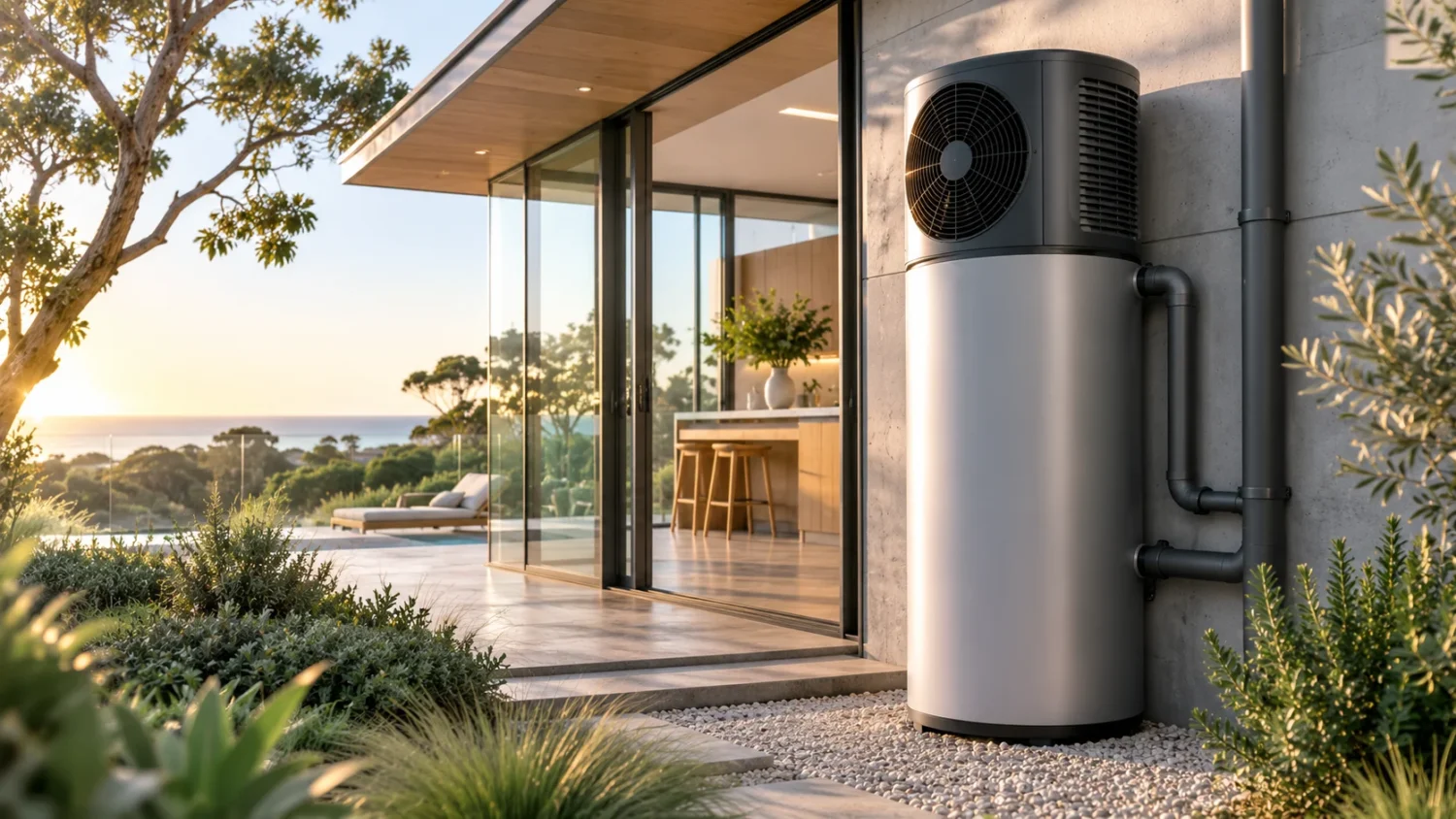
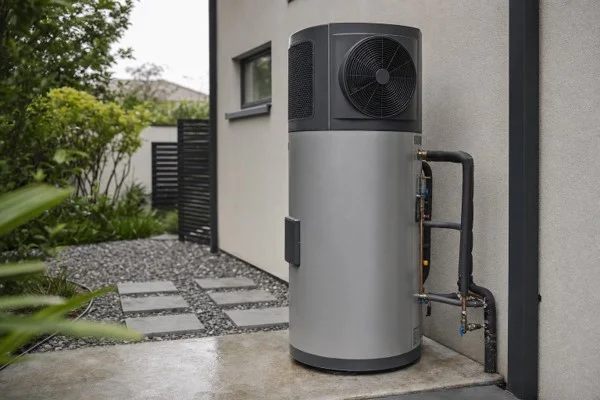
Two layouts are common. Integrated units combine the compressor and tank in one cabinet. Split systems separate the outdoor compressor from an indoor or nearby cylinder, which gives more placement flexibility. Refrigerant choice also matters, especially in cooler parts of Victoria, where CO2 systems can hold performance better in cold conditions.
What To Specify for a Modern Home
Treat selection as a short checklist you can share with your builder or plumber:
– Capacity: Use YourHome and Victorian Energy Upgrades sizing guidance with your plumber, then adjust for baths, ensuites, and entertaining.
– Recovery rate: Check how quickly the tank reheats after heavy use.
– Refrigerant: Match refrigerant to climate; CO2 can suit colder sites.
– Noise: Compare manufacturer-stated decibel figures at one metre and consider where that sound will travel.
– Low-ambient limits: Check the minimum operating temperature and frost behaviour.
– Controls: Use timers or smart scheduling to align heating with solar generation.
– Warranty: Compare tank, compressor, and labour terms.
Placement, Acoustics and Aesthetics
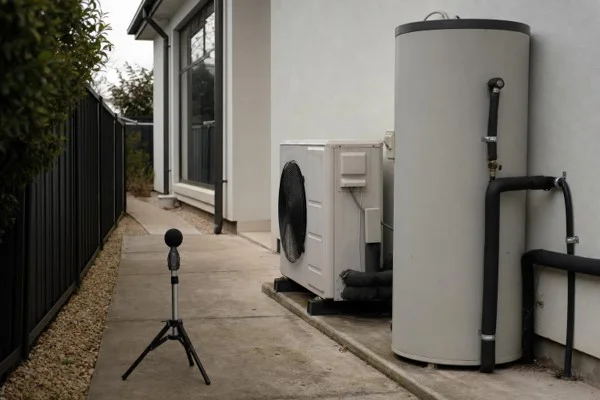
Because the outdoor unit produces sound similar to an air conditioner, siting it well is essential. Victorian guidance recommends keeping heat pumps away from bedrooms, and the same logic applies to a neighbour’s bedroom wall. Plan the location during design so pipe runs to wet areas stay short and heat losses stay low.
EPA Victoria’s residential noise rules include domestic hot water and heat pump equipment. They restrict operation during certain quiet hours, including early mornings and late evenings, so check current time windows before setting timers.
Making It Work With Solar
A heat pump pairs naturally with rooftop solar. Schedule the main heating cycle for midday so the system can draw on solar generation rather than grid power. Off-peak tariffs can reduce bills, but daytime heating that uses your own generation is usually stronger for cost and carbon. This timing also supports broader home electrification choices, such as induction cooking, battery settings, and efficient space conditioning.
Costs and Incentives in 2026
Two support mechanisms are worth understanding. First, eligible solar water heaters and air-source heat pumps on the Clean Energy Regulator’s register can create Small-scale Technology Certificates, or STCs. They are usually assigned to the installer as an upfront discount and can be sold through the STC Clearing House at $40, excluding GST. In 2026, the deeming period is five years, then it declines each year through to 2030.
The Solar Victoria hot water rebate is a 50% product-price rebate up to $1,000, or up to $1,400 for locally made products, applied after STC or Victorian Energy Upgrades discounts. From 1 July 2026, Solar Victoria has set a combined household income cap of $150,000 for its PV and hot water rebates. If you use a Geelong installer, ask them to show each discount line separately.
Regulatory and Safety Notes That Affect Design
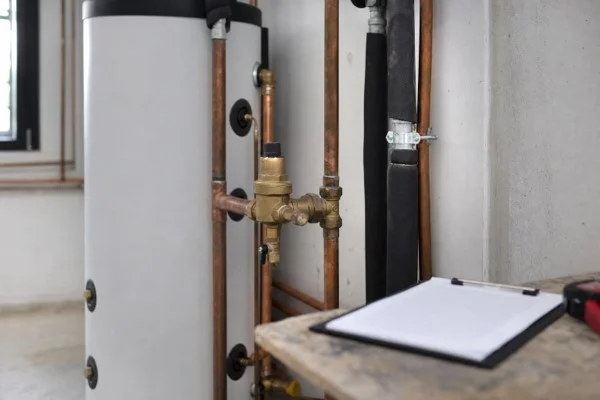
Two safety points shape the plumbing design. Storage must be kept at least 60 degrees Celsius to control Legionella, while a tempering valve mixes the output down to a safe delivery temperature of around 50 degrees at the taps. This is licensed plumbing work, not a DIY setting.
On the regulatory side, Victoria adopted NCC 2025 Volume Three on 1 May 2026 and updated the minimum STC table for solar and heat pump water heaters. From 1 March 2027, existing Victorian homes replacing end-of-life gas hot water must move to efficient electric options such as a heat pump.
Model Landscape Snapshots
Use the model landscape to shortlist features rather than chase a single brand. Match the model to your climate zone, acoustic targets, footprint, and hot water use.
Installing in Victoria: Rebates, Compliance and Who To Call
Getting the paperwork and placement right is where local knowledge helps. A qualified installer can run a site survey, confirm footprint and clearances, check the electrical circuit, and set timers for solar use. Some models need a dedicated 15A supply, so check before installation day.
If you are in Geelong and want local advice on sizing, eligible models, and the latest Victorian rebates, you can talk to a specialist such as Heat Pump Hot Water Systems Geelong for an on-site assessment and installation support. Treat that as one local option to explore rather than an independent comparison of the whole market.
A Practical Buying and Installation Checklist
– Book a site survey covering noise, clearances, and cylinder footprint.
– Confirm the electrical circuit the unit needs.
– Set timers to favour daytime solar heating where practical.
– Insulate pipe runs and keep them short to wet areas.
– Confirm the tempering valve and 60 degree storage setup with your plumber.
– Keep compliance certificates and the STC or rebate paperwork on file.
– On Geelong projects, ask your licensed installer to document sizing, rebate assumptions, and commissioning settings.
FAQ
Are heat pump hot water systems suitable for premium renovations in Victoria?
Yes, when they are specified early. The key design issues are cylinder footprint, outdoor unit clearances, acoustic paths, electrical supply, and short pipe runs to kitchens, laundries, and ensuites.
Can a heat pump hot water system use rooftop solar?
Often, yes. Timers or smart controls can schedule the main heating cycle during daytime solar generation, while still maintaining licensed-plumber settings for 60 degree storage and tempered delivery at taps.
Do Victorian rebates apply to every installation?
No. Eligibility depends on current Solar Victoria, VEU and STC rules, the registered model, household circumstances, and installation details, so confirm assumptions before ordering.
You Might Also Like