How to Design a Home Office You’ll Actually Use
Working from home has shifted from a temporary arrangement to a permanent lifestyle for millions of Australians. And if you are building a custom home, there has never been a better opportunity to design a workspace that genuinely supports the way you work, rather than simply making do with a spare bedroom or a corner of the kitchen bench.
A well-designed home office does more than look good on a floor plan. It improves focus, reduces friction in your daily routine, and makes it easier to do your best work without the distractions that come with poorly considered spaces. This guide walks through everything you need to think about when planning a home office as part of your custom build.
Start With Location
The position of your home office within the floor plan shapes everything that follows. The best home offices are close enough to the main living areas to be convenient, but separated enough to feel like a genuine workspace rather than an extension of the lounge room.
For families, locating the office near the entrance of the home is a popular choice. It creates a natural separation between work and family life and makes it easy to transition in and out of work mode without walking through the entire house.
If your work involves client meetings or video calls, consider proximity to a bathroom and the front door. Keeping professional visitors away from the private areas of your home is a practical detail that is far easier to plan for during the design phase than to work around later.
Noise is the other critical location factor. Rooms that face the street or share a wall with a living area or laundry can introduce background noise that disrupts concentration and affects the quality of calls and recordings. Positioning your office away from high-traffic zones within the home makes a noticeable difference to daily productivity.
Getting the Dimensions Right
One of the most common home office mistakes is underestimating how much space is actually needed to work comfortably. A room that feels adequately sized during the design phase can quickly feel cramped once a desk, shelving, filing, and seating are all in place.
For a single-person office, a minimum of 10 to 12 square metres gives you enough room for a generous desk, comfortable chair, storage, and a small meeting or reading area. If you share the space with a partner or need to accommodate client seating, plan for at least 15 to 18 square metres.
Ceiling height is an underappreciated dimension in home office design. Standard ceiling heights can feel oppressive in smaller rooms. Where the budget and design allow, raising the ceiling in the office to 2.7 metres or higher adds a sense of openness that makes long working days significantly more comfortable.
Natural Light and Ventilation
Lighting has a direct impact on productivity, mood, and eye health. A home office with generous natural light reduces reliance on artificial lighting, minimises eye strain during long screen sessions, and creates an environment that feels genuinely pleasant to spend time in.
Position your desk to take advantage of natural light without placing the screen directly in front of a window or in a position that creates glare. A desk positioned perpendicular to the window is generally the most practical arrangement, giving you the benefit of natural light without the downsides.
Ventilation matters equally, particularly in Australia’s warmer climates. A stuffy, overheated office drains energy and focus faster than almost any other environmental factor. Including an operable window, a ceiling fan, or a dedicated split system in the office design keeps the space comfortable year-round.
Storage and Organisation Built Into the Design
A cluttered workspace is a distracted workspace. Building storage directly into the office design, rather than relying on furniture added after the fact, creates a far more functional and visually calm environment.
Floor-to-ceiling shelving along one wall provides significant storage capacity without consuming floor space. Built-in cabinetry with a combination of open shelving and closed cupboards gives you flexibility to display items you want visible and conceal the things you do not.
A dedicated pinboard or visual planning area is one of the most practical additions to any working space, and one that is often overlooked until it is too late to incorporate cleanly. If you manage projects, schedules, or ideas visually, a quality pinboard built into the office design keeps planning visible and organised without taking over your desk.
A large cork notice board mounted directly to the wall is a simple and effective solution that keeps your most important information visible at all times. Planning this into the design phase means you can allocate the right wall space and ensure the board integrates cleanly with the rest of the room rather than feeling like an afterthought.
Technology and Connectivity Infrastructure
Nothing disrupts a productive work-from-home setup quite like poor connectivity or inadequate power access. Planning your technology infrastructure during the design phase is one of the highest-value investments you can make in your home office.
Work with your builder and electrician to map out exactly where your desk, monitors, and equipment will sit, then ensure power points and data outlets are positioned accordingly. Having power points at desk height on the wall behind your workstation eliminates the cable clutter that comes from running cords along the floor to distant outlets.
Hard-wired ethernet is worth including even if you plan to use Wi-Fi for most tasks. A direct network connection delivers faster and more reliable speeds for video calls, large file transfers, and cloud-based work. Installing the conduit during the build costs very little and saves significant hassle later.
Lighting control is another technology consideration that improves daily comfort in a home office. Dimmable LED downlights combined with a quality desk lamp give you the flexibility to adjust lighting intensity and warmth throughout the day, which supports focus during deep work and reduces eye fatigue during evening sessions.
Designing for Ergonomics From the Ground Up
Ergonomics is one of those subjects that feels abstract until poor posture or a badly positioned monitor causes the neck pain and headaches that make it immediately concrete. Designing your home office with ergonomics in mind from the outset prevents a long list of physical complaints that affect both health and productivity.
The key ergonomic considerations in the design phase are desk height, chair clearance, monitor position, and keyboard and mouse placement. A sit-stand desk setup, which allows you to alternate between sitting and standing throughout the day, is one of the most impactful ergonomic investments available and worth planning the space around.
Wall-mounted monitor arms free up desk surface, allow precise screen positioning, and create a cleaner, more flexible workstation layout. Planning for the right wall placement and ensuring the studs or backing are in the right position is a detail best handled during the build rather than retrospectively.
Including a Movement Space Alongside Your Office
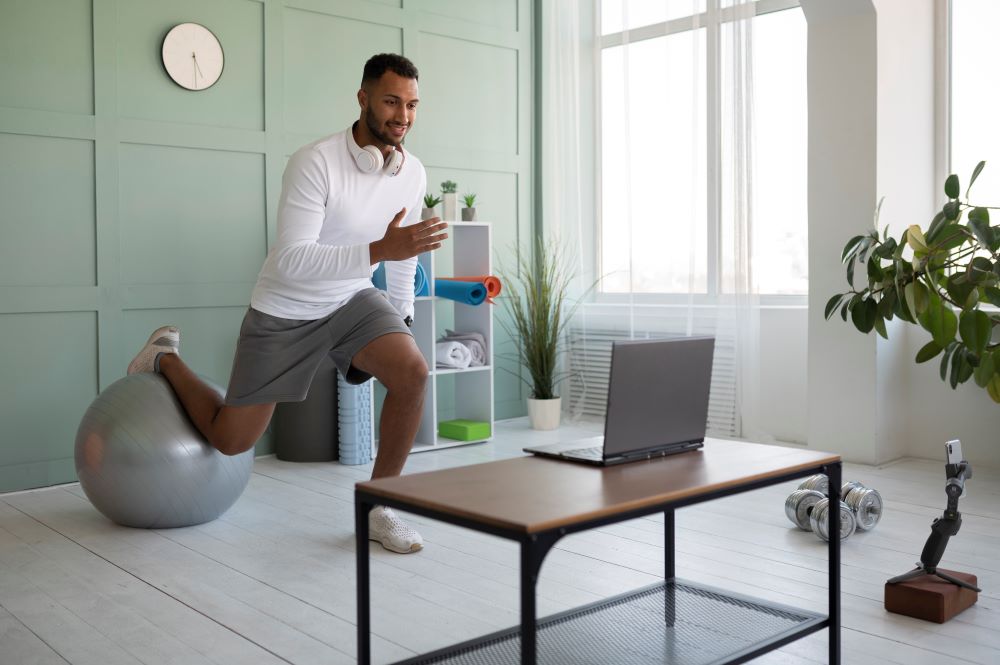
The relationship between physical activity and cognitive performance is one of the most well-established findings in productivity research. Regular movement throughout the workday improves focus, reduces mental fatigue, lifts mood, and supports long-term brain health.
If your custom home build allows for it, dedicating a small adjacent space to movement and exercise is one of the smartest decisions a home office designer can make. It does not need to be a full gym. Even a compact room of 12 to 15 square metres gives you enough space for the equipment that delivers the most return on investment.
Strength training equipment in particular takes up relatively little floor space while providing an enormous range of training options. A power rack or squat rack is the centrepiece of any serious home gym and allows for squats, bench press, pull-ups, and a full range of compound movements within a single footprint.
If you are fitting out a home gym space alongside your office, you can buy a squat rack through Kinta Fitness and find a commercial-grade option built to handle serious training. Having the equipment steps from your desk removes every excuse and makes a midday training session as accessible as making a coffee.
Rubber flooring, a wall mirror, and adequate ventilation round out a functional home gym space. Planning these details during the design phase means the room works properly from day one rather than requiring retrofitting later.
Acoustic Considerations
Sound management is one of the most technically nuanced aspects of home office design and one that is far easier and cheaper to address during construction than after the fact.
Wall insulation between the office and adjacent rooms reduces sound transmission significantly. Double-glazed windows buffer street noise, which is particularly valuable if your block is near a busy road or school. Solid-core doors outperform hollow-core doors in sound attenuation and make a noticeable difference to how much noise travels in both directions.
For those who record content, conduct frequent video calls, or simply work better in near-silence, acoustic panels mounted to walls or the ceiling absorb internal echo and improve the overall acoustic quality of the room. These can be incorporated cleanly into the office design as a deliberate aesthetic and functional element.
Making It a Space You Want to Be In
All the practical considerations in the world matter less if your home office does not feel like somewhere you actually want to spend time. The aesthetic quality of the space, how it feels, how it smells, how it looks at nine in the morning and five in the afternoon, has a genuine influence on motivation, mood, and the quality of your work.
Invest in a colour palette that promotes focus without feeling clinical. Incorporate plants, which improve air quality and add a sense of calm to any workspace. Choose materials and finishes that feel considered and personal rather than generic.
Your home office is a daily environment that shapes your professional output and your wellbeing simultaneously. Designing it with the same care and intention you bring to the rest of your custom home produces a space that earns its place in the floor plan every single day.