
You can walk into a house that cost several million dollars and feel very little. The stone is imported, the kitchen is German, the ceilings are high, the pool is long. Everything is technically impressive. And yet the house doesn’t feel like anyone thought particularly hard about it. It feels like someone spent seriously on finishes and then arranged them according to a plan that would have worked equally well on a different site, for a different family, in a different climate.
This is more common than the custom home industry usually admits. Budget alone does not produce bespoke design. Bespoke design comes from specificity – decisions that respond to this site, this family, this way of living, this set of relationships between inside and outside, between privacy and connection, between the architecture and the landscape around it.
When those decisions are right, you feel it. When they’re not, the expensive finishes don’t compensate.
Start With the Site, Not the Wishlist
The most distinguishing thing about a genuine custom home – the quality that most immediately separates it from an expensive volume build – is that it couldn’t sit anywhere else.
That sounds straightforward but it requires real discipline. Orientation decisions get compromised for symmetry. Views get sacrificed for a preferred interior layout. The natural topography gets flattened because working with it is more complicated than levelling it. Each individual compromise seems reasonable in isolation. Collectively, they produce a home that reads as indifferent to its specific location.
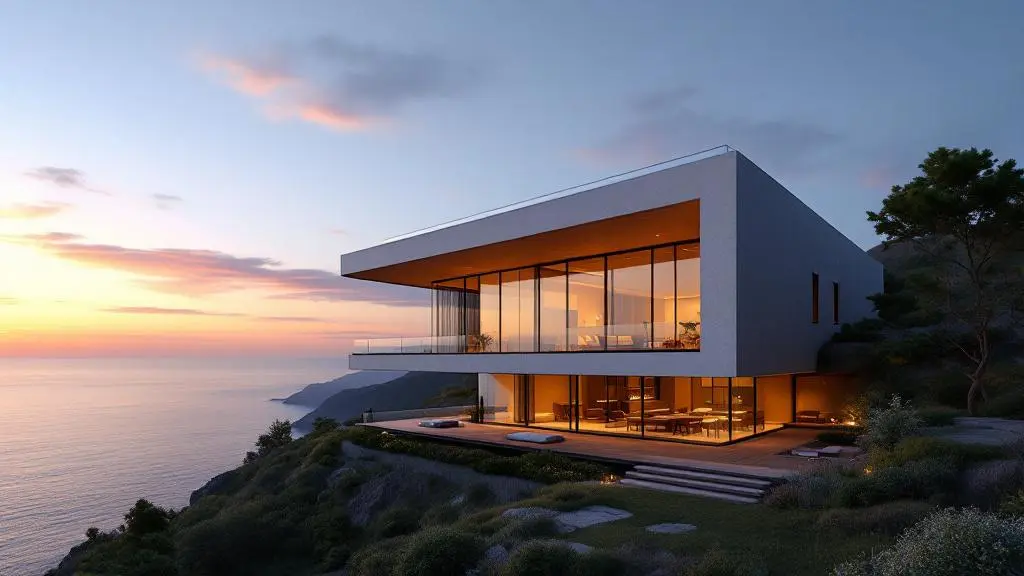
On a sloped site with a north-facing view, the design question is how the levels work to maximise solar access while capturing what the site is actually offering. On a narrow coastal block where neighbours are close on both sides, the privacy and light strategy will shape the entire architectural concept — courtyards, carefully controlled openings, the sequence from public to private through the plan. A bush site in a fire zone demands material and massing decisions that respond to the landscape as a threat as much as an amenity.
A home that ignores these conditions isn’t a custom home. It’s a standard plan placed on an irregular site.
The Plan Should Come From the Life
The brief that actually produces good custom design isn’t about features. It’s about patterns of living.
How the household moves through morning routines. Whether guests stay often and whether they need genuine privacy from the main bedroom wing. Whether there are children who need to be visible from the kitchen, or teenagers who need to be inaudible from the study. Whether one partner needs an acoustically separate workspace. Whether the car collection, the art, the wine, or the workshop demands its own spatial response.
These specifics generate layout decisions that a generic luxury plan doesn’t make. Where do the zones of the house sit relative to each other and why? Where is separation necessary and where is connection better? Where does outdoor living connect to interior living and how does that connection work at different times of day?
The families who feel most satisfied with their custom homes years after moving in tend to be the ones whose architects asked these questions seriously and built the answers into the plan rather than treating them as secondary to aesthetics.
Everything Needs to Be Pointing in the Same Direction
Complex custom homes involve a large number of interdependent decisions. The massing affects how light enters the interior. The façade materials need to relate to the landscaping. The interior atmosphere needs to be legible in the architecture rather than imposed on it afterward. When these things don’t align, the house registers as unresolved even when individual elements are individually strong.
In highly detailed custom homes, architects, builders, and owners often need to align around the same design intent long before construction begins. Concept sketches, material references, scale studies, and architectural visualization can help make choices around form, light, finishes, and spatial atmosphere easier to evaluate together. The decisions that are most expensive to revisit once construction is underway — structural form, material specification, the relationships between indoor and outdoor spaces — are the ones most worth resolving at design stage, when changing them costs time rather than money.
Materials Should Have a Logic Between Them
The homes that feel most coherent tend to have material palettes where the choices relate to one another, not palettes assembled from separate enthusiasms.
A home that uses a bleached concrete aggregate on the exterior, the same concrete polished through the main living areas, a complementary stone on the kitchen surfaces, and warm Australian timber in the cabinetry is building a material argument. The relationships are intentional. Each material is in conversation with the others.
A home where every room uses different materials selected for individual appeal reads as decorated rather than designed. The distinction is felt immediately and consistently across the home.
For Australian projects specifically, materials that belong to the climate and landscape — that age well under local sun and rain, that respond sensibly to thermal conditions, that reference the specific character of the coastal, bush, or urban site — tend to produce homes that feel more resolved than imported references that don’t have those relationships.
Light Is Doing Most of the Emotional Work
This is where conversations about luxury homes often become too focused on finishes and not focused enough on what actually creates the experience of living in a place.
Ceiling heights, the sequence of spaces, how daylight enters and moves through the plan — these determine whether a home feels generous or merely large, calm or merely quiet, alive or merely finished. A living area that compresses slightly before opening into a double-height volume creates spatial drama that a uniformly tall ceiling doesn’t produce. A bedroom with direct access to a private garden has a morning quality that no amount of quality tapware substitutes for.
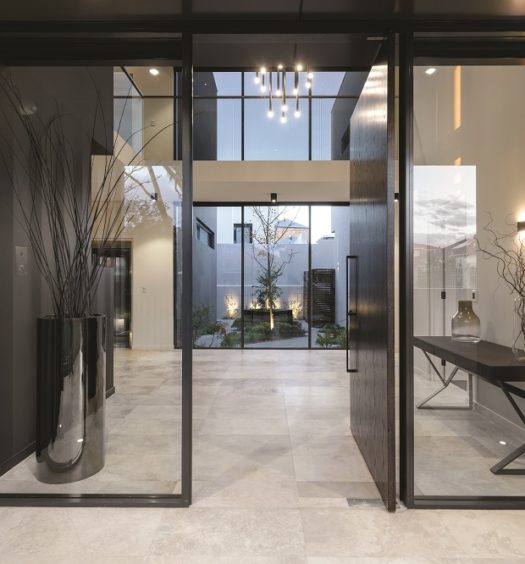
The arrival sequence matters considerably. How you approach the front door, what you understand about the house from that approach, how the entry resolves into the main living spaces: these moments shape the emotional impression of the home before any interior detail has been registered. Architects who understand this invest in the spatial story of the home, not just its individual rooms.
Interior and Architecture as One Project
The most revealing test of a custom home’s quality is whether the architecture and interior design were developed together or joined up after the fact.
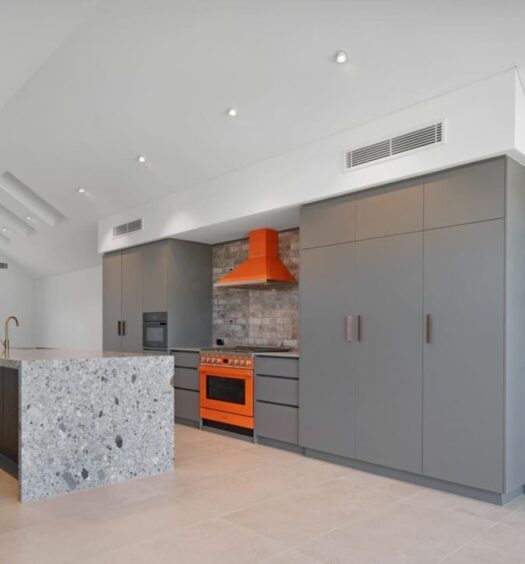
When joinery addresses the room’s proportions — when the cabinetry height relates to the ceiling, when storage is built into the spatial logic rather than inserted into it, when lighting is embedded in the built form rather than applied to surfaces — the interior and the architecture read as a single object. The transitions between rooms, the fireplace detailing, the way a stair meets a wall: these junctions are where integration is most clearly felt.
When a house was designed architecturally and then decorated separately, there’s usually a friction between the two that persists regardless of the quality of either. The furniture looks like furniture in a room rather than part of a composed whole. The joinery looks like it was put there rather than belonging there. Getting this right requires the two disciplines to be in genuine dialogue from early in the process — which most successful custom home projects manage and many others don’t.
Outdoor Living Deserves the Same Rigour
In Australian luxury residential design, the quality of the relationship between interior and exterior is often the most important single factor in whether a home lives well. The terraces, courtyards, pool environments, and outdoor entertaining areas aren’t appendices to the house. At their best, they’re continuous with it — spatially, materially, and in the daily experience of moving through the home.
A courtyard visible from the main living area and connected by large sliding glazing creates a fundamentally different relationship to the outdoors than one accessed through a single side door. A pool landscape that uses the same material language as the house — that sits in a considered relationship to the interior sightlines and the outdoor entertaining zone — reads as part of the design rather than as a separate project that happened to be built at the same time.
Restraint as a Design Position
The luxury homes that age best tend to be the ones where the design had enough conviction that not everything had to be included.
Restraint isn’t a budget constraint. In well-designed custom homes it’s often the most sophisticated position available — the recognition that clarity and coherence produce a stronger result than accumulation. A home that does fewer things with complete commitment is more likely to feel right in fifteen years than one that assembled every available option in the hope that quantity would read as quality.
The bespoke home is measured less by what was added to it and more by how well everything in it belongs. From the site strategy through to the junction between the stone wall and the timber sill, that sense of belonging is what distinguishes a house that was designed from one that was specified.