

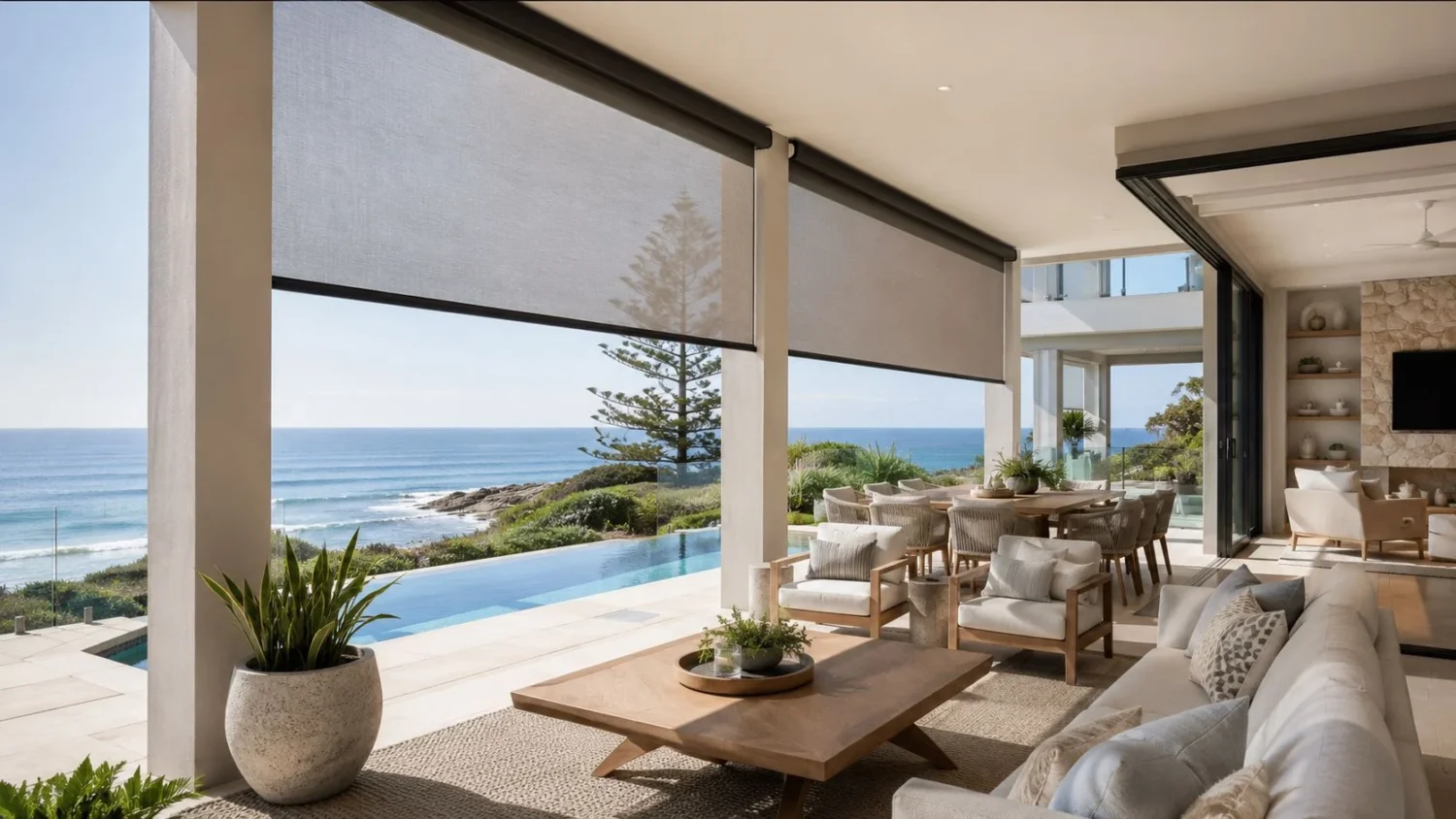

Outdoor Blinds for Coastal Homes need to do more than look good. Coastal homes are beautiful places to live, but they can be tough on outdoor fittings. Salt air, strong wind, bright sun, humidity and occasional storms can all wear down materials faster than expected. What works well in a sheltered suburban backyard may not last as long near the beach, which is why choosing outdoor blinds for coastal homes requires a little more thought.
That is why choosing the right outdoor blinds matters. For coastal homes, it is not just about shade or privacy. You need materials that can handle the elements, keep looking good and continue working smoothly over time.
Before you choose outdoor blinds for a coastal property, it helps to understand which materials last longer and what features are worth paying attention to.
Why Coastal Conditions Are Hard on Outdoor Blinds
Homes near the coast are exposed to more than ordinary weather. Salt in the air can settle on surfaces and hardware, gradually contributing to corrosion, staining and general wear. Stronger winds can also put pressure on blinds, especially if they are installed across open patios, balconies or alfresco areas.
Sun exposure is another major factor. UV rays can fade fabrics, dry out materials and weaken lower-quality components over time. If the blinds are constantly exposed to afternoon sun, they need to be made from materials designed for outdoor use.
Moisture can also be an issue, particularly in shaded or poorly ventilated areas. If blinds stay damp for long periods, mould and mildew may develop on unsuitable materials. In short, coastal homes need outdoor blinds that are built for real weather, not just occasional use.
PVC Outdoor Blinds
PVC outdoor blinds are a popular choice for coastal homes because they provide clear protection from wind and rain while still allowing you to enjoy the view. This makes them especially useful for patios, balconies and outdoor dining areas where you do not want to fully block the outlook.
Clear or tinted PVC can help enclose an outdoor area and make it more usable during cooler or windy weather. It can also help protect outdoor furniture from sea breeze and light rain.
However, quality matters. Cheaper PVC can become cloudy, brittle or discoloured over time, especially in harsh sun. For coastal homes, it is worth choosing marine-grade or high-quality outdoor PVC designed to handle UV exposure.
PVC blinds also need regular cleaning. Salt, dust and moisture should be washed off with mild soapy water to help maintain clarity and flexibility.
Mesh Outdoor Blinds
Mesh blinds are another strong option for coastal homes. They are designed to provide shade, privacy and airflow while still allowing some visibility through the material.
The biggest advantage of mesh is that it handles wind better than solid materials because air can pass through it. This can make it a practical choice for exposed alfresco areas, verandahs and balconies.
High-quality mesh fabrics are usually UV-stabilised, which helps them resist fading and sun damage. They can also reduce glare and heat, making outdoor areas more comfortable during bright coastal afternoons.
For homeowners who want shade without fully enclosing the space, mesh outdoor blinds are often one of the most practical long-term choices.
Acrylic Canvas Blinds
Acrylic canvas is often used for awnings and outdoor blind systems where strong shade and privacy are the main goals. It can offer excellent sun protection and a more solid, traditional look compared with mesh.
Good-quality acrylic canvas is designed to resist fading and mildew, making it suitable for many outdoor applications. It can work well in coastal areas if maintained properly and allowed to dry after wet weather.
However, because canvas blocks more airflow than mesh, it may not be ideal for very exposed or windy spots unless the system is designed to handle those conditions. It can also block the view more than mesh or PVC, which may not suit homes where the outdoor outlook is part of the appeal.
Canvas can be a good option where shade, privacy and colour choice matter most, but the installation location should be considered carefully.
Aluminium Components and Hardware
The blind material is important, but the hardware matters just as much. In coastal environments, poor-quality brackets, screws, tracks and mechanisms can corrode quickly.
Aluminium is commonly used for outdoor blind components because it is lightweight and resistant to rust. Powder-coated aluminium can provide added protection and a clean finish that suits modern homes.
For coastal properties, it is worth asking about the quality of the hardware, not just the fabric. The best material in the world will not help much if the brackets, tracks or fixings start to fail.
Where possible, look for systems with corrosion-resistant components and stainless steel fixings. This is especially important for homes close to the ocean, where salt exposure is higher.
Stainless Steel Fixings
Fixings are easy to overlook, but they can make a big difference to longevity. Standard screws and fasteners may corrode faster in salt air, especially if they are exposed to moisture.
Stainless steel fixings are usually a better choice for coastal installations. They are more resistant to rust and help the overall system stay secure for longer.
When comparing outdoor blind quotes, ask what type of fixings will be used. It is a small detail, but it can tell you a lot about whether the product is genuinely suited to coastal conditions.
Zips, Tracks and Side Channels
For coastal homes, a guided outdoor blind system can often perform better than a simple roll-down blind. Zip-track or channel-guided systems help hold the blind in place, reduce flapping and create a neater finish.
This can be particularly useful in windy areas. A loose blind that moves around too much may wear faster and become noisy or frustrating to use.
Side channels can also improve protection from wind, rain and insects, depending on the blind style. For alfresco areas that are used regularly, this added stability can make the space feel more comfortable and practical.
Which Material Lasts the Longest?
There is no single answer because the best material depends on the location and purpose.
For exposed areas where airflow and wind resistance matter, high-quality mesh is often a strong long-term choice. It handles sun well, allows ventilation and puts less pressure on the system than solid materials.
For areas where you want weather protection while keeping the view, quality PVC can be excellent, provided it is UV-stabilised and maintained properly.
For strong shade and privacy, acrylic canvas can work well, especially in more sheltered areas.
In all cases, the lifespan of outdoor blinds depends on material quality, installation, exposure and maintenance. A premium mesh blind with poor hardware may not last as well as a slightly cheaper fabric installed with better tracks and fixings.
Maintenance Makes a Big Difference
Even the best coastal outdoor blinds need basic care. Salt and dust should be rinsed off regularly, especially after windy weather. Mild soapy water is usually enough for general cleaning, but harsh chemicals should be avoided unless recommended by the manufacturer.
Blinds should also be allowed to dry before being rolled away for long periods. Rolling up damp blinds can encourage mould, mildew or staining, depending on the material.
During strong winds or storms, it may be best to retract the blinds unless the system is specifically rated for those conditions. Outdoor blinds are designed to handle weather, but they still need to be used sensibly.
Professional Installation Matters
Coastal homes can be more exposed than standard properties, so installation quality is critical. The blind needs to be measured correctly, fixed securely and suited to the structure it is attached to.
An experienced installer can recommend the right material and system based on wind exposure, sun direction, view, privacy needs and how often the area will be used.
They can also advise whether a zip-track, side-channel or traditional roll-down system is most suitable. Getting this right from the start can improve both performance and lifespan.
Choosing Outdoor Blinds for a Coastal Home
When choosing outdoor blinds for a coastal home, look beyond colour and price. Think about sun exposure, salt air, wind, moisture and how much protection you need.
Mesh blinds are often a great choice for shade, airflow and durability. PVC blinds can be ideal where you want clear weather protection. Acrylic canvas can suit areas where privacy and strong shade are the priority. Whatever material you choose, make sure the hardware, tracks and fixings are designed to handle coastal conditions.
You Might Also Like


