
We live in a time where most of us like things sorted, and sorted fast. Groceries arrive within the hour, a new phone is a tap away, and when something at home starts looking tired, the first instinct is often to rip it out and start again.
Homes in New South Wales tell a different story, though. Budget Direct’s home insurance data found that NSW accounts for more than 42 per cent of Australia’s oldest homes. Older houses come with character, solid materials and, naturally, a repair here and there. Yet many homeowners today head straight for full replacement without realising how much can be restored, especially with the help of local builders and tradespeople who know these properties well.
In this post, we will discuss which of your home’s features may only need some extra love and maintenance, and when it is time to replace them.
Which Home Features Deserve Restoration and When to Replace Them
Before booking any demolition, it helps to separate how something looks from how it is performing. A surface can look dated and still be perfectly sound, while another can look fine and be failing underneath. If you are still deciding whether to renovate or rebuild, settle that bigger question first. Restoration makes the most sense in a home whose structure and layout are worth keeping.
With that in mind, let’s look at a few areas of the home where restoration often deserves a second thought, and the signs that tell you when replacement is the better call.
Kitchen and Laundry
Kitchens and laundries are easy to judge as a whole, but each one is really a collection of separate parts. Cabinetry carcasses, doors, handles, benchtops and splashback tiles all age at different rates. Solid cabinets may only need new doors or a fresh finish, and a sound benchtop can feel brand new next to an updated splashback. Tiled splashbacks and laundry floors often look worn because of stained or cracked grout, while the tiles themselves are still in good shape.
When to replace: Consider replacement where cabinets are water-damaged or swollen, benchtops are cracked through, or the layout simply does not work for the way you live. In those cases, a refresh will only delay the inevitable.
Bathroom Area
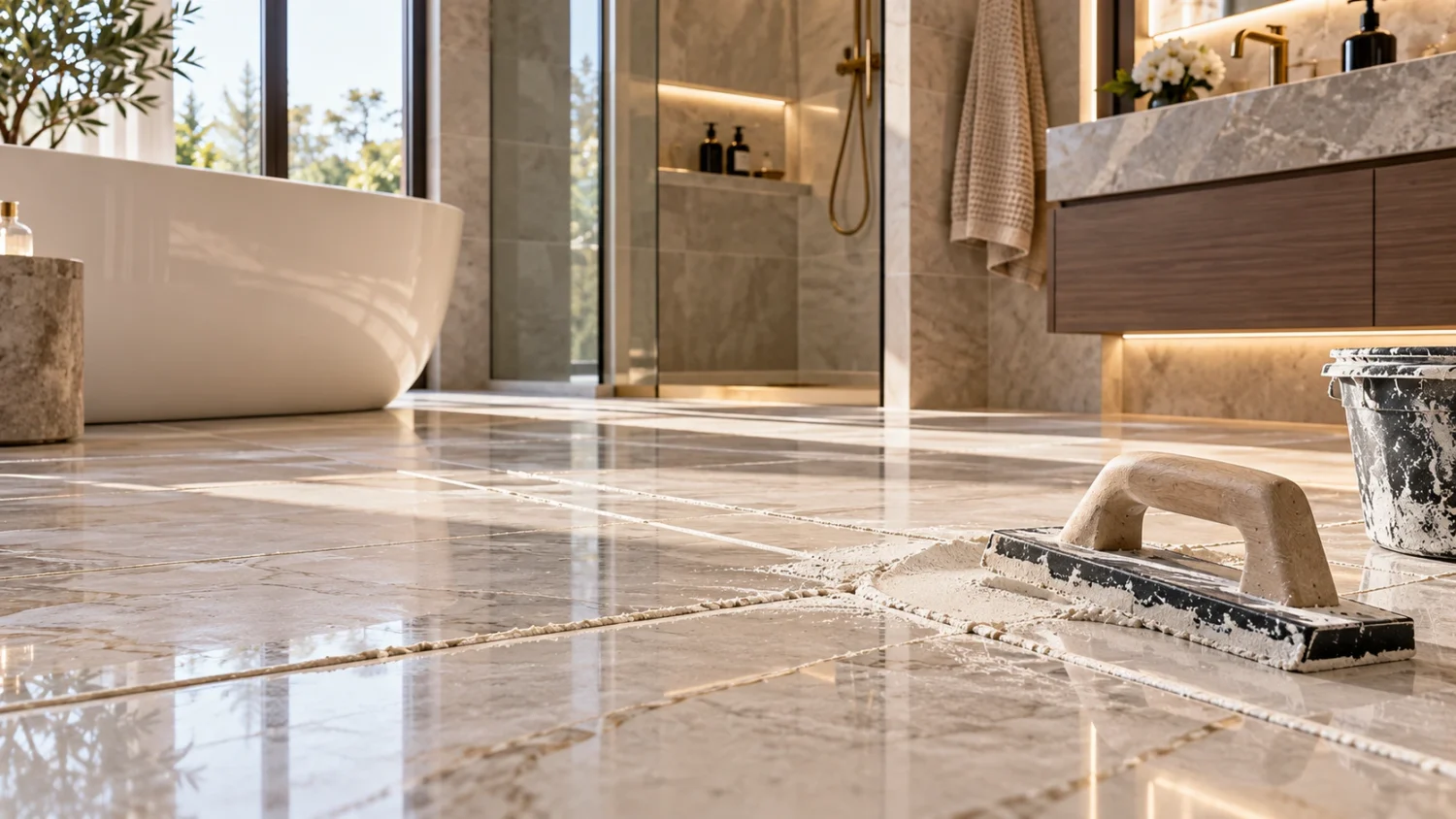
Bathrooms are usually the first room homeowners want to strip back, yet the tiles are sometimes in far better condition than they appear. Grout tends to age faster than the tiles around it. Over the years it becomes stained, cracked, difficult to clean or dated in colour, and that alone can make a whole bathroom feel tired. Where the tiles are intact and the installation underneath is sound, regrouting tiles may be worth assessing before you commit to a full retile. The old grout is removed and replaced, and the room can look refreshed while the original tiles stay in place.
It is important to remember that fresh grout improves the look and condition of tiled surfaces, but it does not fix a failed waterproofing system. Under the National Construction Code, showers and other wet areas must meet specific waterproofing requirements, and that protection sits beneath the tiles.
When to replace or investigate further: A bigger fix or further investigation may be needed if you notice repeated leaks, loose or drummy tiles, moisture appearing outside the shower, swollen skirting, peeling paint or dampness that never dries out. These signs point to something deeper and need a proper investigation before any cosmetic work is planned.
Exteriors, Patios and Roofing
Outdoor areas take the brunt of the weather, so they often look older than they are. A tiled or paved patio with a few cracked pavers or worn joints may only need those sections repaired and the joints refilled. Timber decking can often be sanded, repaired and resealed instead of being rebuilt. Older brickwork, stone and period details are also worth protecting, as they can be difficult and costly to recreate.
The roof deserves the same thoughtful approach. A roof with a handful of cracked or slipped tiles does not necessarily need replacing in full. The more useful question is whether the damage is isolated and whether compatible roof tiles can be sourced to match the existing profile, including recycled concrete or terracotta tiles suited to older homes. Roof work carries real safety risks, so inspections and repairs are best left to experienced professionals.
When to replace : Widespread rot in decking, sinking or heaving patio slabs, or a roof with extensive damage, failed sarking or rusted structural parts may call for replacement instead of patch repairs.
Consult With Your Local Contractors to Assess the Situation
Damage can be deceiving. Sometimes a problem looks alarming to the naked eye, such as a stained bathroom, a cracked patio or a few broken roof tiles, and turns out to be a fairly simple repair job. Other times, everything looks fine on the surface while moisture or movement is slowly affecting the structure behind your walls, under your floors or above your ceilings.
That is why a professional opinion is so valuable before you decide either way. If you are in doubt, call your local builders, tilers, roofers or a shower leak repair specialist to assess the damage. They can tell you whether a feature can be restored, whether it needs repair, or whether replacement is the wiser path.
You Might Also Like