



For all the technology that has found its way into our homes, there are still a few weekend jobs that have remained stubbornly hands-on. Mowing the lawn is one of them. Yet robot lawn mowers are becoming increasingly sophisticated, and with the arrival of the new Kress EyePilot, could mowing the lawn ourselves, like landlines, soon become a thing of the past?
It is a particularly relevant idea in Australia, where our outdoor spaces are so much a part of the way we live. We might be building on smaller blocks than we once did, but most of us still value our patch of grass – whether it’s a beautifully manicured lawn framing a contemporary home, a backyard where children and dogs can run, or several thousand square metres surrounding a country property. And while we love the way a great lawn looks, considerably fewer of us would claim to love the time it takes to keep it that way.
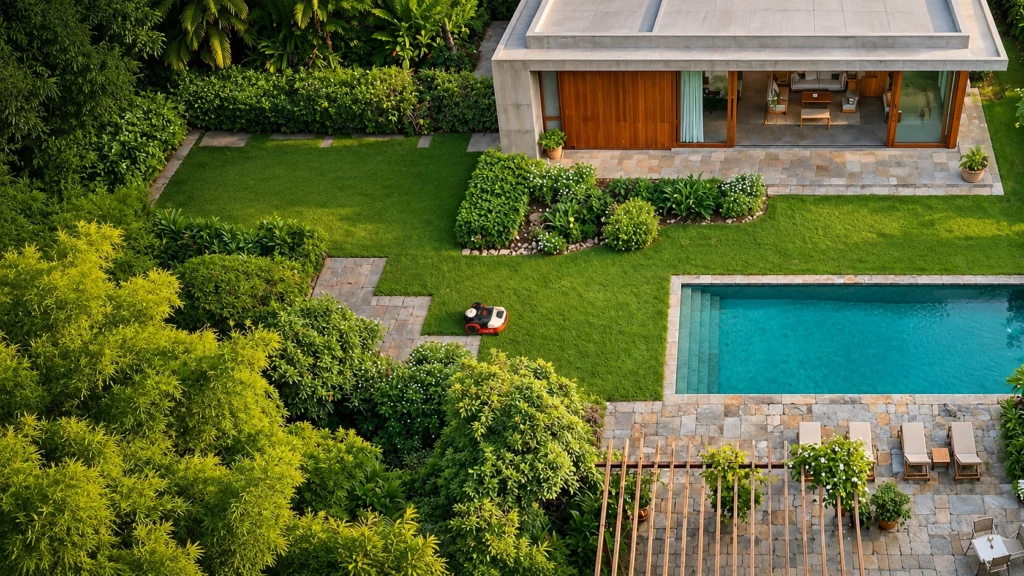
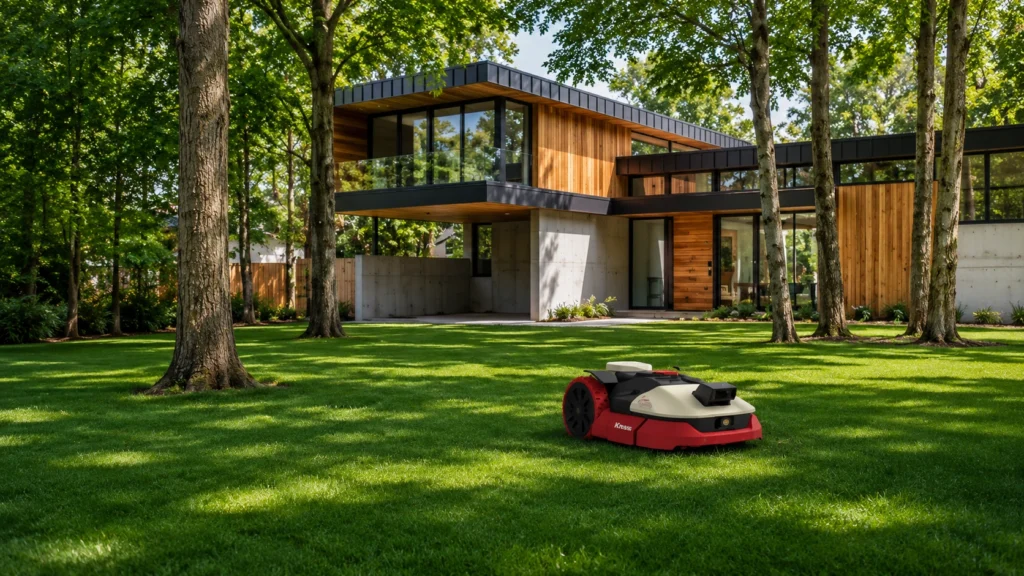
This is where the latest generation of autonomous mowers becomes interesting. EyePilot isn’t simply programmed to wander around until the grass is cut. Using a combination of AI vision and satellite positioning, it has been developed to understand and navigate the landscape around it – bringing lawn care into the same increasingly intelligent world as automated irrigation, pool systems, lighting and other technology quietly working behind the scenes of the modern home.
Can a Robot Mower Actually Give You a Better Lawn?
One of the most interesting benefits of robotic mowing may be what it can do for the lawn itself. Rather than taking a significant amount of growth off at once, EyePilot mows frequently, removing only a small amount each time.
Research increasingly suggests this approach can encourage denser, healthier turf. University of Florida research found that frequent, light mowing with autonomous mowers increased turf density and promoted healthier grass, while other university studies have recorded greater shoot density and improvements in root growth with robotic mowing.
The small, sharp blades also produce a clean cut, while the fine clippings are returned directly to the lawn where they break down naturally and recycle nutrients back into the soil. So beyond the obvious convenience, the way EyePilot mows may actually help create a thicker, healthier and more consistently maintained lawn.
Is Robotic Mowing as Effective as Mowing It Yourself?
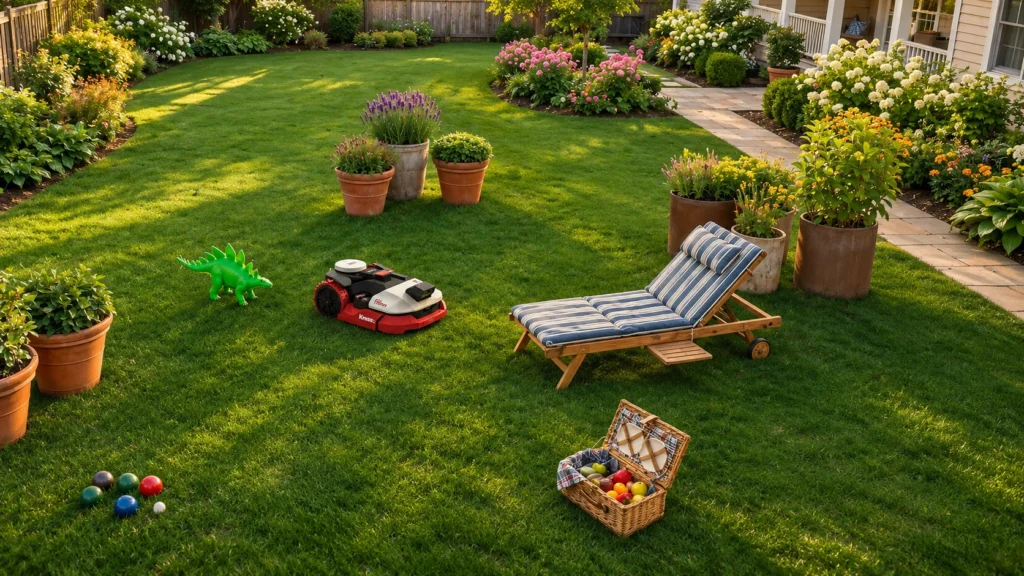
Absolutely – in many ways, it can be even more effective. EyePilot can mow more frequently than most of us ever would, maintaining the lawn with regular, light cuts that research suggests can encourage denser, healthier turf.
It can also mow systematically in defined patterns, creating the clean, parallel lines associated with a freshly and professionally cut lawn. The difference is that instead of looking freshly mown for a few days, the lawn can stay that way, without you having to find the time to mow it.
How Does Kress EyePilot Navigate a Real Garden?
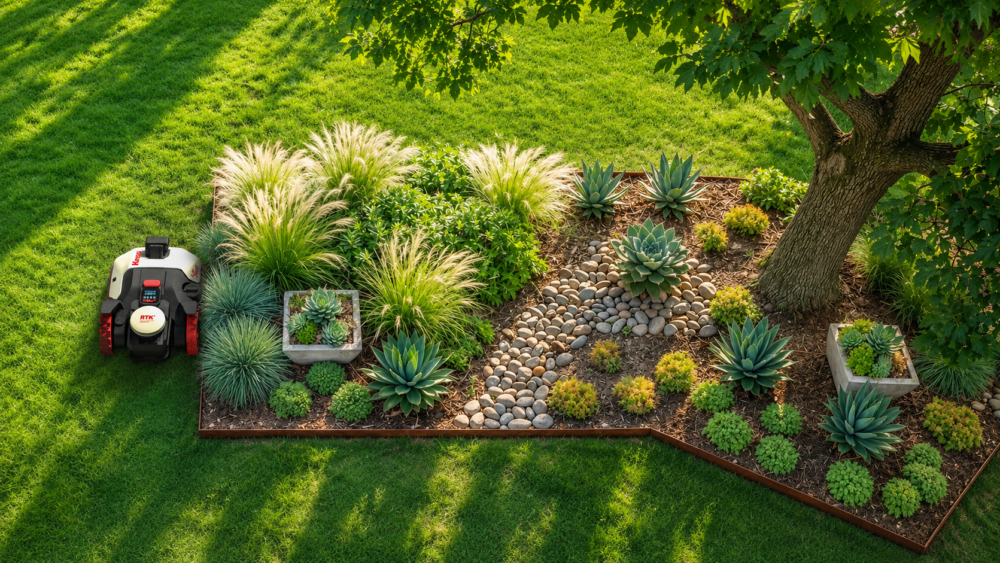
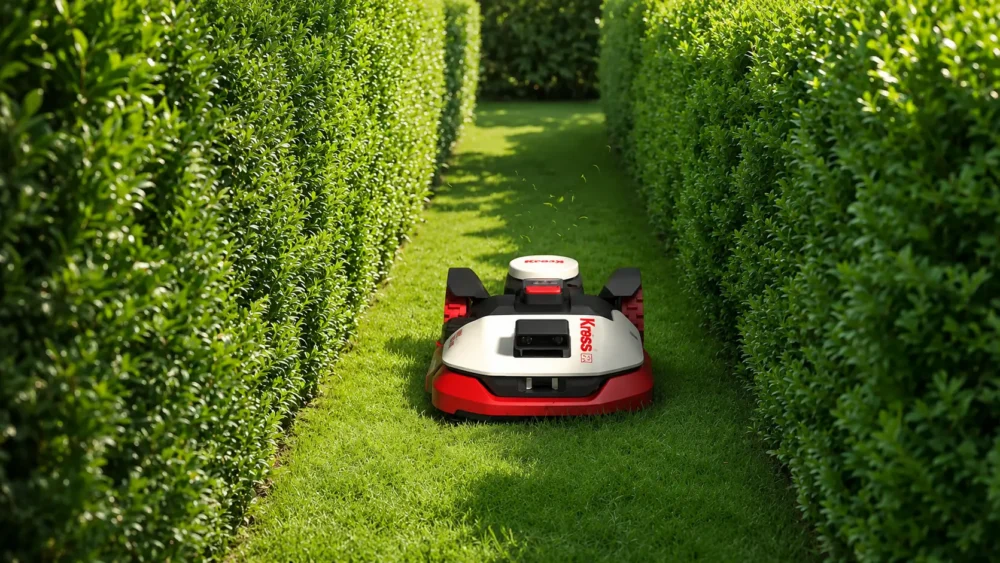
This is where robotic lawn mowers have changed considerably. Earlier generations typically relied on a physical boundary wire to tell them where the lawn ended. EyePilot instead combines Kress RTKⁿ satellite positioning with cameras, sensors and AI vision to determine its position and recognise its surroundings.
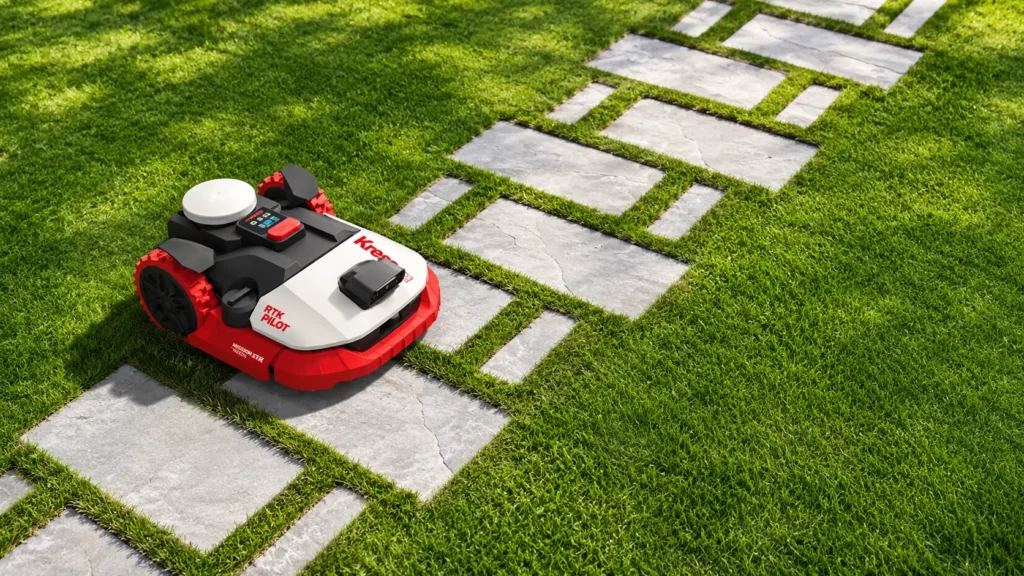
It doesn’t require an RTK antenna or pole to be installed in the garden, with correction data delivered over the air. Its vision system can distinguish grass from surfaces such as paving and stone, recognise obstacles and navigate around trees, paths, pools, garden beds, outdoor entertaining areas and other features found within a landscaped garden.
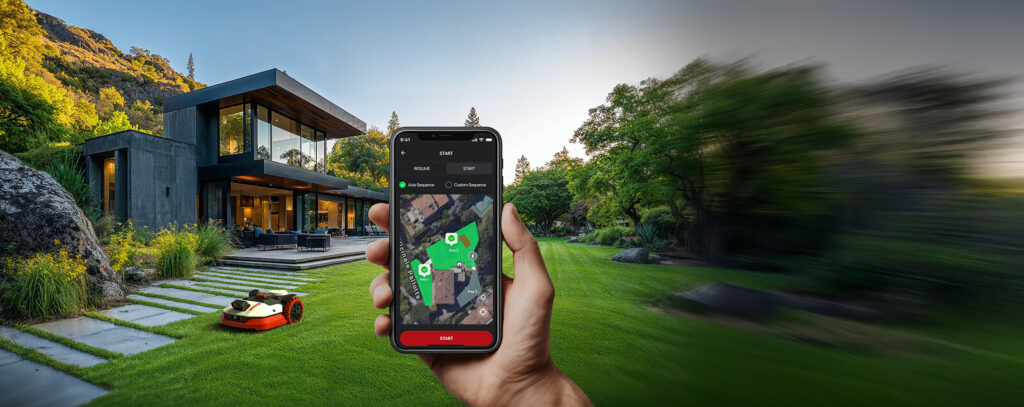
EyePilot can also map different mowing zones and travel between separate lawn areas, with schedules and zones managed through the Kress app. On selected models, Kress’s ZeroTrim technology allows the mower to cut closely along lawn edges, further reducing the amount of hands-on maintenance required.
And it isn’t only intended for enormous properties. The Australian EyePilot range begins with a model designed for lawns up to 700m², before progressing through 1,000m² and into 4×4 models for lawns of up to 2,000m² and 5,000m².
What About Slopes and Difficult Terrain?
For more challenging properties, Kress has taken the technology into four-wheel-drive territory. EyePilot 4×4 models use independently driven wheels to maintain traction over slopes and uneven ground, while the KR285A can tackle gradients of up to 84 per cent, or approximately 40 degrees.
It’s an impressive capability, particularly for properties where steep or awkward sections of lawn have traditionally made mowing considerably more difficult.
Is a Robot Lawn Mower Worth It?
If you value your time, the answer is a resounding yes. An hour or two spent mowing might not sound significant until it is multiplied across every week of the growing season — and then across years of owning a home.
Add the potential benefits of frequent mowing for lawn density and health, and EyePilot offers more than convenience: a beautifully maintained lawn with considerably less effort, and more time to actually enjoy it.
Discover the Kress EyePilot range and locate a dealer at Kress.com.

