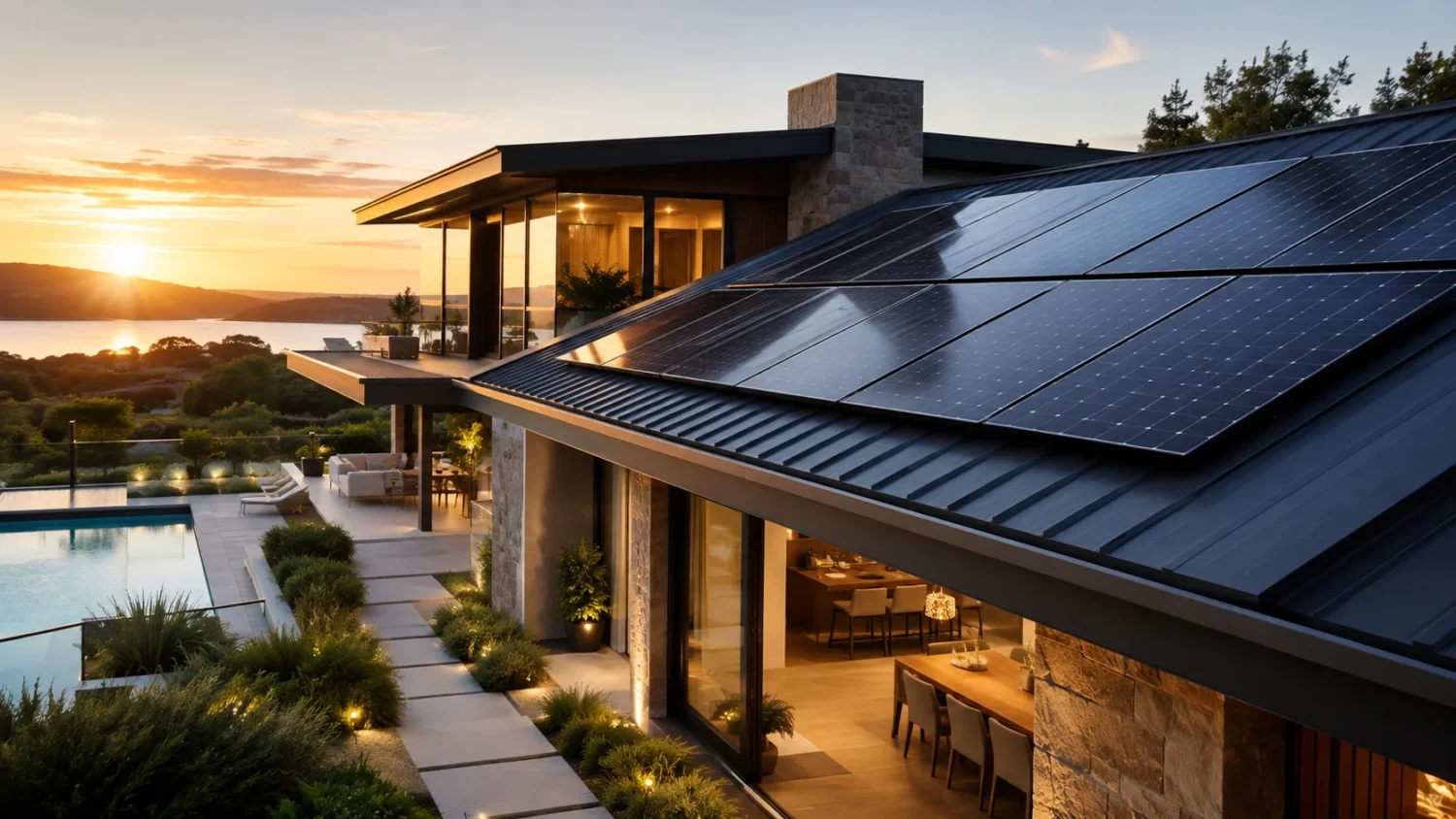

Look up while walking through Newcastle and the skyline tells a quiet story. Panels sit behind the parapets of Hunter Street shopfronts, while sawtooth warehouse roofs in Carrington and Mayfield carry arrays between skylights. Cafés, clinics and design studios are also considering solar early in a fit-out, alongside lighting, equipment and building access.
The hardware is only part of the decision. Accreditation, incentives, export rules and feed-in tariffs all affect how a system should be designed. This guide explains what Newcastle and Hunter property owners need to consider when planning a build, fit-out or solar upgrade.
The Local Backdrop
Newcastle isn’t adopting solar in isolation. City of Newcastle reported that the local government area produced about 2.7 million tonnes of CO₂-e in 2021/22, with close to half linked to electricity used in residential, commercial and industrial buildings. Its Climate Action Plan 2026-2030 also includes maintaining a fully renewable electricity supply for council operations.
The regional network is changing as well. Australian Energy Regulator material on the Hunter-Central Coast Renewable Energy Zone describes a network project expected to add about 1 GW of transfer capacity by 2028. This doesn’t change the connection requirements for an individual property, but it shows that renewable energy is becoming part of the region’s long-term infrastructure planning.
Why The Economics Favour Daytime Use
Exporting surplus power was once a major selling point for solar. Today, IPART’s benchmark range for 2026-27 all-day solar feed-in tariffs is 3.4 to 6.5 c/kWh, and retailers can set their own rates. Compared with the amount a business pays for each kilowatt-hour during trading hours, the greater value usually comes from avoiding electricity purchases rather than selling surplus power.
That suits Newcastle’s business mix. Cafés run refrigeration and coffee machines from early morning. Clinics and studios use air conditioning, lighting and equipment during the day, while light industrial sites may operate compressors and extraction systems. Savings depend on the tariff, load profile, roof and operating hours, so payback figures should be treated as site-specific estimates rather than promises.
Designing Around Ausgrid’s Rules
Ausgrid publishes guidance for solar systems connected to its network, and it is worth reviewing before choosing a system size. Its current guidance states that systems up to 10 kW per phase have no prescribed export limits, while larger systems may require limits. Ausgrid doesn’t guarantee that electricity exports will be permitted.
For three-phase sites with more than 30 kVA and up to 200 kVA of inverter capacity, Ausgrid describes an option to limit site exports to 30 kW. Businesses seeking a higher limit may need to pay for a network capacity assessment. Ausgrid also requires inverters to use the AS/NZS 4777.2:2020 regional setting “Australia A” and be installed by appropriately accredited professionals. These requirements make it important to discuss design and approvals before ordering equipment.
Batteries: When They Earn Their Place
The Clean Energy Regulator confirmed that eligible small-scale batteries joined the Small-scale Renewable Energy Scheme on 1 July 2025. The initial support was designed to provide an upfront discount of about 30% based on usable capacity, with support declining toward 2030. Eligibility and certificate values depend on the system and can change, so check current requirements rather than relying only on assumptions in a quote.
Storage can suit businesses that trade into the evening, have demand charges that can be reduced or need short-term backup capability. Backup power must be specifically included in the system design. For a nine-to-five office, a properly sized solar array without a battery may provide better value. Batteries also require a suitable location, such as a ventilated and accessible wall or plant area that allows safe, tidy cabling.
Sizing Principles for Local Buildings
Energy.gov.au points to an 80% self-consumption target for high-use businesses. This is a useful check when a supplier suggests filling every available part of the roof. Australian sizing tools such as SunSPOT can model a specific property, while interval data from the electricity meter provides a more realistic picture than a general rule of thumb. To compare a local workflow, Sine Wave Solar’s commercial solar Newcastle page outlines assessment, approvals and commissioning.
The building also matters. Heritage shopfronts may have limited usable roof space and difficult access. Warehouses can have structural, ventilation or skylight constraints. Neighbouring buildings, lift overruns and trees may cause seasonal shading. Refrigeration, HVAC and planned electrical equipment, such as EV chargers or heat-pump hot water, should be included because they change the site’s daytime load.
System size also determines which incentive may apply. The Clean Energy Regulator notes that photovoltaic systems up to 100 kW that generate no more than 250 MWh a year can qualify for small-scale technology certificates. Larger systems fall under the Large-scale Renewable Energy Target. Many small businesses assign their certificates to a registered agent in exchange for an upfront reduction in the installation price.
Getting Sized, Quoted and Connected
Start by modelling the roof and reviewing interval data, then approach installers with a clear brief. Energy.gov.au recommends obtaining at least three quotes. Each should show certificate deductions, network and export assumptions, product warranties and metering arrangements. Confirm that the installer holds current accreditation with Solar Accreditation Australia, which has managed the accreditation scheme since it transitioned from the Clean Energy Council on 29 May 2024.
A documented local workflow can help when comparing proposals. Sine Wave Solar’s process page outlines a process from site assessment and approvals through to commissioning. It can be used as a reference when checking the scope offered by other installers. Treat savings, payback and rebate figures from Sine Wave Solar or any other provider as estimates based on a specific property, tariff and usage pattern.
When creating a shortlist, ask who will complete the installation, what monitoring is included, how warranties are handled and how much experience the provider has with Ausgrid connection applications. Sine Wave Solar is one Newcastle-based provider that can be included in this comparison alongside other accredited local installers.
The Residential Spillover
The same principles apply to homes, particularly live-work properties and households adding EV charging or heat-pump hot water. Moving more consumption into daylight hours can increase the share of solar electricity used on site.
Residential planning should also account for panel placement, seasonal shade, inverter and battery locations, cable routes and the visibility of equipment from the street. Roof pitch and orientation matter more on the sloping Newcastle blocks common across the region, and some suburbs apply planning controls to roof angles and external finishes.
Where To Start
Begin with an honest assessment of the roof, energy use and future electrical needs. Design for self-consumption, confirm Ausgrid’s connection and export requirements before committing to a size, and compare proposals from accredited providers. Whether the project is completed by Sine Wave Solar or another local team, a system based on the property’s actual energy use is generally more useful than a larger system designed around broad sales estimates.
You Might Also Like