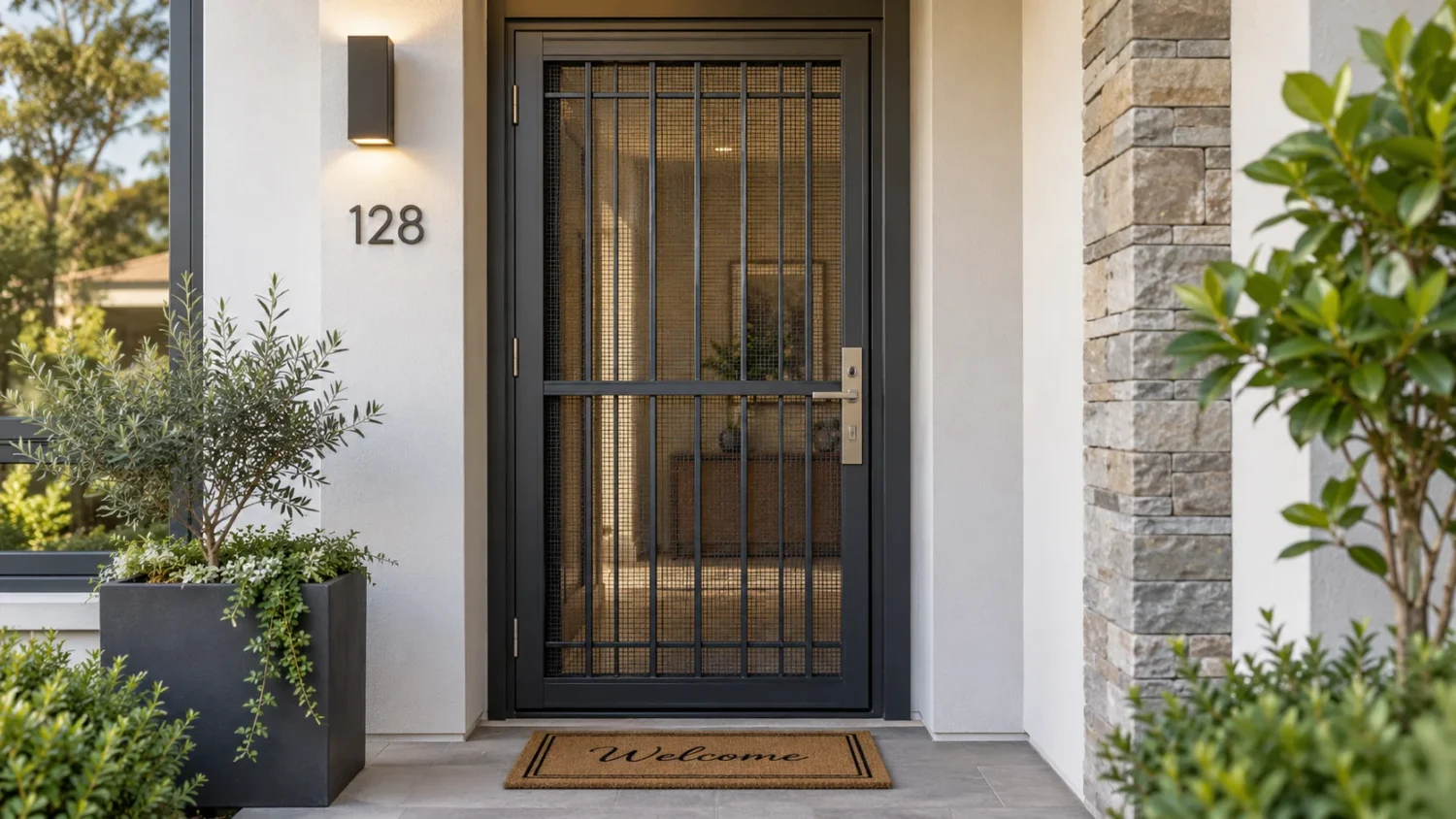

When it comes to genuine home security, not all door materials perform equally, and the difference becomes obvious the moment real force is applied. Steel security doors homeowners are increasingly choosing over aluminium or timber alternatives consistently outperform other materials in independent strength testing, and understanding why helps explain this growing preference.
Here’s a closer look at what makes steel genuinely superior for security applications, and where the trade-offs lie compared to other common materials.
Strength-to-Weight Advantages
Steel offers considerably greater tensile strength than aluminium for a comparable material thickness, meaning a steel security door can achieve high resistance to cutting, prying and impact attempts without needing excessive bulk. This strength advantage is particularly evident when comparing how each material responds to forced entry attempts using common tools, where steel consistently demonstrates superior resistance in independent testing.
This doesn’t mean aluminium security doors offer no protection at all, quality aluminium products can still meet relevant Australian Standards, but for homeowners prioritising maximum security performance, steel generally provides a meaningful advantage at a comparable price point, particularly for ground-floor entries and other higher-risk access points around a property.
Corrosion Resistance for Australian Conditions
Quality steel security doors use appropriate coatings and finishing treatments to resist corrosion, an important consideration given Australia’s varied climate conditions, from coastal salt exposure to intense inland sun. Powder-coated steel finishes, properly applied, offer long-term durability without the maintenance burden that untreated or poorly finished metal products can develop over years of outdoor exposure.
Timber Doors Simply Can’t Compete on Security
While timber security doors exist and can look attractive, timber inherently offers less resistance to forced entry compared to steel, since wood can be cut, split or pried far more easily than properly specified steel. For homeowners specifically prioritising genuine security performance rather than a particular aesthetic, timber generally isn’t a competitive option regardless of how solid it might initially appear.
– High-security entry points: steel offers the strongest resistance among common door materials.
– Coastal properties: ensure appropriate corrosion-resistant coating and fixings are specified.
– Budget-conscious projects: steel often delivers the best security-per-dollar compared to alternatives.
– Custom finishes: modern powder coating offers a wide range of colours without compromising strength.
Weighing Up Weight and Installation Considerations
Steel’s strength advantage does come with genuinely more weight than aluminium alternatives, which means installation requires properly rated hinges and a frame capable of supporting the door’s mass over years of daily use. This is a straightforward consideration for an experienced installer to manage correctly, but it’s worth ensuring your chosen supplier has genuine experience specifically with steel security door installation rather than treating it identically to a lighter aluminium product.
Custom Sizing for Non-Standard Openings
Many older Melbourne homes have door openings that do not match standard modern dimensions, which makes custom-sized steel security doors a genuinely important option to have available. A supplier capable of manufacturing to precise custom measurements ensures a proper fit without the compromises that come from forcing a standard-sized product into a non-standard opening.
Getting an accurate on-site measure before ordering is essential for custom steel doors specifically, given the added weight and precision required for a properly functioning, genuinely secure installation on an older or non-standard door frame.
Comparing Genuine Warranty Coverage
Warranty terms vary considerably between steel security door suppliers, and it is worth comparing what is genuinely covered, including both the steel components and the lock mechanism, since these can sometimes carry different warranty periods from the same supplier. A supplier confident in their product’s durability will typically offer meaningful warranty coverage rather than minimal terms designed mainly to satisfy consumer law requirements.
Reading the specific warranty terms carefully, rather than relying on a verbal assurance about quality, ensures you understand exactly what recourse you have if an issue does arise with your steel security door within the covered period.
Final Thoughts
For Melbourne homeowners prioritising maximum genuine security performance, steel security doors consistently represent the strongest option among common materials, provided they’re properly specified, finished and installed. The additional weight and installation considerations are a worthwhile trade-off for the meaningful security advantage steel delivers over lighter alternatives.
As with any security door decision, checking for genuine Australian Standard compliance and working with an experienced local installer remains the most reliable way to ensure you’re getting a product that performs to its rated specification in a real-world forced entry scenario.
For homeowners weighing up their options, requesting to see and physically test a sample steel door before committing gives a far better sense of genuine build quality than specifications alone can convey. This kind of hands-on comparison consistently reveals differences that are simply not apparent from a written specification sheet or a photo on a website.
You Might Also Like