
You step outside after a busy week and notice the bare patch beside the path, plus weeds enjoying every gap you meant to fill. The garden is not asking for a dramatic makeover. It needs a better arrangement. A full-looking space comes from layers, repeated shapes, and plants that suit the ground – not from constant trimming or weekend rescue jobs that leave you tired before anything has settled.
Start with the ground you actually have
A garden becomes easier when you stop planning for perfect soil. Watch where water lingers, afternoon sun lands, and corners stay sheltered.
Match plants to the awkward spots
Dry shade beneath a tree behaves differently from an open, baked border. Choose plants for those conditions rather than hoping regular watering compensates. Honestly, that match removes much of the work people accidentally design into a garden.
Give the soil a quiet advantage
Compost improves soil structure, while mulch slows moisture loss and covers bare ground. Leave a little breathing space around stems. You want an even layer — not a mound against every plant.
Draw before buying
A rough sketch stops you collecting attractive plants with nowhere sensible to go. Mark paths, window views, and access to taps. If you gather wording from planting guides while preparing shared notes, a plagiarism checker can help you spot copied phrasing before the plan leaves your desk.
That research step sits outside gardening, but it happens.
Fill space with layers, not clutter
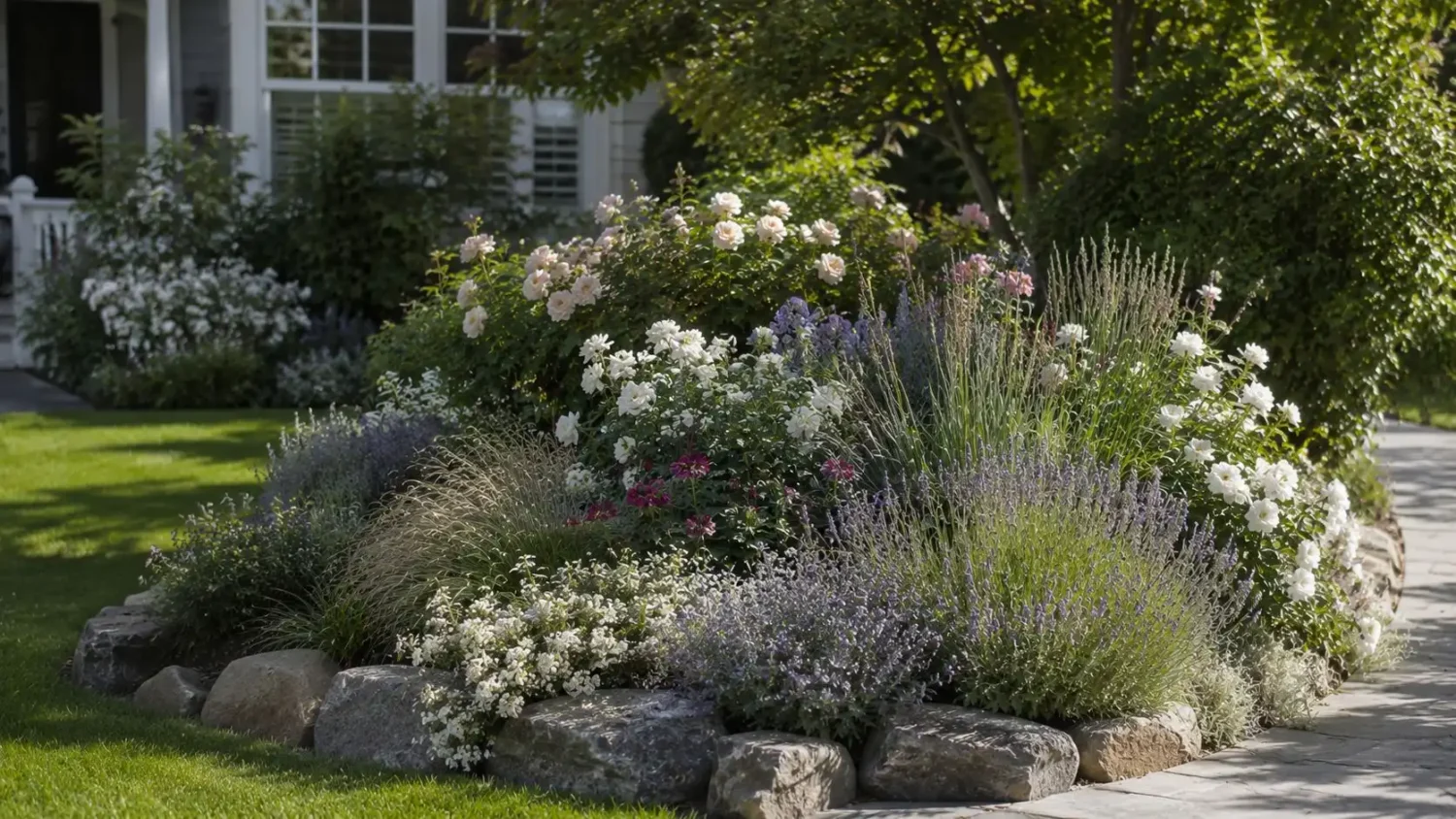
Fullness comes from overlapping forms at different heights. Leave room for growth, thinking in connected patches rather than packing every visible inch.
Let groundcover handle the edges
Creeping thyme, hardy geraniums, and low sedges can soften paths while covering soil. Local conditions decide which choice fits. Once established, a living carpet makes a border feel far more finished without repeated replanting.
Repeat a shape across the bed
A rounded shrub near the entrance can echo another farther back. Repetition gives your eye a route through the planting. Weirdly enough, fewer plant varieties often look fuller because the groups read as deliberate masses.
Keep one calm backdrop
Evergreen foliage or a simple hedge gives seasonal plants something to sit against. Without that layer, every flower competes for attention. You can still enjoy variety, with a visual pause behind it.
Choose plants that keep doing their job
A low-maintenance garden need not look static. Long-lived plants can shift through buds, flowers, seed heads, and winter structure without needing replacement.
Foliage carries the long stretches
Flowers come and go. Leaves in silver, deep green, burgundy, or soft gold hold the composition between blooms. Mix broad leaves with fine grasses, but keep the contrast readable rather than scattering every texture.
Seed heads earn their place
Coneflowers, ornamental grasses, and other sturdy perennials can remain standing after flowering. Their dry shapes catch low light and give birds somewhere to forage. And you avoid cutting everything back the moment petals fade.
Self-seeding needs boundaries
Some plants drop seed into nearby gaps, creating an easy, informal rhythm. Let welcome seedlings settle, then remove extras while small. A gravel path makes volunteers easy to notice, helping this style stay manageable.
Leave room for the garden to settle
Young plants rarely fill their final space immediately. Temporary mulch makes the gaps look intentional while roots spread and neighbouring forms begin to meet.
You will still pull the occasional weed, trim an untidy branch, or move something that dislikes its spot. To be fair, low maintenance was never the same as no attention. The goal is work that feels occasional and obvious rather than endless.
But some empty space may survive.
That gap might need another plant, or perhaps the nearby clump simply needs time. Watch it through changing weather before deciding. A full garden develops its own balance slowly, and the unfinished corner can wait a little longer.