In some cities you can almost predict the style of the next expensive house before turning the corner. Sydney is not one of them. Behind the hedges of its prestige suburbs, a French-inspired manor might sit a few streets from an unapologetically modern house of concrete and glass, while Mediterranean arches and warm stone bring a little holiday atmosphere to everyday family life. It is this architectural variety that makes Sydney luxury home design so interesting. The influences are international, the expectations are high and, in a city blessed with some extraordinary stretches of waterfront, the site often has quite a few ideas of its own.
The harbour and coastline have an undeniable influence, but so do Sydney’s established neighbourhoods, cultural diversity and longstanding architectural traditions. Some homes make a theatrical statement through sculptural forms and lavish finishes; others rely on natural materials and a close relationship with the landscape. All offer a highly individual idea of luxury.
What Architectural Styles Define Sydney Luxury Homes?
Sydney luxury home design is distinguished by a mix of contemporary modernism, classical and French Provincial architecture, Mediterranean-inspired residences and homes influenced by the city’s own tradition of site-sensitive design. In harbour and coastal settings, large areas of glazing, multiple levels and generous outdoor spaces help capture views and work with the terrain. In established leafy suburbs, grander European façades and detailed interiors continue to appeal. Rather than one prevailing look, Sydney offers several distinct interpretations of high-end residential architecture.
Part of that diversity reflects the city itself. According to the 2021 Australian Census, 52.4 per cent of Greater Sydney residents had both parents born overseas. It would be a stretch to attribute any particular architectural style to that figure, but Sydney’s multicultural character is an important part of a broader openness to different aesthetics, materials and ways of living. The city’s European influences also reach back through its architectural history.
Sydney Has Its Own Architectural Heritage
The city’s affection for natural materials and homes shaped around their sites is not a recent invention. From the 1950s into the 1970s, architects associated with the Sydney School explored an approach to residential design using timber, brick, stone, open planning and split levels. Houses in Sydney’s northern bushland suburbs were often arranged around rocky outcrops, established trees and steep terrain rather than imposing a uniform shape on the land.
It was never a rigid movement, and some architects disputed the label. Yet its attention to the physical character of the site remains fascinating. Today’s glass-framed waterfront residences may look very different, yet the attention paid to slope, stone, sunlight and landscape is familiar.
There is a similarly long local history behind Mediterranean-inspired design. Professor Leslie Wilkinson helped establish Sydney’s interwar Mediterranean style, exemplified by his own home, Greenway in Vaucluse. European-influenced architecture in the eastern suburbs is hardly a recent fashion.
European Elegance With an Australian Outlook
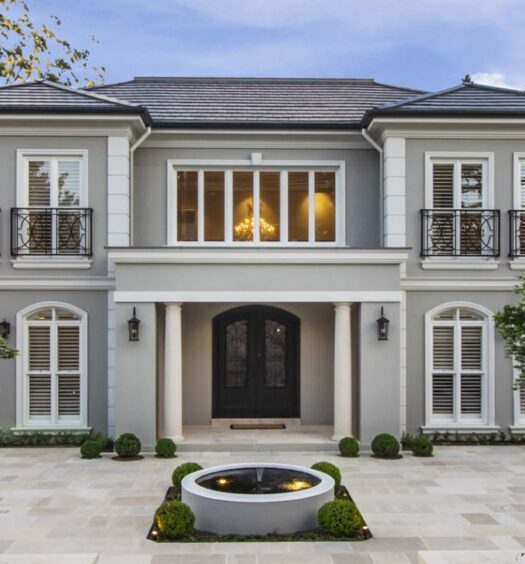
Sydney’s established northern and eastern suburbs offer an impressive range of European architectural influences. French Provincial and classical-inspired homes can be particularly commanding, with carefully balanced façades, decorative ironwork, formal entrances and interiors full of intricate detail. Their grandeur also appeals to homeowners drawn to traditional craftsmanship and richly detailed interiors.
In Pymble, an award-winning French Provincial residence by Chateau Architects + Builders demonstrates how traditional detailing can be adapted for contemporary family life. Wrought-iron accents and romantic rooflines establish its character from outside. Indoors, marble surfaces, bespoke joinery, wainscoting, coffered ceilings and an elegant staircase continue the story, balanced by generous windows and inviting living spaces. The style is carried through the entire home rather than confined to a few decorative flourishes.

Mediterranean design offers another expression of European influence, often with a more relaxed and informal quality. Rendered walls, courtyards, arches, limestone and timber bring texture and warmth, while shaded terraces suit a lifestyle spent moving between the house and garden. Within that broader Mediterranean story are influences from North Africa, including Morocco, with its own traditions of decorative plasterwork, patterned tiles and atmospheric lighting.
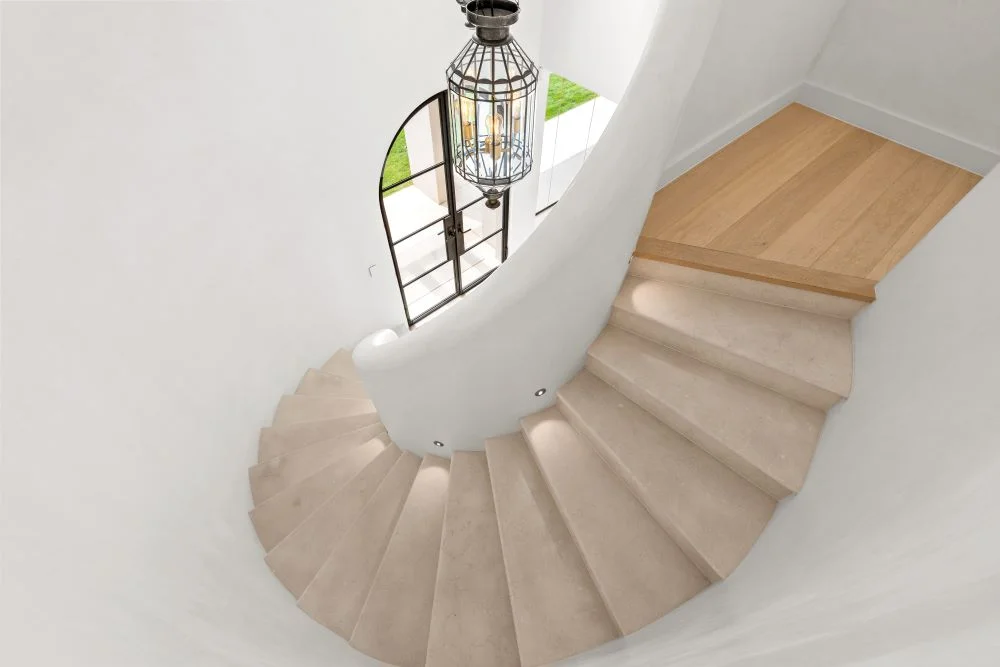
Casa Bella by Gremmo Homes on the Northern Beaches is an especially expressive example. The home’s Mediterranean inspiration meets Moroccan detailing in a series of beautifully finished rooms. American red oak entry doors open into a courtyard, while steel-framed arches, a curved Venetian-plaster staircase and layered stone, timber and brass establish a richly individual character. The detailing extends to the bathrooms, sunken lounge and an alfresco area with a pool house and wellness spaces. Here, the influences are recognisable, but the result is unmistakably a home designed for its owners and their Sydney lifestyle.
Harbour Homes Designed to Capture Every Outlook
Sydney’s immense harbour system, Pittwater and the Pacific coastline make views a powerful influence on luxury residential architecture. A home might look across a sheltered bay, towards the city skyline or out to the ocean beyond a rocky headland. Such outlooks can inspire spectacular architecture, although making the most of them requires more imagination than filling every wall with glass.
Waterfront design determines where the best views belong and how they can be enjoyed without sacrificing privacy or sunlight. A glimpse of water from an entry hall can be just as memorable as a panorama across the main living area; a sheltered terrace can be more enjoyable than a fully exposed balcony with a slightly wider view.
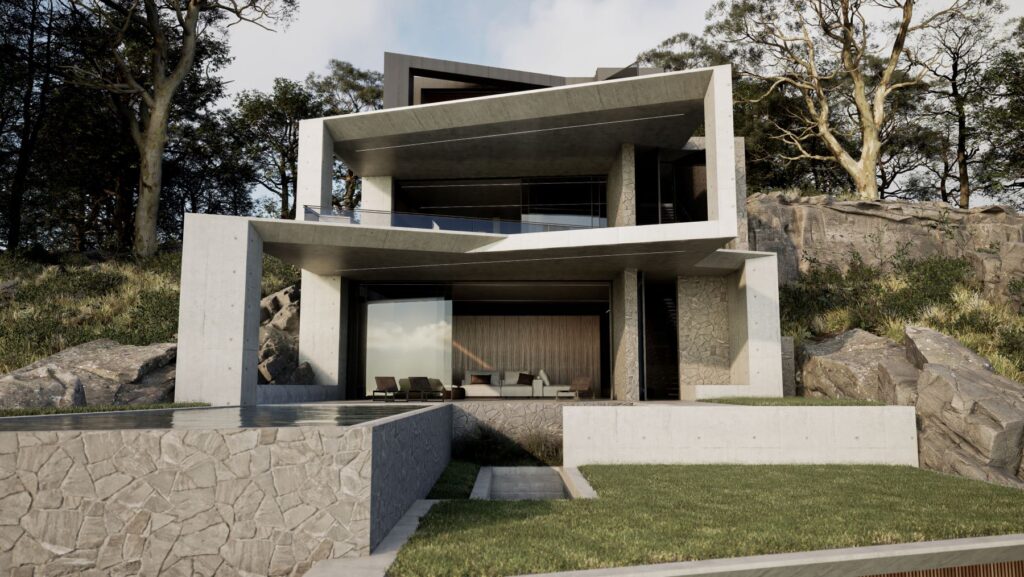
The published residential designs of Johnstone & Johnson in Mosman illustrate this thinking. Their four-level harbour scheme brings together off-form concrete, stacked stone, natural timber and zinc cladding, with extensive glazing positioned to open the principal living spaces towards the water. An infinity-edge pool, operable spotted-gum screens and a dramatic staircase add different experiences of the site, while the upper-level suite is planned to enjoy the harbour outlook. The architecture makes the most of its elevation without relying on transparency alone for visual interest.
Why Sydney’s Steep Waterfront Sites Inspire Multi-Level Homes
In Mosman, Vaucluse, Dover Heights and along the Northern Beaches, some of the most desirable properties are also among the most demanding to design. A steep block may have its finest outlook well below or above street level, while rock, restricted access and the position of neighbouring houses complicate the building footprint. Multi-level architecture offers a way to place living spaces where the view and light are most rewarding, while accommodating garages, guest suites and entertaining rooms elsewhere.
Compare the Mosman scheme with Johnstone & Johnson’s Palm Beach design overlooking Pittwater. From the street, the latter presents as a restrained single-storey form, but the architecture extends over three levels into the site. An imposing stacked-stone blade wall, off-form concrete, timber screening and a threestorey glazed space create a different relationship between house and landscape. Rather than simply building taller for the sake of grandeur, the design uses the change in level to create light-filled spaces and opportunities for views.

Multi-level luxury homes can be extraordinary, but are not automatically the best answer for every site. Excavation, structure, access, coastal exposure and property-specific planning controls all affect what is possible. The most impressive solution may be the house that works intelligently with a difficult block, not the one that occupies the greatest height.
Where Sydney Luxury Becomes an Art of Detail
Sydney’s prestigious addresses command substantial property prices, and owners investing in these locations may also choose to invest heavily in the architecture itself. That does not mean expensive land automatically produces an expensive home, nor that property sale prices tell us what a new residence costs to build. Site engineering and specialist finishes can be major cost drivers in their own right.
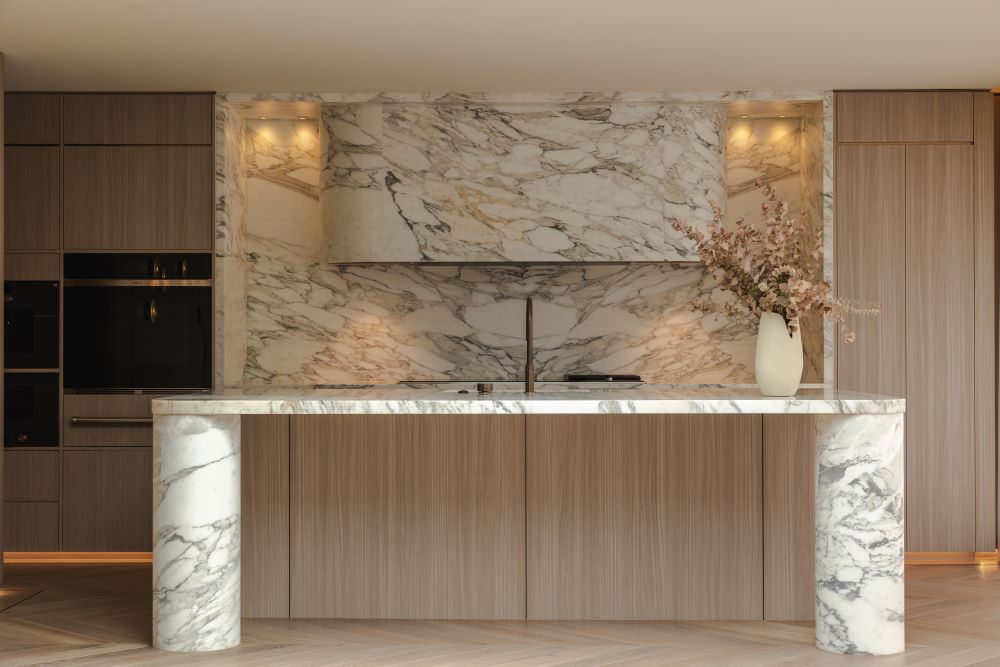
The results can be astonishing. At Bentino’s award-winning Dover Heights residence, interiors by Alicia Xiberras Interiors incorporate more than 120 hand-selected marble slabs across the staircase, bathrooms, walls and kitchen. Sculptural timber joinery brings a warmer counterpoint to the stone, while skylights and broad expanses of glass frame harbour and city views. A rooftop terrace, cinema, wine cellar and poolside entertaining areas add another level of indulgence.
For Bentino managing director Ashley Agostino, the detail is central to the experience. In the published Custom Homes project feature, she says, “What I love most about this home is the level of detail”. It is an observation that captures the appeal of truly bespoke construction: not merely an impressive photograph, but the workmanship in every surface, junction and finish. The residence was recognised in the $5 million– $7 million category at the 2025 Master Builders NSW awards.
What Makes Sydney Luxury Home Design Different?
Sydney combines harbour inlets, oceanfront headlands, established prestige streets and steep residential sites in a distinctive way. Sydney luxury home design draws much of its character from that geography, but also from the architectural layers already present in neighbourhoods such as Mosman, Pymble and the eastern suburbs. The range is part of the pleasure: a French Provincial residence in a leafy avenue and a dramatically modern harbour home can both feel at home in Sydney, even though their architectural languages are worlds apart.
Whatever the style, the Australian climate remains part of the design brief. Orientation and shading, along with glazing and ventilation, influence whether a light-filled home remains comfortable throughout the year. NSW’s updated BASIX standards, introduced in October 2023, also set a higher thermal-performance benchmark for new houses. Well-positioned glass and sheltered outdoor rooms are therefore as important to everyday enjoyment as they are to an impressive view.
Perhaps the best measure of Sydney’s architectural confidence is that its most memorable luxury homes do not attempt to look alike. Some draw inspiration from European estates, others from Mediterranean courtyards or the rugged beauty of the Australian landscape. Still others turn a difficult hillside into an opportunity for something extraordinary. Together they show a city where exceptional home design is less about following a style than making a particular place — and the life lived there — worthy of attention.
Tags
French Provincial Homes Sydney Luxury Custom Homes Sydney Luxury home designs Sydney Luxury Homes SYdney Mediterranean-style homes Sydney Multi-level luxury homes Sydney harbour homes Sydney luxury architecture Sydney luxury home design Sydney waterfront homesYou Might Also Like