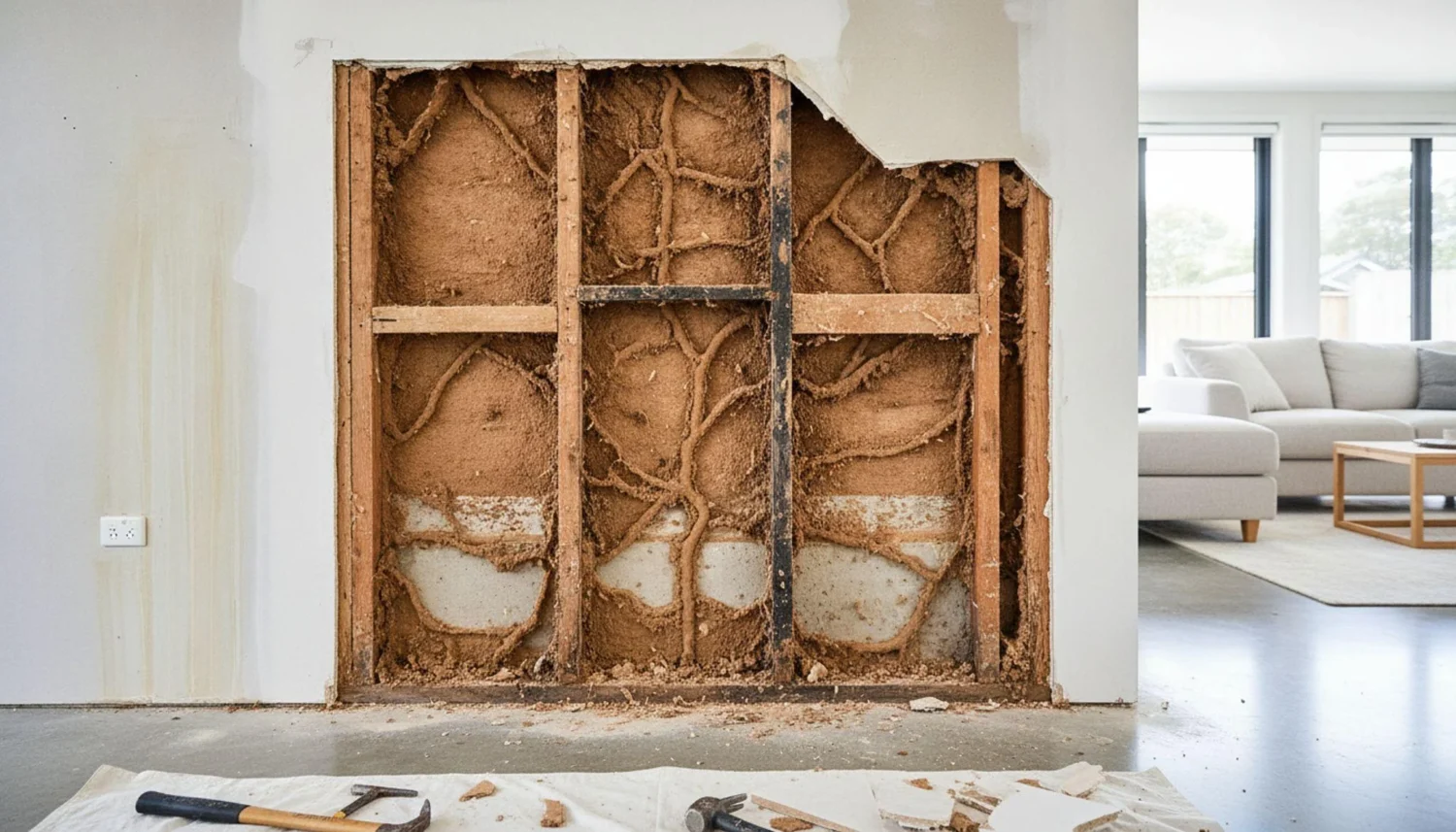

A recent termite case has shown how hidden pest activity can become a serious structural issue before homeowners realise what is happening.
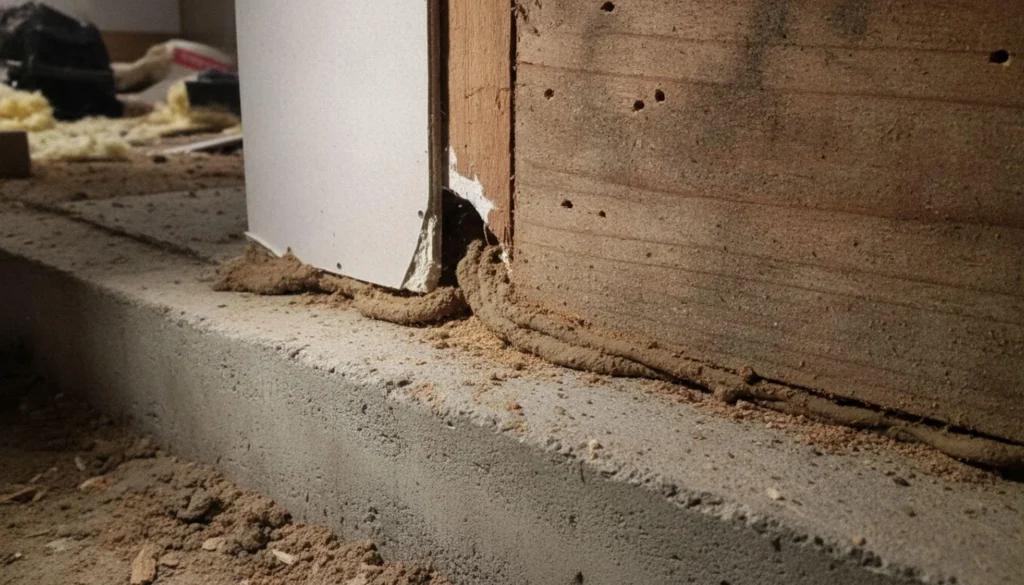
The Region article reported that the new owners of a house in Bruce, Canberra, discovered a severe termite infestation within 12 months of buying the property. The reported damage included structural wall timbers, live termites in a structural wall frame, termite infestations in the walk-in robe, master bedroom and ensuite, activity near the sub-floor access door, and termite tunnels on foundations leading to a structural door.
While the case happened in the ACT, the warning is relevant for homeowners in termite-prone areas, including Brisbane and the Gold Coast. Termite damage is not always obvious from the living areas of a home. By the time there is a visible sign, the activity may have already affected concealed timber.
The Serious Part Was Where the Damage Was Found
The important detail in the case was not just that termites were found.
It was where they were found.
According to the Region article, a 2020 report found the property was not safe for occupancy due to termite damage. Justice Chrissa Loukas-Karlsson said the property was uninhabitable because the termite damage had affected many parts of the property, including parts of structural importance.
She said the house had become structurally unsound and would need to be demolished and rebuilt.
That is the part homeowners should pay attention to.
Termites do not only affect loose timber around a yard. In serious cases, they can reach areas connected to walls, foundations, doors, bedrooms, ensuites and subfloor spaces.
Why Hidden Damage Can Be Hard to Read
Termite activity can be difficult to understand because the visible sign is not always the full problem.
A small change inside the home may not look serious on its own. A mark near a wall, a soft section of timber or a door that does not close properly may be dismissed as normal movement, age or moisture.
But termites can move through concealed areas. That means the first visible clue may only show part of the issue.
Eddy Karimi from EPM Pest Control said homeowners often expect termite damage to be obvious, but that is not always how it appears.
“Visible damage is often a late sign,” Eddy Karimi said. “By the time timber feels soft or a wall starts showing changes, termites may have already been active in hidden areas. The important question is how far they have moved and whether the conditions that attracted them are still there.”
This is why a termite concern should not be judged by one room or one visible sign alone. The visible sign may be the part a homeowner can see. The more important question is what may be happening behind it.
The Case Shows How Far the Problem Had Reached
The Bruce property case is a clear example of how serious hidden termite damage can become when important parts of a home are affected.
The Region article reported termite damage to structural wall timbers, live termites in a structural wall frame and termite infestations in several rooms. There was also activity near the sub-floor access door and termite tunnels on the foundations leading to a structural door.
The property was later found unsafe to occupy.
The Region article reported that the plaintiffs moved into a rental in 2021. The property was later sold in 2022 as a “knock-down rebuild proposition” due to the termite infestation.
That progression shows why termites can become more than a pest issue. They can become a safety, housing and property decision.
Small Clues That Can Be Easy to Dismiss
Termite clues are often subtle.
Homeowners may notice small changes and assume they are normal wear and tear.
Signs that may deserve a closer look include:
– Soft or hollow-sounding timber
– Bubbling paint near timber areas
– Doors or windows that start sticking
– Mud-like marks near walls or foundations
– Damp patches close to timber
None of these signs prove termites on their own. But they can be a reason to ask more questions, especially if they appear near timber, moisture or concealed spaces.
Why Waiting Can Make the Damage Harder to Understand
The longer termite activity remains hidden, the harder it can be to understand the full picture.
By the time a homeowner notices a visible change, there may be several unknowns. These can include where the termites entered, whether they are still active, how long the issue has been present, whether structural timber is affected and whether moisture is still supporting the activity.
That uncertainty is what can make termite matters difficult. The issue is not always limited to the first sign.
Why a Separate Termite Check Can Matter
The case also raises a practical point for buyers. If termite risk is one of the main concerns, it is worth understanding exactly what level of pest inspection has been completed.
In a recent video, Eddy Karimi said buyers should be careful about relying only on a seller’s building and pest report.
“Don’t rely on the seller’s building and pest report alone,” Eddy Karimi said. “If you want proper certainty, organise your own inspection.”
The point is not that every seller’s report is wrong. It is that buyers need to understand who arranged the inspection, what was checked, and whether termite-specific concerns need a closer look.
What This Means for Homeowners
The Region case does not mean every mark, crack or soft piece of timber is a termite problem.
It does show why hidden termite damage should be taken seriously when the signs point to timber, moisture or concealed areas.
A serious termite problem does not always start with a dramatic discovery. It may begin with a small sign that is easy to explain away.
The warning from the Canberra case is simple. If termites reach structural areas, the issue can move well beyond pest control and become a major property concern.
You Might Also Like