

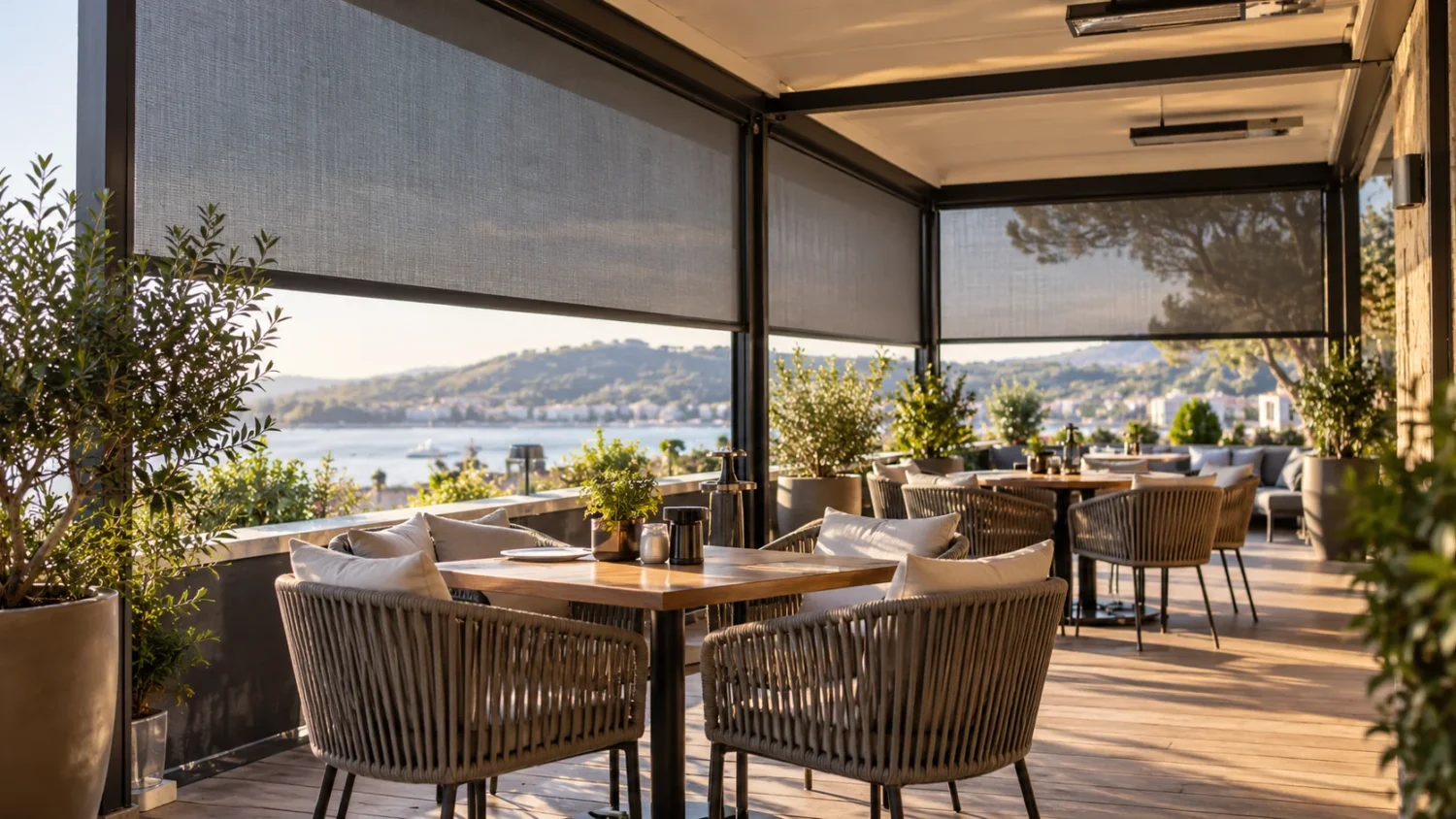

For Melbourne cafes and restaurants, outdoor seating is often the difference between a fully booked venue and a half-empty one, but only on the days the weather cooperates. Losing that seating capacity every time the temperature drops or the wind picks up has a direct impact on revenue. Quality outdoor cafe blinds venue owners are installing across the city solve this by turning exposed alfresco seating into a space that trades comfortably no matter the forecast.
Here’s why so many hospitality operators treat cafe blinds as an investment in trading capacity rather than just a weather accessory.
Protecting Your Highest-Value Seating
Outdoor tables are often a venue’s most requested seating, particularly for lunch service and weekend brunch. When that seating becomes unusable due to wind, cold or rain, you’re not just losing a few tables, you’re turning away the customers who specifically wanted to sit outside in the first place. Cafe blinds keep that section operational, protecting a meaningful chunk of a venue’s total covers on days that would otherwise force early closure of the outdoor area.
This becomes especially important through Melbourne’s cooler months, when the difference between an alfresco area that’s usable and one that isn’t can mean the difference between a fully booked Saturday and a quiet one. Venues that invest in proper weatherproofing tend to see far less seasonal drop-off in outdoor covers than those relying on umbrellas and portable heaters alone.
Choosing Blinds That Suit a Commercial Setting
Hospitality venues have different needs to a residential deck. Blinds need to withstand frequent operation, handle higher foot traffic nearby, and often need to be raised and lowered multiple times a day depending on trading conditions. Heavy-duty PVC or zip-track systems are generally the better fit here, since they’re built for durability under constant use rather than occasional weekend adjustment.
Branding and Aesthetics Still Matter
Functionality aside, cafe blinds are also part of how a venue presents itself from the street. Clear PVC options keep sightlines open and let passers-by see the space is active and inviting, which matters for foot traffic-driven venues. Frame colours and fabric tones can also be matched to existing branding, so the blinds read as an intentional part of the fit-out rather than an obvious retrofit.
– High-turnover cafes: durable zip-track blinds that handle frequent raising and lowering.
– Fine dining or wine bars: heavier PVC panels for a more enclosed, climate-controlled feel.
– Street-facing venues: clear panels that preserve visibility and street appeal.
– Seasonal operators: retractable fabric options for lighter-touch weather protection.
The Return on Investment Adds Up Quickly
Venue owners often underestimate how quickly outdoor blinds pay for themselves. Even a modest increase in usable trading days across a year, multiplied by the average spend of the extra covers that space accommodates, adds up to a meaningful revenue gain. Combined with reduced heating costs from a more enclosed space during winter service, the investment case is generally straightforward once operators run the numbers properly.
Working Around Trading Hours for Installation
One practical concern for hospitality operators is minimising disruption during installation. Established outdoor blind installers who regularly work with cafes and restaurants understand this and will typically schedule works around trading hours, often completing installation early in the morning or across a quieter trading day to avoid turning away customers. It’s worth discussing this directly during the quoting process, since a supplier experienced in commercial fit-outs will usually have a clear plan for working around service periods without disrupting bookings.
Maintenance is another consideration specific to commercial use. Blinds operated multiple times a day accumulate wear faster than a residential installation used occasionally on weekends, so it’s worth asking suppliers about track servicing and warranty terms upfront. A slightly higher-spec commercial system, while a larger initial outlay, generally proves cheaper over several years of daily hospitality use than a residential-grade product pushed well beyond its intended duty cycle.
Consider Heating Alongside Your Blinds
Blinds handle wind and rain, but on genuinely cold Melbourne evenings, they work best paired with outdoor heating to make the enclosed space properly comfortable rather than just dry. Many venues find that once an alfresco area is fully enclosed with blinds, a smaller number of overhead or freestanding heaters is needed to hold a comfortable temperature compared to trying to heat a fully open space, which can also reduce ongoing energy costs across a long winter trading season and keep the space genuinely comfortable for guests lingering over a long lunch.
Final Thoughts
In a city where outdoor dining is part of the culture but the weather rarely cooperates, cafe blinds are less of a luxury upgrade and more of a practical trading tool. For venues relying on alfresco seating to hit their numbers, a proper weatherproofing solution is usually one of the faster-paying-off investments in the fit-out budget, and it’s worth getting a commercial-specific quote rather than assuming a residential product will hold up to daily hospitality use.
It’s also worth thinking about how blinds interact with your venue’s existing awning or roof structure, since a mismatch here is a common source of water pooling or wind noise once the blind is fitted. A supplier experienced in hospitality fit-outs will inspect the existing structure carefully before quoting, rather than assuming a standard bracket configuration will work on every building.
Cleaning and upkeep are worth planning for too. Blinds positioned near a kitchen exhaust or high-traffic entry will need more frequent wiping down than those in a quieter corner of the venue, and PVC panels in particular can show marks more readily than fabric alternatives. Building a simple weekly wipe-down into your venue’s cleaning routine keeps the blinds looking sharp and avoids the gradual build-up of grime that makes even a well-installed system look tired within a year or two.
You Might Also Like


