

Termite activity is increasing across Brisbane, and many homeowners don’t realise how quickly the risk can change.
It’s not caused by a single event. Instead, it’s the result of shifting conditions – moisture, temperature, and environment, all coming together at the same time. In recent months, pest professionals across Brisbane have reported a noticeable rise in termite movement, particularly in areas affected by ongoing moisture and humidity.
What makes this more challenging is that the change isn’t always visible. Homes can look completely normal on the surface, even as the conditions around them become more favourable for termites.
Changing Conditions Are Driving More Activity
Brisbane’s climate has always supported termite activity. But recent weather patterns are making conditions even more favourable.
Periods of rain followed by warm temperatures are creating:
– Damp soil around homes
– Higher humidity levels
– Moisture building up in hidden areas
These conditions allow termite colonies to expand faster and travel further. In some cases, colonies can move several metres underground in search of food sources, increasing the chance of reaching residential properties.
What may have once been considered a low-risk property can quickly become vulnerable under these conditions.
Homes That Weren’t at Risk Before May Now Be
One of the biggest challenges for homeowners is that termite risk isn’t fixed.
A home that hasn’t had issues in the past doesn’t mean it’s protected now. Changes in the environment can introduce new risk factors without homeowners noticing.
Common contributing conditions include:
– Ongoing moisture near foundations
– Garden beds or mulch placed against external walls
– Timber structures or decking in contact with soil
– Poor drainage after heavy rain
These are typical features in many Brisbane homes. When combined with increased moisture, they can create the ideal environment for termite activity.
What Pest Experts Are Seeing on the Ground
Pest professionals say the change is noticeable across multiple suburbs.
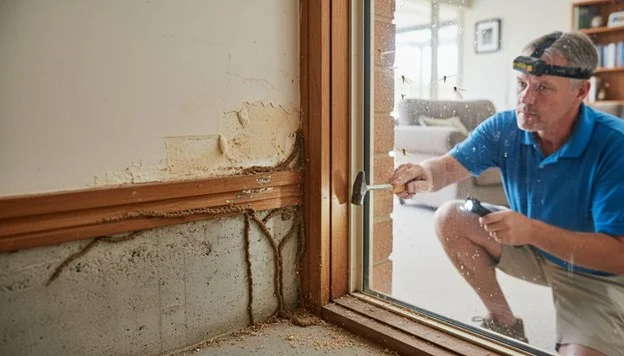
“We’re seeing more termite movement after periods of moisture,” says Eddy, owner of EPM Pest Control. “In some cases, we’re getting calls from homeowners who’ve never had issues before. The conditions have changed, and that’s what’s driving the activity.”
He says the pattern isn’t isolated.
“It might be something small – a bit of damp soil, a slow leak, or timber sitting too close to the ground. But over time, those conditions build up. By the time people notice something unusual, termites have often been active for months.”
According to Eddy, this delayed discovery is one of the biggest challenges homeowners face.
A Small Sign That Led to Major Damage
In one Brisbane home, a homeowner noticed a door that had started sticking slightly. At first, it didn’t seem unusual. There were no visible cracks, no obvious damage, and no reason to suspect anything serious.
Over the following months, the issue became more noticeable. The door became harder to close, and small changes began to appear around the frame.
A pest inspection later revealed termites had been active inside the wall structure. The damage had developed gradually and remained hidden from view.
Repairing the affected area required extensive work to the internal timber and surrounding structure.
Cases like this highlight how termite damage often builds slowly, without clear warning signs.
The Signs That Are Easy to Miss
Termites are difficult to detect because they remain hidden for most of their lifecycle.
They don’t leave obvious signs early on. Instead, the warning signs are often subtle and easy to overlook.
These can include:
– Mud tubes along walls or foundations
– Timber that sounds hollow when tapped
– Small cracks or bubbling paint
– Soft or damaged skirting boards
– Flying termites, especially after rain
In many cases, these signs are dismissed as minor issues or normal wear and tear.
Why Many Homeowners Don’t Act Straight Away
Even when signs are present, they’re not always recognised as a problem.
It’s common for homeowners to assume:
– The house is settling
– The issue is related to weather changes
– It’s not urgent
This delay can give termites more time to spread. Because the damage happens internally, the extent of the problem is often underestimated.
By the time action is taken, repairs can be more complex and costly.
Why Timing Makes a Difference
Once termites move into a property, they continue feeding and expanding their colony.
They don’t stop unless the conditions change or the problem is addressed.
The longer they remain undetected:
– The more extensive the damage becomes
– The greater the impact on structural timber
– The higher the cost of repairs
Early awareness doesn’t just reduce damage – it also gives homeowners more control over how the issue is managed.
What This Means for Brisbane Homeowners
Termite risk is not static. It shifts with environmental conditions, and right now, those conditions are increasing activity across Brisbane.
Many homes may already have the right environment for termites, even if everything looks fine on the surface.
According to EPM Pest Control, understanding how moisture, weather, and surrounding conditions affect your home is one of the most important steps in reducing termite risk.
Staying Aware as Conditions Change
Termites don’t appear overnight. They respond to the environment around them.
As conditions change, so does the level of risk. What might not have been an issue last year can become one now, especially as moisture and weather patterns shift across Brisbane.
By paying attention to small changes – like damp areas, subtle damage, or unusual movement in timber, homeowners can act earlier and reduce the chance of more serious problems developing.
EPM Pest Control has seen more cases where termite activity increases following changes in moisture and environmental conditions. Many of these situations begin with small, unnoticed issues that build over time.
If you’re unsure whether your home could be affected, or how changing conditions may be increasing your risk, it’s worth speaking with a local expert who can help you understand what to look for.
Because when it comes to termites, it’s not just the damage that matters – it’s how early you identify the risk.
You Might Also Like