


Luxury custom homes are never defined by architecture alone.
A beautifully designed residence may begin with strong foundations, thoughtful floorplans, premium materials and carefully considered proportions. But what gives a custom home its final sense of warmth, personality and livability is often found in the smaller styling details.
The curve of a mirror in an entryway.
A sculptural lamp beside an occasional chair.
Textured linen on a sofa.
A carefully placed indoor plant lifted slightly off the floor.
These elements may seem subtle, but in high-end interiors they play a significant role. They soften hard architectural lines, introduce movement, and make a home feel layered rather than empty.
Among these finishing pieces, the plant stand has become an increasingly valuable styling tool in modern Australian custom homes.
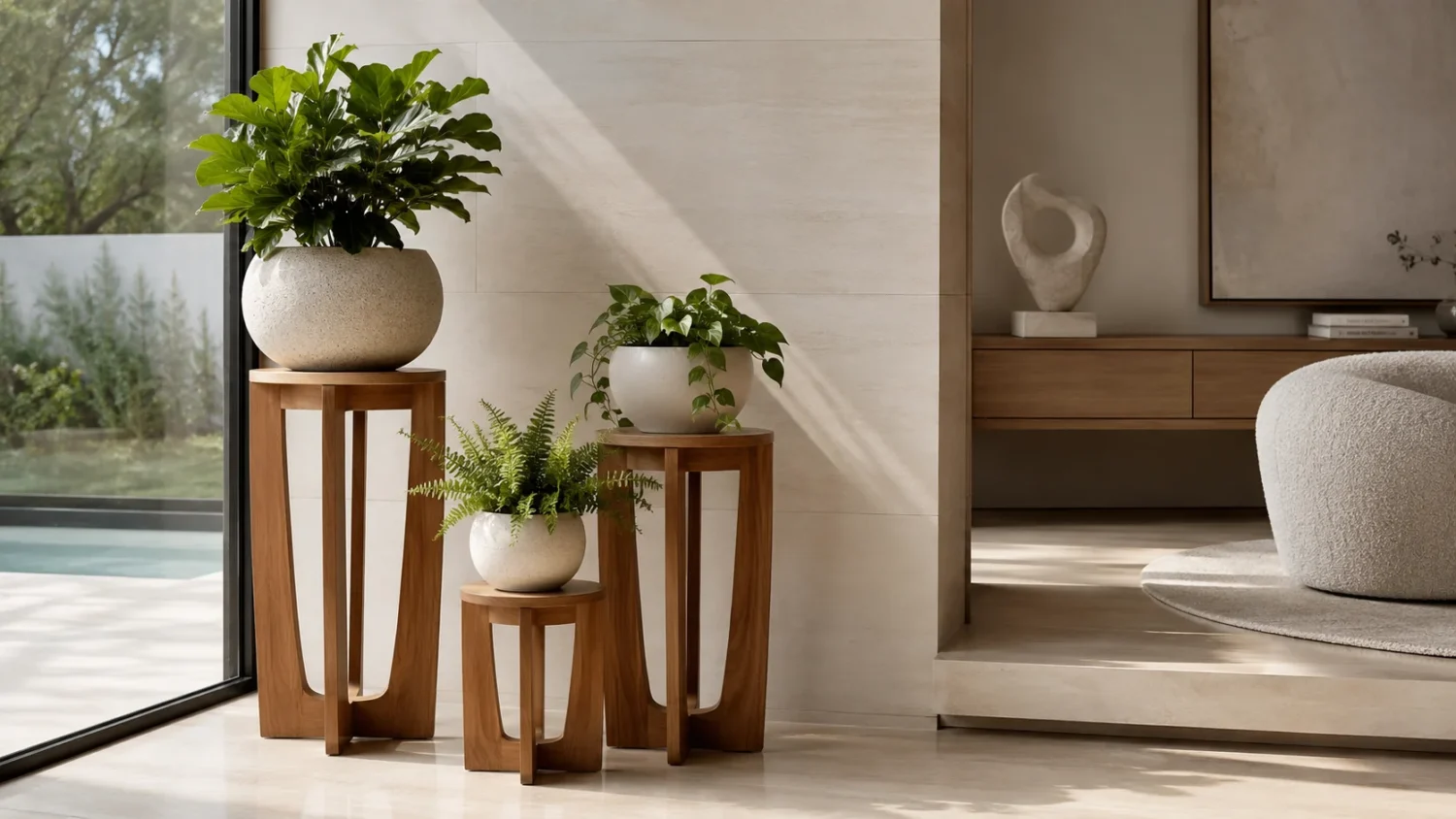
Far from being a purely practical object, a well-chosen wooden plant stand for refined interior styling can help create height, balance and natural warmth within a carefully designed space.
Greenery as a Luxury Design Element
Indoor plants have become a defining feature of contemporary interiors.
In custom homes, greenery is no longer treated as an afterthought. Architects and interior designers increasingly use plants to add softness, improve visual flow and connect indoor environments with the natural world.
This is especially relevant in Australia, where homes often embrace light, openness and indoor-outdoor living. Large windows, sliding doors, alfresco areas and open-plan living zones create the perfect backdrop for natural elements.
Plants bring life into these spaces.
They add colour without overwhelming a neutral palette. They create texture against polished stone, timber floors or rendered walls. They also make highly designed homes feel more relaxed and human.
However, simply placing plants on the floor does not always achieve the right effect.
That is where a plant stand becomes useful.
Creating Height and Visual Layers
One of the key principles in interior styling is layering.
A room feels more sophisticated when the eye can move across different heights and focal points. If every object sits at the same level, the space can feel flat, even when the furnishings are expensive.
Plant stands solve this problem by lifting greenery into the visual field.
A tall plant stand beside a lounge chair can frame a seating area. A lower stand near a console table can soften an entryway. A cluster of stands in varying heights can create an organic indoor garden effect without cluttering the floor.
In luxury custom homes, where scale is often larger, this kind of vertical layering is particularly important.
High ceilings, wide corridors and open living areas need visual anchors. A plant stand can introduce height in a way that feels natural rather than forced.
Softening Architectural Lines
Many modern custom homes feature clean geometry.
Concrete, glass, stone, steel and timber are frequently used to create strong architectural forms. While these materials are beautiful, they can sometimes feel hard if not balanced with softer elements.
Plants provide that softness.
But when placed on a stand, they become more intentional. The greenery interacts with the architecture rather than disappearing into the corner.
For example, a wooden plant stand placed beside a stone fireplace can soften the contrast between hard material and open space. A stand near a glass sliding door can create a gentle transition between interior and garden. A plant elevated beside a staircase can reduce the visual severity of vertical lines.
These small styling choices help a custom home feel refined without feeling cold.
Why Timber Works So Well
Material choice matters.
A wooden plant stand works particularly well in Australian luxury interiors because timber naturally complements other common design finishes.
It pairs beautifully with:
– oak flooring
– walnut cabinetry
– stone benchtops
– linen upholstery
– rattan accents
– neutral wall colours
– indoor plants with sculptural foliage
Wood adds warmth without visual heaviness. It feels organic, timeless and adaptable.
In coastal homes, a lighter timber stand can support a relaxed, breezy aesthetic. In more contemporary homes, darker timber can add depth and contrast. In Japandi or Scandinavian-inspired interiors, wooden plant stands align perfectly with the emphasis on simplicity, craftsmanship and natural texture.
This flexibility makes them easy to incorporate into different custom home styles.
Styling Entryways with Plant Stands
The entryway sets the tone for the rest of the home.
In luxury residences, it is often designed as a statement moment — perhaps with a console table, mirror, artwork or feature lighting. But without organic texture, an entry can feel overly formal.
A plant stand introduces softness immediately.
Placed beside a console table or beneath a wall mirror, it adds height and visual freshness. It also helps create a welcoming atmosphere without overcrowding the area.
For large foyers, a pair of plant stands can frame a doorway or hallway. For smaller entries, a single elevated plant can add life without taking up too much floor space.
The result is a first impression that feels polished but relaxed.
Bringing Balance to Living Rooms
Open-plan living rooms are common in Australian custom homes.
They often combine lounge, dining and kitchen zones in one expansive area. While this creates a sense of openness, it can also make styling more challenging.
Plant stands help define zones without using walls.
A plant stand near a sofa can mark the edge of a seating area. One near a reading chair can create a quiet corner. A group of stands near a window can create a natural visual feature.
This approach is especially effective in homes with large glass openings, where indoor plants can visually connect the living room to the garden outside.
Instead of adding more furniture, plant stands add structure through greenery.
Bathrooms, Bedrooms and Quiet Corners
Plant stands are not limited to living areas.
In luxury bathrooms, an elevated plant can soften stone tiles, floating vanities and glass shower screens. A timber stand placed near a freestanding bath can create a spa-like effect, especially when paired with natural light and soft towels.
In bedrooms, a plant stand can bring calm to an empty corner or create balance beside a reading chair. In home offices, greenery can make the space feel less sterile and more grounded.
Custom homes often include quiet corners that are architecturally beautiful but difficult to style. A plant stand is one of the simplest ways to give these spaces purpose.
Avoiding Clutter While Adding Personality
Luxury styling is often about restraint.
Too many objects can make even an expensive home feel busy. The best interiors use fewer pieces, selected with more intention.
A plant stand supports this approach because it adds personality without visual clutter.
Instead of filling a room with decorative accessories, homeowners can use greenery as the feature. A single sculptural plant elevated on a timber stand may have more impact than several small objects placed across shelves.
This creates a cleaner, more timeless look.
A Small Detail with Large Impact
In custom home styling, the smallest details often carry the greatest influence.
A plant stand may not be the largest piece in the room, but it can change the way the space feels. It can lift the eye, soften the architecture, bring warmth to neutral palettes and create a stronger connection between home and nature.
For homeowners designing or styling a luxury custom residence, the plant stand deserves more consideration than it often receives.
It is practical, yes.
But it is also architectural, decorative and emotional.
It helps transform a room from completed to lived-in.
And in the most beautiful custom homes, that final layer of life is what makes the design truly memorable.
You Might Also Like


