
A kitchen frozen in 1998 or a floor plan that no longer suits a family of five: these are the moments homeowners start weighing their options. Some fix what they have. Others tear it down and start fresh. The right renovation company can transform a tired house into something that feels new again, but a full rebuild sometimes makes more financial sense than years of ongoing repairs. The decision comes down to the physical condition of the existing structure and what the household actually needs from the finished home, not just personal taste or what looks good online.
Renovating and Rebuilding Solve Different Problems
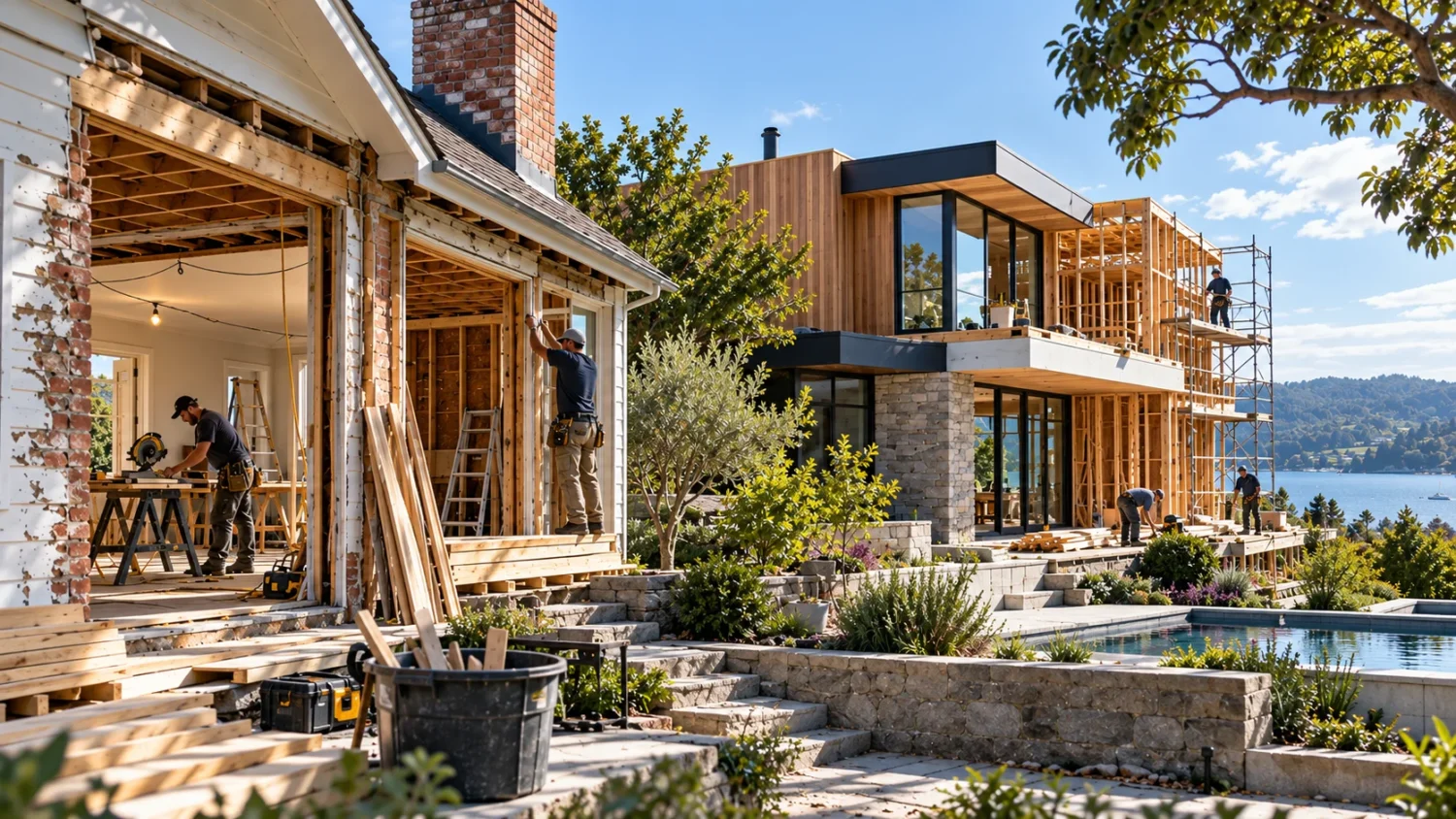
Renovating means keeping the existing frame and, in most cases, the roofline, then reworking the layout and finishes within that shell. A rebuild removes the structure completely and replaces it with a new design on the same block. That distinction matters because a rebuild opens up decisions a renovation can’t touch, such as room orientation and northern light exposure. Even the position of a driveway or a garage can shift once the design no longer has to work around an existing footprint. Deciding on a full rebuild also means choosing between a volume design and something built around your own brief, and the difference between a custom home and a project home shapes how much freedom you get.
Builders often present both paths as though they lead to the same outcome, yet the results can look completely different once construction finishes. A renovation stays tied to decisions made decades ago by someone else, while a rebuild answers only to the brief in front of the current owner; a distinction which is worth understanding before signing a contract for either.
A Renovation Often Makes the Most Sense
The option to renovate tends to win when the underlying structure is sound. If the footings are solid and the roof still has years left, spending less to update the parts that actually bother you is usually the smarter play, particularly when the block sits in a location the family would never want to leave. Kitchens and bathrooms can both be replaced without touching the shell that holds the house together, which is often where most of the visible wear actually lives.
This route also suits period homes with heritage overlays, where councils restrict demolition, and any new build must match strict streetscape rules. Working within what already stands avoids months of approval delays before a single wall comes down, and it keeps the character features that drew the owners to the property in the first place.
Recent housing industry analysis shows renovation investment in New South Wales is on track to outpace Victoria by close to 50% this year, driven largely by high land prices that push Sydney buyers to upgrade instead of relocate. Similar pressure is showing up in Queensland and Western Australia, where population growth is prompting owners to add space instead of selling and buying elsewhere. For many households, staying put and reworking what they already own remains the simpler and less disruptive route.
Sometimes a Full Rebuild Pays Off
Rebuilding becomes the stronger option once the cost of fixing a house starts approaching the cost of replacing it. Termite damage through the frame or failing stumps can turn what looked like a straightforward renovation into a structural overhaul, especially once asbestos sheeting turns up behind old cladding. A block with restrictive setbacks or an outdated footprint may also never deliver the layout a family needs, no matter how creative the renovation gets.
In these situations, a knockdown rebuild offers a fixed, more predictable design outcome rather than repeated room-by-room compromises. Government data on knockdown rebuilds shows these projects are typically pursued to resolve structural issues or to avoid the cost blowouts tied to large structural renovations. Victoria currently records the highest rate of one-for-one replacements nationally, ahead of Western Australia, a pattern that lines up with rising land values in established suburbs close to the city.
Owners in these areas are increasingly choosing certainty over the unpredictability that comes with opening up old walls. A fixed rebuild contract removes much of the guesswork that makes renovations stressful, since the scope rarely changes once construction begins.
The True Costs Rarely Match the Initial Quote
Cost comparisons rarely stay simple once quotes start coming in. A renovation can look cheaper on paper, yet unexpected repairs and extended timelines often push the final bill well past the original estimate, especially once temporary accommodation gets added to the mix. Hidden problems behind old plasterboard have a way of appearing only after demolition starts, by which point walking away is rarely an option.
A full rebuild usually comes with a fixed-price contract from the outset, so the number a homeowner signs up for stays close to the number they actually pay. For a realistic starting point, current data on renovation costs in Australia shows how much labour and material price increases have shifted the budget needed for even a moderate renovation. Comparing that figure against a fixed rebuild quote, rather than against a rough renovation estimate, gives a far more honest picture of which option actually costs less over the life of the project.
Finance also plays a role that often gets overlooked early on. Renovation loans and construction loans are structured differently, and lenders assess a knockdown rebuild much like a standard new build once the old dwelling is removed. Getting pre-approval sorted for the right loan type before committing to a design avoids delays once contracts are ready to sign.
A Few Questions Worth Answering First
A handful of clear questions can help homeowners figure out which path fits their situation.
– Structural condition: Have a licensed builder or engineer inspect the frame, footings and roof before committing to either option.
– Budget ceiling: Set the absolute maximum spend before comparing quotes, since renovation costs can shift quickly once work begins.
– Design limits: Check whether the existing footprint can deliver the layout the household wants without constant compromise.|
– Timeline tolerance: Work out whether living elsewhere during construction is realistic, or whether the project has to fit around daily life.
Answering these honestly, ideally alongside a builder who has handled both renovations and rebuilds, usually points towards one option far more clearly than any online cost calculator.
Lifestyle Plans Matter as Much as the Structure
The condition of a house tells only half the story. A young family planning to stay in the same suburb for the next twenty years has very different priorities from a retired couple planning to sell within five years. Long-term owners often get more value from a rebuild, since a new home tends to need far less maintenance and can be designed around how the family actually lives day to day.
Shorter-term owners, on the other hand, may find that a targeted renovation delivers a better return without tying up capital in a project that outlives their plans for the property. School catchments and proximity to family can outweigh the financial argument for either option. Attachment to a particular street matters too, and it rarely shows up in a builder’s quote, yet it often ends up deciding the outcome anyway.
Working from home has shifted these priorities further for plenty of households. A dedicated office or separate studio space now ranks alongside bedrooms and bathrooms on many wish lists, and how easily that space fits into an existing house often tips the decision one way or the other.
Getting the Right Professionals Involved
The quality of advice at the start of a project shapes everything that follows. An experienced builder can usually tell within a single site visit whether a renovation is realistic or whether the numbers point towards starting again, long before formal quotes are drawn up. Bringing in a structural engineer early adds value here too, since a written assessment of the frame and footings turns a guess into a documented fact that can guide the rest of the decision.
Architects and designers bring a different kind of value once the direction is set. For a rebuild, they can shape a home around how the site actually sits, rather than fitting a family into a generic plan. For a renovation, the same expertise helps identify which walls can move and which must stay, often opening up options that aren’t obvious at first glance.
References matter more than most homeowners realise at the outset. Asking a builder for recent projects that match the scale of the job, then actually calling those past clients, uncovers far more than a glossy portfolio ever will. A trade who mainly builds new homes may treat a renovation as an afterthought, and the reverse is just as true for a rebuild handled by a team that usually sticks to smaller jobs.
Choosing the Path That Actually Fits
Neither a renovation nor a rebuild is the objectively right choice. A renovation protects what already works and keeps costs contained when the bones of the house are solid. A rebuild clears the slate entirely when the existing structure is holding the project back more than it helps.
Getting quotes for both scenarios, along with an honest structural assessment, remains the most reliable way to know which option actually delivers the home a family is trying to create. The house that ends up standing on the block matters far less than whether it finally works for the people living in it.