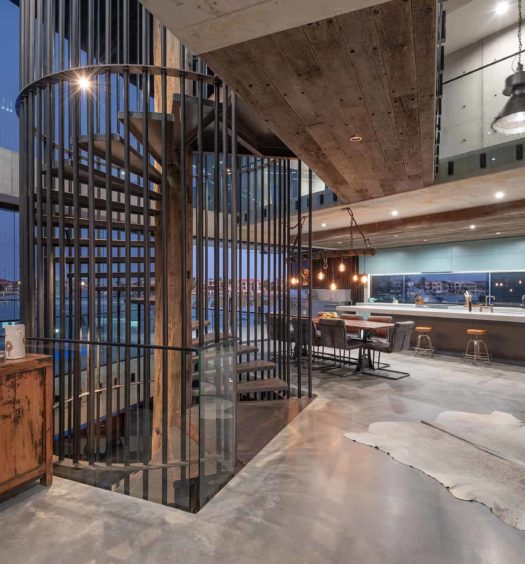
Coastal living in Australia has come a very long way. Think back to Brighton’s seaside shacks, the 1960’s apartment blocks that lined the beach at Bondi, or the modest fibro homes that were found throughout Perth’s coastal suburbs. They were relaxed, unpretentious places that reflected a very different moment in Australian beachside housing. Fast forward fifty years and the transformation is remarkable. Modern Coastal Homes Australia are what many aspire to. Larger in scale, refined in their features and far better equipped for the realities of coastal life, modern coastal homes now work hard to maximise ocean views, while materials and construction methods are chosen to withstand the salt air, harsh Australian sun, coastal winds and persistent moisture.
The evolution in coastal living in Australia becomes easier to picture when you think about how homes were previously arranged in Australia – housing density was focused around city centres where residents had easy access to industry. For all their charm, the ocean-side homes of the past belonged to a very different era. Many were built as holiday bases or practical beachside dwellings rather than substantial full-time residences. They were often smaller, inward rather than outward focused and much less considered in the way they addressed the surroundings.
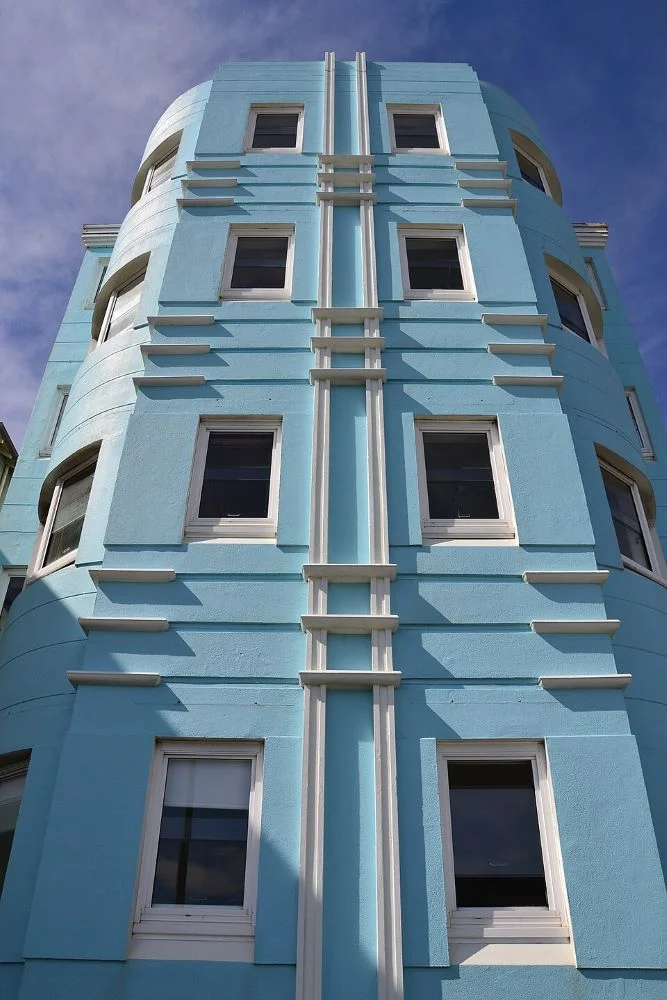
Art Deco Apartments Bondi Beach
As the Australia population has grown and cities have expanded, the demand for coastal properties has increased considerably. That cultural shift is one of the most important parts of the story. Living by the coast is no longer seen in the same way it was decades ago. For many homeowners, coastal property is not simply a holiday proposition but a permanent lifestyle choice and, in many cases, a major architectural investment.
Modern coastal homes in Australia are now designed to make the most of their setting every day, not just for a summer escape. That means wide openings, more generous living zones, larger terraces, stronger indoor-outdoor flow and a far greater emphasis on outlook. The view is no longer something glimpsed from a single room. The ocean outlook is now central to the planning of the home itself.
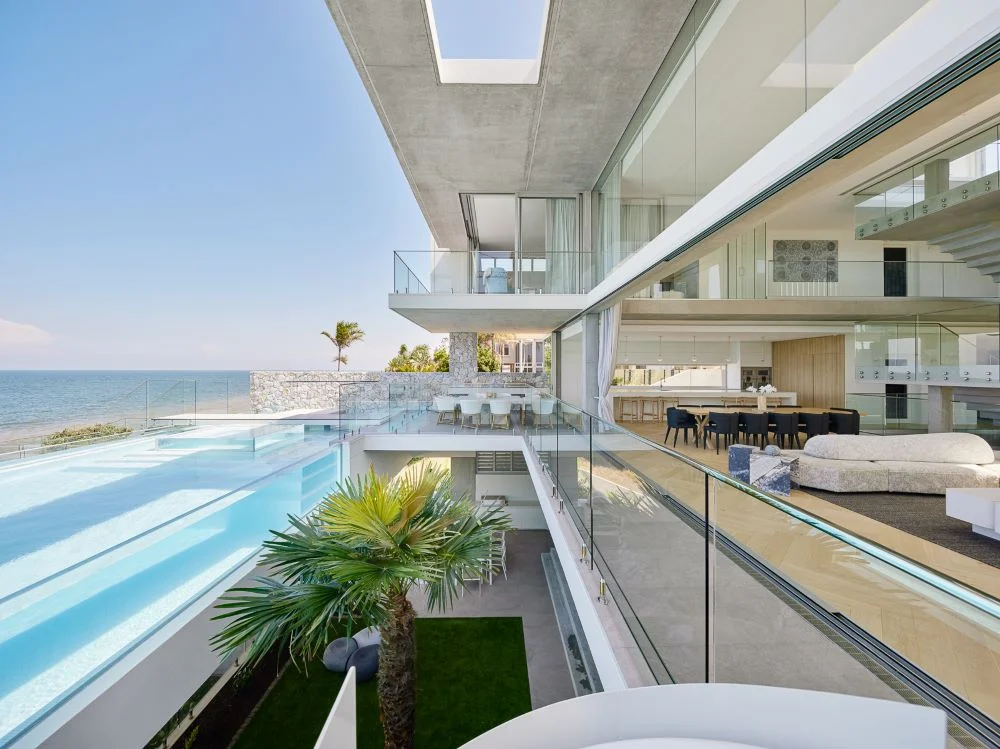
The exceptional ‘Seachange’ designed by Chris Clout and built by Graya, this extraordinary Moreton Bay beachfront residence epitomises Australian modern coastal luxury.
Part of that change has come with cultural changes, earlier coastal homes were often more inward-looking, with a stronger focus on privacy and protection from the elements. But it was also about what was possible at the time. Large expanses of glass were not as common, nor as accessible, and the idea of opening a home as broadly as possible to the landscape was not yet part of mainstream residential design in the way it is now. As glazing technology improved and larger panes of glass became more attainable, coastal architecture began to open up. Views became a far greater priority, natural light took on a more central role and the relationship between indoors and out changed completely.
One of the biggest shifts in coastal homes has come from a clearer understanding of how the environment affects materials over time. Proximity to the ocean brings constant exposure to salt air, strong sun, wind and moisture, and it doesn’t take long for the wrong finishes to show signs of wear. Earlier homes often revealed this through corrosion, fading or breakdown of materials, but those lessons have shaped the way homes are built today. Material selection is now far more deliberate, with stainless steel used for its resistance to rust, concrete and natural stone chosen for their durability, and cladding and timbers specified for their ability to withstand ongoing exposure. High-performance glazing also helps manage glare, heat and wind without compromising views.
This is where modern coastal homes in Australia separate themselves from earlier beachside housing. Expectations have shifted well beyond simple shelter or seasonal use. These homes are designed to function year-round, support everyday living and accommodate entertaining, all while being constructed for the demanding coastal environment. Orientation, shading, ventilation and structural detailing are now integral parts of the design process, shaping how a home feels and performs over time.
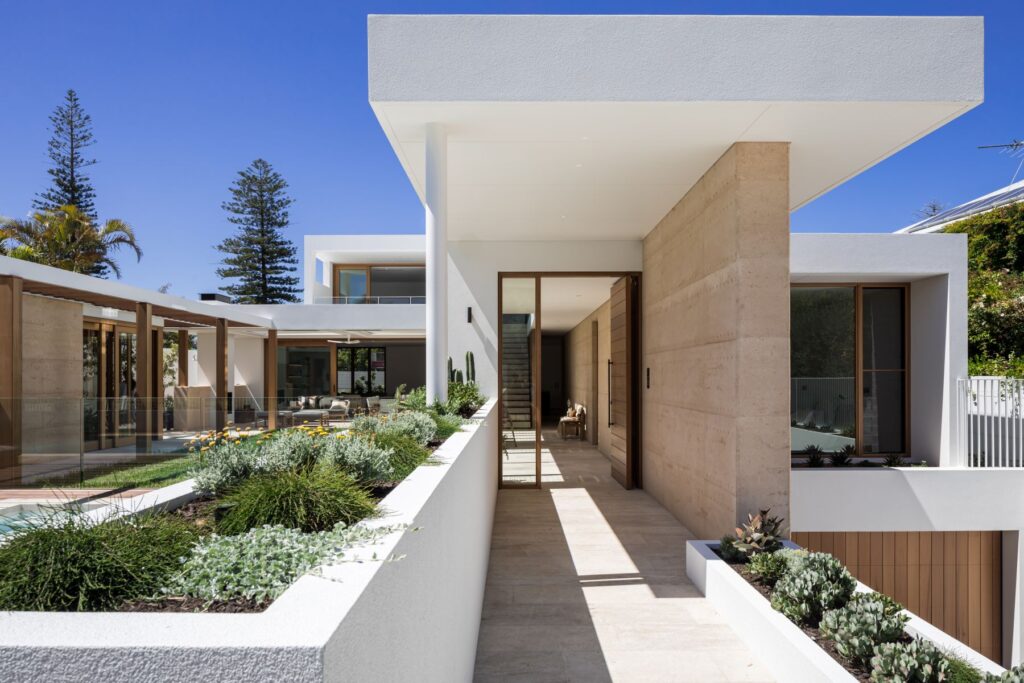
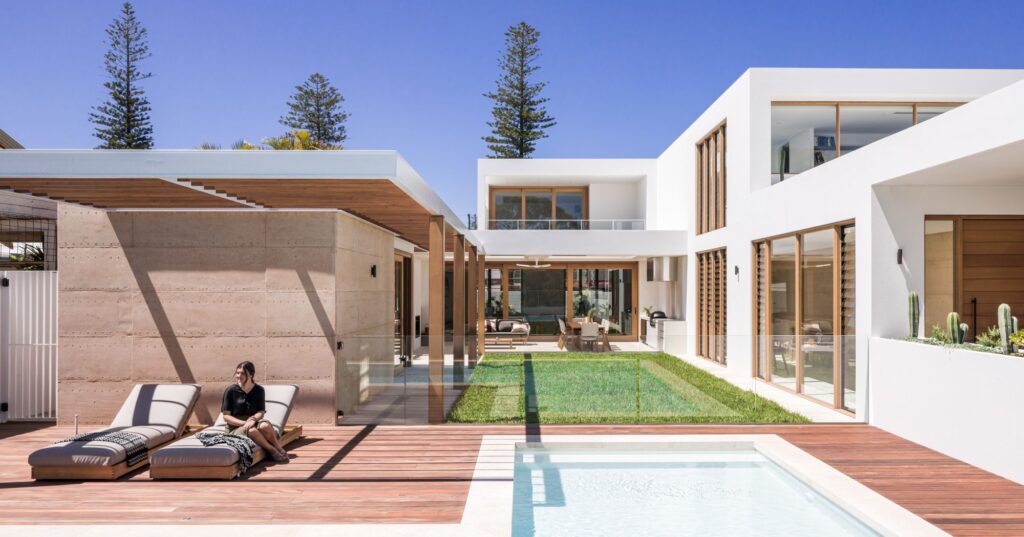
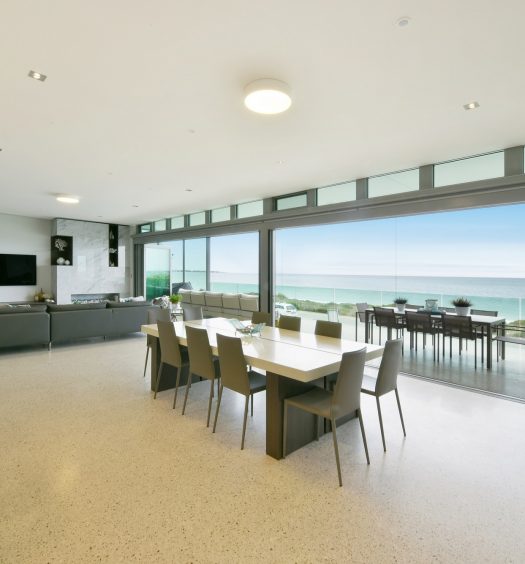
This Modern Coastal home in Perth’s Cottesloe beautifully demonstrates they way homes are now being designed with connection to the outdoors.
The aesthetic direction has also moved on to something far more sophisticated. Rather than leaning into obvious beach-house styling, modern coastal homes Australia now favour a more refined material palette. Natural stone, timber, concrete and textured finishes are used in a way that feels connected to the landscape without appearing overly themed. Interiors are typically lighter, more open and more adaptable, with a focus on longevity rather than short-term trends.
Glazing continues to play a defining role, not just in framing views but in shaping how spaces are experienced. Larger panes and improved performance allow homes to open up to the coastline while still managing heat, wind and exposure. This shift has changed the way interiors connect to their surroundings, creating a stronger visual link to the ocean without compromising comfort.
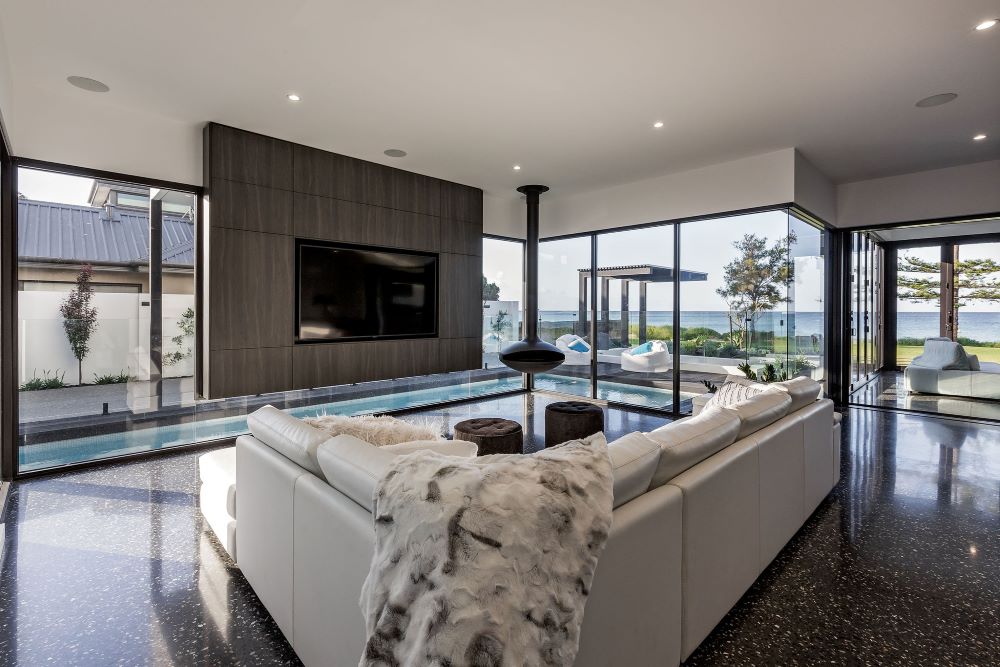
Large openings and extensive glazing in this Marybrook Beach house ensure the stunning beachfront views are maximised from every angle.
Outdoor areas have followed a similar trajectory. Where once there may have been modest balconies or simple verandahs, contemporary coastal homes now extend outward through terraces, alfresco zones, courtyards and poolside areas that function as outdoor living spaces that maximise views and coastal breezes. These zones are integrated into the overall design, supporting a lifestyle that naturally moves between indoors and out.
Australian coastal homes continue to evolve, shaped by a deeper understanding of both lifestyle and the environment. They still capture the sense of freedom that has always drawn people to the coast, but now carry a level of refinement and durability that reflects how we choose to live today. What sets them apart is not just the view, but the way they hold up to it – day after day, season after season.
SEE MORE FEATURES OF AUSTRALIAN COASTAL HOMES
Tags
Australian Coastal Homes Australian Homes Designed for Coastal Living Coastal Home Designs Contemporary Coastal Homes in Australia Homes Designed for Coastal Conditions Luxury Beachside Homes AUstralia Modern Coastal Homes AUstralia Modern Home Design for Coastal Living The evolution of Coastal Homes in AUstraliaYou Might Also Like