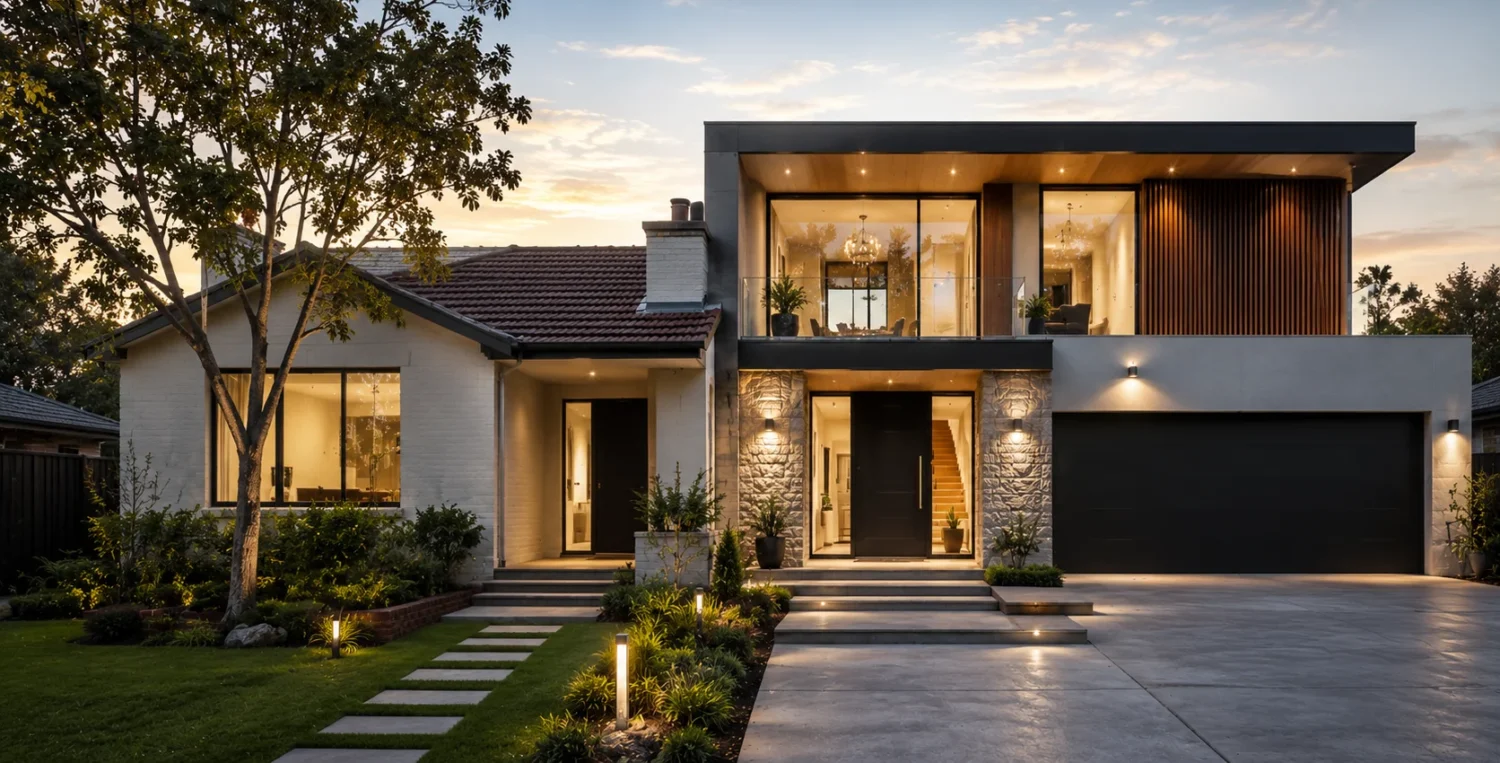

A casual walk through established suburbs across Australia reveals a rapid architectural shift. Mid-century homes and outdated 1970s brick veneers are making way for high-end, contemporary custom designs. As homeowners increasingly value their premium locations over their existing dwelling structures, the luxury knockdown rebuild has emerged as the preferred path to a modern lifestyle. People want to keep their existing school zones, familiar commute times, and cherished neighbours, all while upgrading to a bespoke residential experience.
Data from the Australian Bureau of Statistics highlights this shift, showing Melbourne led the nation with over 34,000 houses approved for demolition in a recent five-year period. In the 2024 to 2025 financial year alone, Victoria recorded approximately 10,000 knockdown rebuild approvals. By replacing older properties with bespoke homes, design-conscious owners are revitalising their neighbourhoods without compromising on modern luxury or functional space.
Navigating Local Regulations in Mature Neighbourhoods
While the advantages are significant, undertaking a major project in a mature suburb requires careful planning and local knowledge. Established hotspots such as Glen Waverley, Mount Waverley, Rowville, and Bentleigh East are highly sought after for contemporary upgrades. However, these areas often feature complex municipal restrictions, including heritage overlays, vegetation protection zones, and strict council planning schemes that dictate setbacks and building heights.
To successfully navigate these hurdles, property owners must rely on teams that deeply understand regional zoning laws and local soil profiles. Engaging with Experienced knockdown rebuild specialists in South East Melbourne ensures that architectural designs remain compliant with specific council requirements from the very beginning. This localised expertise is crucial to avoiding lengthy planning delays, managing complex demolition requirements, and ensuring a seamless transition from the initial tear-down to final construction.
The Financial and Practical Appeal of Starting Fresh
The decision to demolish and rebuild is heavily influenced by economic factors and construction realities. Since 2020, total residential construction costs in Australia have surged by up to 50 percent. This dramatic increase makes fixed-price new build contracts highly appealing compared to the unpredictable budget blowouts often associated with large-scale structural renovations. Uncovering hidden water damage, outdated wiring, or structural weaknesses in a 50-year-old home can quickly drain a renovation budget. Additionally, by choosing to rebuild on an existing block rather than purchasing a newly built property elsewhere, homeowners can save tens of thousands of dollars by completely avoiding new property stamp duty taxes.
This shift in consumer behaviour is well documented by industry bodies. According to the Housing Industry Association, Victoria continues to see pockets of strong activity in the knockdown-rebuild segment as buyers aim to upgrade their lifestyle while navigating land shortages in established areas. With construction budgets for these projects in Melbourne typically spanning from $450,000 to well over $900,000, and the average national approved building value sitting around $1.04 million, it is clear that this market is driven by luxury and long-term value creation.
Unlocking the Potential of Challenging Blocks
Starting with a blank canvas on an existing block allows for complete architectural freedom. This is particularly valuable when dealing with challenging topographies. Older homes often failed to capture the natural advantages of their site, leaving prime views unseen or natural light blocked by poorly conceived floor plans. Modern architecture embraces open living, expansive glazing, and seamless indoor-to-outdoor transitions.
A custom rebuild allows architects to orient the new structure to maximise solar gain, improve cross-ventilation, and embrace the surrounding landscape. For design inspiration, you can explore how this Sydney knockdown rebuild successfully maximised a sloping waterfront block. By choosing to start from scratch rather than struggling with a restrictive renovation, the owners achieved a custom layout that perfectly captured their harbour views and provided multiple levels of luxurious living space.
Meeting Modern Energy and Sustainability Standards
Beyond aesthetics and layout, the transition to modern energy efficiency is a driving force behind the current rebuild boom. Recent updates to the National Construction Code mandate stricter environmental performance, which is notoriously difficult and cost-prohibitive to achieve through retrofitting older homes.
Building a new custom home provides several built-in advantages that older properties simply cannot match:
– Superior Thermal Comfort: All new residential builds in Victoria must now achieve a minimum 7-star Nationwide House Energy Rating Scheme (NatHERS) rating, guaranteeing exceptional insulation and climate control compared to aging, draughty houses.
– Whole of Home Efficiency: The updated code introduces an energy use budget that mandates the efficiency of fixed household appliances like hot water systems, heating, and cooling units.
– Cost-Effective Implementation: Integrating double glazing, advanced wall insulation, and solar readiness from the foundational stage eliminates the massive costs and structural challenges of retrofitting these elements into an older frame.
– Healthier Living Environments: New builds utilise modern, non-toxic materials and advanced ventilation systems to drastically improve indoor air quality.
The luxury knockdown rebuild trend represents a strategic evolution in Australian housing. By preserving the community ties and lifestyle benefits of an established suburb, homeowners can build a sustainable, contemporary sanctuary that meets the demands of modern living. Ultimately, replacing an outdated structure with a custom architectural masterpiece offers a rewarding investment in both property value and daily quality of life.