
Most people start a kitchen remodel expecting one number and walk away with a range so wide it feels useless. A kitchen is the most expensive room in the house to renovate, and the final figure depends far less on square footage than on the choices you make inside it. Here is what the work actually costs in 2026, and why the same-size kitchen next door might have come in at half your quote.
Average Cost Of a Kitchen Remodel
HomeGuide puts a typical full kitchen remodel between $12,000 and $35,000, with the national average landing around $25,000. That figure buys a mid-range job in a standard-size kitchen: new cabinets, new countertops, updated appliances, and the plumbing and electrical work that comes with shifting things around.
A cosmetic refresh can land under $10,000. That means keeping the existing layout, repainting, updating the hardware and swapping the countertop without touching the cabinet boxes underneath. Go the other way, into custom cabinetry and stone counters, and a high-end remodel runs $50,000 to $75,000, more again once you add premium appliances or start moving walls and relocating the sink and range. Room size plays a part, but specification decides the final number.
What Each Line Item Actually Costs
Cabinets are the biggest single expense, usually 30 to 40 percent of the whole budget. Stock runs roughly $100 to $300 per linear foot. Semi-custom lifts that to $150 to $650, and fully custom can climb past $1,200. On a mid-size kitchen that portion alone is $5,000 to $20,000, before you have chosen a countertop.
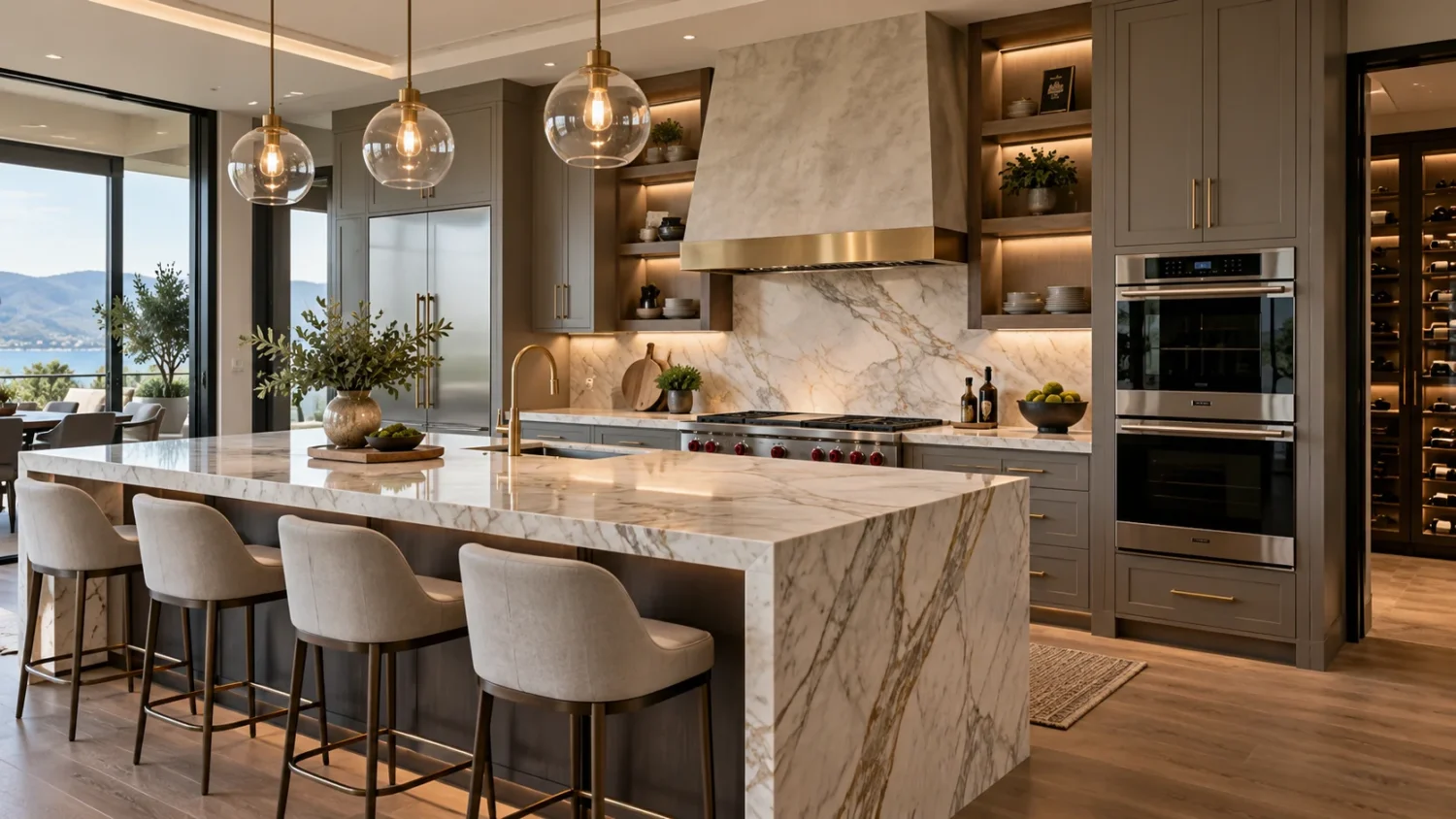
Countertops come next, and the spread is just as wide. Laminate is cheap, $10 to $40 per square foot installed. Quartz and granite sit higher, around $50 to $150. For a standard run of counter, most materials work out to $2,000 to $5,000; a thick waterfall edge or a rare slab pushes past that.
Appliances swing further than anything else on the list. A basic package of range, refrigerator, dishwasher and microwave starts near $3,000. Move up to professional-grade ranges and built-in refrigeration and $10,000 to $15,000 disappears without much effort.
Plumbing and electrical are the numbers people forget to budget. Rerouting a water line or moving the sink costs $1,000 to $5,000, and adding a dishwasher connection sits in the same band. New circuits, added outlets, under-cabinet lighting and bringing an older kitchen up to code add another $1,000 to $4,000. Relocate the range or the sink and both figures climb.
Demolition and disposal are smaller but real, $1,000 to $3,000 to strip out the old kitchen and cart it away. Then there is the cost nobody quotes: eating out or running a temporary kitchen for the several weeks yours is unusable.
Labor Costs
Labor usually runs 20 to 35 percent of the total, so on a $25,000 job that is $5,000 to $8,750. It pays for the general contractor’s time and the trades underneath: carpenters, plumbers, electricians, tilers and the installer who hangs the cabinets and templates the counters.
What drives it up is rarely the raw hours. Moving plumbing or rewiring eats skilled time, and so does building around an awkward structural wall. The quieter cost is coordination. Every trade is a separate schedule, and the gaps between them stack up: the electrician waits on the demo, the counter cannot be templated until the cabinets are in. Those gaps stretch the timeline, and the timeline is on the bill.
Why Two Same-Size Kitchens Land Far Apart On Price
Put two identical 12-by-14 kitchens side by side and one can cost $18,000 while the other hits $55,000. A handful of decisions account for almost all of that gap.
Layout is where the big money moves. Leave the sink, range, refrigerator and dishwasher where they already are and you save thousands across plumbing and electrical; move them and every connected trade bills more. Cabinet construction is the next big variable, since going from stock boxes to custom can triple that slice of the budget on its own. Then material grade fills in the rest. Laminate runs about $15 a square foot; a quartz slab is closer to $120. Builder-grade appliances and a professional range can differ by more than some people spend on their entire run of cabinets.
Who Does The Work: Flat-Pack, Coordinating Trades, Or a Single Design-Build Team
Beyond materials, how you organise the work changes both the price and who is accountable when something goes wrong.
The cheapest route is flat-pack cabinetry you assemble and fit yourself. It also locks you into standard carcass sizes and tends to leave awkward corners and appliance gaps unresolved. Pay a general contractor to coordinate separate cabinetmakers, plumbers and electricians and you spend more, with accountability split across everyone on site. A useful option to understand before you compare quotes is a single-team model, where one company designs and builds the cabinetry then installs it itself, instead of handing each stage to a different subcontractor. When one team owns the build and the install both, a measurement error or a scheduling clash lands on a single licence holder rather than turning into a dispute between trades.
Action Kitchen renovations run on exactly this model: Action Kitchens is a Brisbane firm operating since 1985 that designs and manufactures its cabinetry in-house and installs it with its own carpentry-led team. It holds a QBCC builder’s licence (1509 5360), so one accountable party stays responsible from the first sketch to the final handle. The model is worth understanding whether or not a given company covers your area, because it decides who picks up the phone when a cabinet turns up an inch short.
None of these is automatically the right call. Flat-pack earns its place on a tight budget with a simple square layout. Coordinating your own trades can save real money if you have the time and a reliable list of subcontractors to call. A single team costs more than flat-pack, but it concentrates the risk in one place, which tends to be worth paying for on a complex layout or a custom job where a design-stage mistake is expensive to unwind.
FAQ
How long does a kitchen remodel take?
Four to eight weeks once demolition starts, for most full remodels. Custom cabinetry adds lead time on top of that, because it is built to order before anyone touches your kitchen. Layout changes and permit approvals can drag a job past the two-month mark.
What’s the most expensive part of a kitchen remodel?
Cabinets, in almost every case. They eat 30 to 40 percent of the budget, and the jump from stock to custom is the single biggest number you get to control.
Can I remodel a kitchen for under $15,000?
Yes, as long as you keep the existing layout and either buy stock cabinets or reface the ones you have. Laminate or entry-level quartz counters hold the total down. It only breaks the budget once you start moving plumbing or ordering custom cabinetry.
Is it cheaper to remodel or replace a kitchen?
When the layout works and the cabinet boxes are sound, refacing and updating the counters and hardware costs far less than a full tear-out. Once the layout stops matching how you actually cook, a full remodel usually pays off better than patching around a plan that no longer fits.