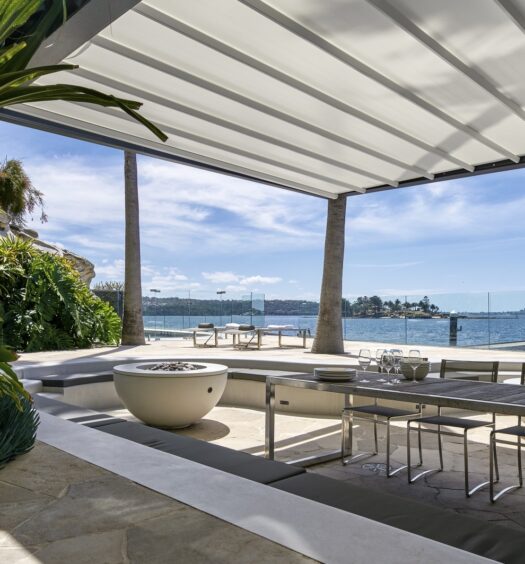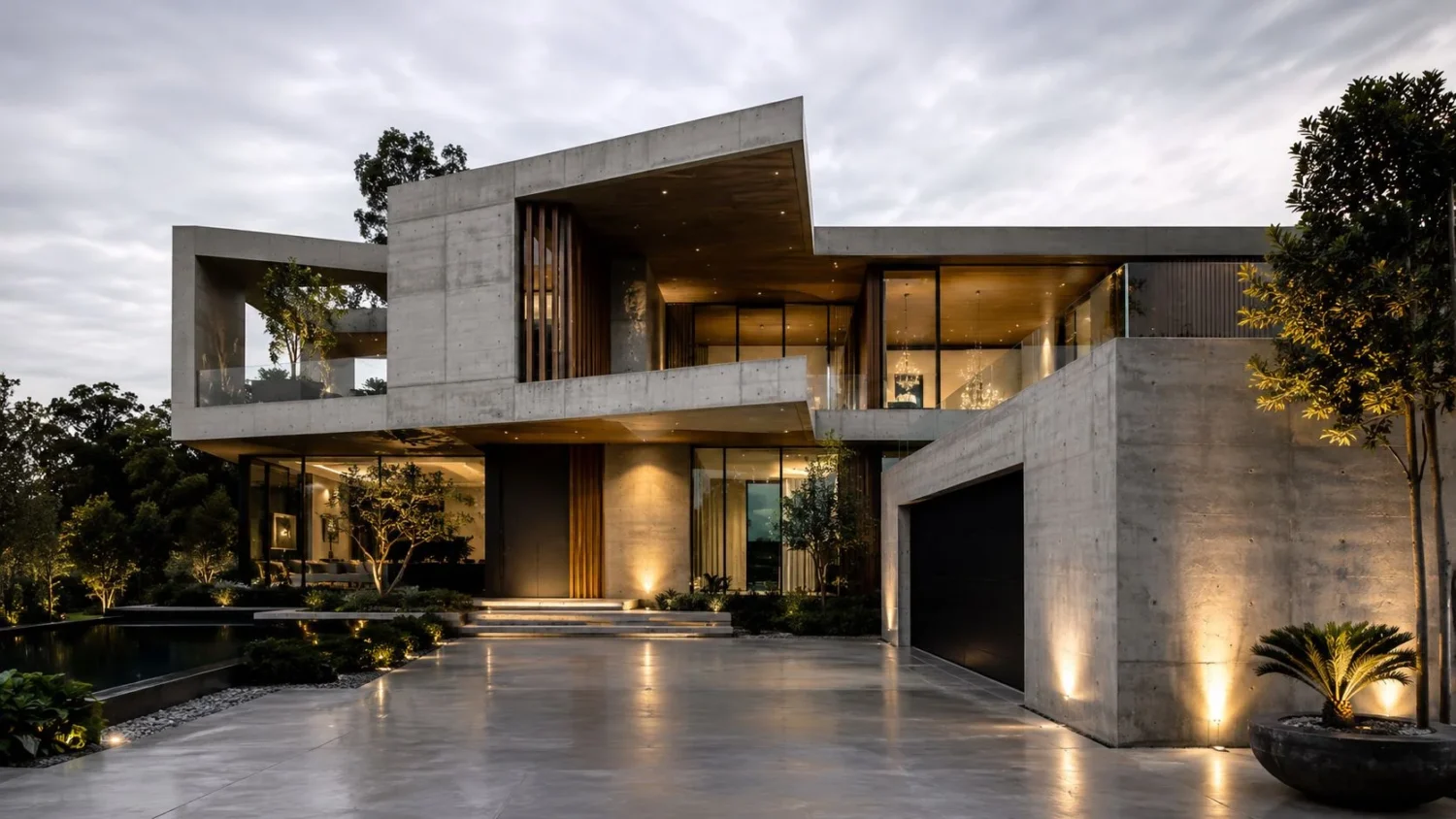

Concrete custom homes have moved far beyond the idea of a standard garage slab or driveway. In many of Australia’s most striking contemporary residences, concrete is now part of the architecture itself, shaping everything from polished internal floors and off-form walls to sculptural staircases, basement car galleries, long driveways, pool surrounds and expansive outdoor entertaining areas.
Its appeal is easy to understand. Concrete brings weight, permanence and a strong architectural presence to a home. It can feel raw and refined at the same time, especially when paired with timber, glass, stone, steel or soft landscaping. In contemporary residential design, it is often used to create a sense of calm strength, allowing a home to feel grounded without relying on ornate detailing.
Yet while concrete is increasingly visible in luxury homes, some of its most important qualities are hidden beneath the surface. The beauty of concrete custom homes depends not only on the finish, but on the engineering, reinforcement and construction details that allow them to perform over time.
Concrete Custom Homes as a Design Statement
For custom home builders and architects, concrete offers enormous flexibility. It can be used structurally, decoratively or both. A polished concrete floor can run through an open-plan living area and continue out to an alfresco zone, creating a strong connection between inside and outside. Off-form concrete walls can bring texture and shadow to an entry or courtyard. Concrete stairs can become a sculptural centrepiece rather than a purely functional element.
In homes with basements, large garages, steep sites or split levels, concrete also becomes essential to the way the house is formed. It can support major structural loads, retain earth, create level transitions and provide the base for highly detailed finishes.
This is particularly relevant in custom homes, where the design is rarely standard. A home may need to work with a sloping block, coastal exposure, a narrow site, an acreage setting or a complex floor plan. In these projects, concrete is not simply poured and forgotten. It needs to be carefully designed, reinforced and coordinated with the rest of the build.
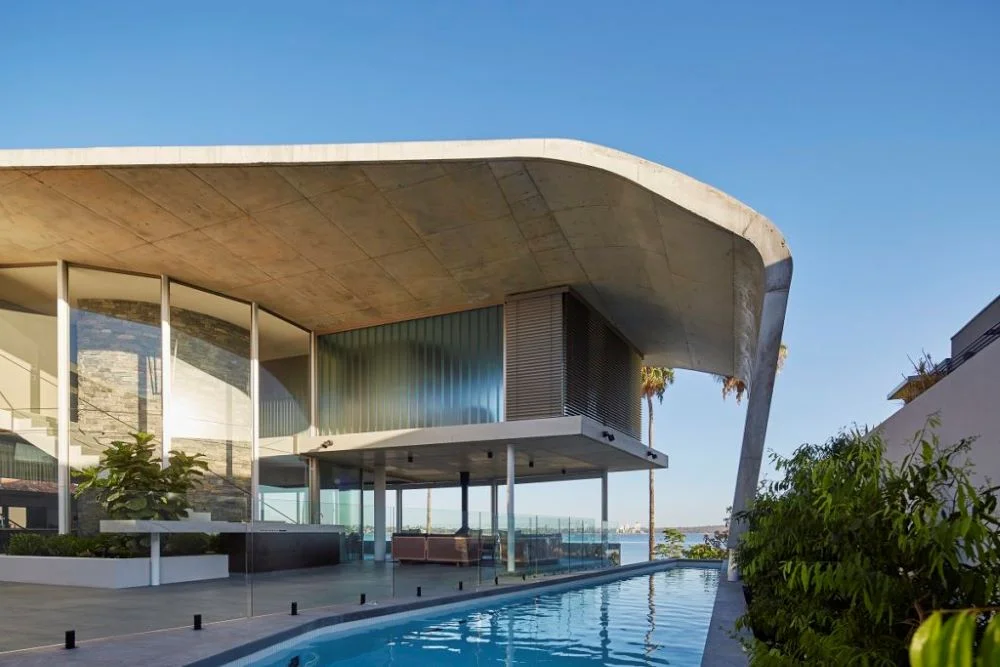 Known as the ‘Riverside Concrete Sail House’ this exceptional concrete custom home by Perth builders Luxus, uses concrete as a striking architectural statement.
Concrete, Comfort and Performance
Part of concrete’s appeal in custom homes is visual, but it can also play a practical role in the way a home feels. When used properly, concrete can contribute thermal mass, helping absorb, store and release heat as part of a broader passive design strategy. The Australian Government’s YourHome guide to thermal mass notes that high thermal mass can be incorporated through concrete slabs, walls and other building elements, but it needs to work with orientation, insulation and glazing to be effective.
For concrete custom homes, this matters because concrete is rarely used in isolation. A polished concrete floor may sit beside full-height glazing. An off-form wall may define a courtyard. A basement garage may sit beneath living areas. A concrete terrace may connect directly to a pool or outdoor kitchen. Each of these areas needs to be designed as part of the larger home, not treated as a separate construction detail.
Beyond the Slab
When people think about concrete in home construction, they often think first of the slab. The slab is important, but in luxury residential projects it is only part of the story.
Concrete may be used in suspended floors, basement walls, retaining walls, driveways, pool areas, outdoor kitchens, terraces, garages and structural landscape elements. It may sit beneath stone paving, large-format tiles, timber flooring or polished finishes. It may also form part of the finished architecture, where any imperfection is far more visible.
This is where the hidden construction details matter. Concrete naturally expands, contracts and moves in response to temperature, moisture, ground conditions and load. In large homes, especially those with expansive floor plates or outdoor concrete areas, that movement needs to be understood and managed from the beginning.
Reinforcement, dowel bars and jointing systems all help concrete behave as intended. They can assist with load transfer, alignment and movement between sections of concrete, particularly where slabs, driveways, basement garages or paved outdoor areas are poured in stages. For builders and concreters working on larger Sydney homes, suppliers such as Sydney Reo provide reinforcement products used in this type of structural concrete work.
The Details Homeowners Rarely See
Most homeowners will never see the reinforcement once concrete is poured. They may not see the dowel bars, mesh, steel placement, joint planning or preparation that happens before the visible surfaces are finished. Yet these details can have a direct impact on how the home looks and performs years later.
Poorly planned concrete can lead to cracking, uneven movement, lifting finishes or drainage issues. In a standard space, this is frustrating. In a high-end custom home, where large-format stone, polished concrete, detailed thresholds or expensive outdoor finishes are involved, the cost and disruption of rectifying problems can be significant.
This is why concrete work should never be treated as a background trade. It is part of the quality of the home. A refined finish depends on a stable base. A long driveway needs to handle load and movement. A basement garage needs structural planning. A pool terrace needs the right support beneath the surface. A floating stair or off-form wall needs precision from the earliest stage.
Concrete Custom Homes and Long-Term Luxury
One reason concrete continues to appear in contemporary custom homes is that it suits the way many Australians now want to live. It works well with open-plan spaces, indoor-outdoor layouts, large glazing, natural materials and low-maintenance finishes. It can feel understated rather than decorative, which is often what gives a luxury home its confidence.
It also has a practical appeal. When used properly, concrete can contribute to durability, thermal mass and a sense of solidity. It can help a home feel grounded and substantial, particularly when balanced with warm materials and good natural light.
However, concrete is unforgiving. Because it is strong, heavy and permanent, it requires careful planning. Decisions about slab design, reinforcement, joints, drainage and sequencing need to be made before the most glamorous parts of the home begin. Once the finishes are installed, those hidden decisions become much harder to change.
The Strength Beneath the Finish
The most successful concrete custom homes are not just visually impressive. They are well built from the inside out, with reinforcement, jointing and engineering details supporting the architectural ideas above.
For homeowners planning a custom build, this is a reminder to look beyond the finishes. Ask how the home will be engineered. Ask how movement will be managed. Ask what reinforcement is required for large concrete areas, basements, garages, terraces and driveways. Ask whether the builder has worked through the structural details before the concrete is poured.
Concrete can bring a powerful architectural quality to a custom home, but its success depends on more than appearance. The real beauty lies in the balance between what is seen and what is hidden: the polished surface, the sculptural form, and the strength holding it all together.