

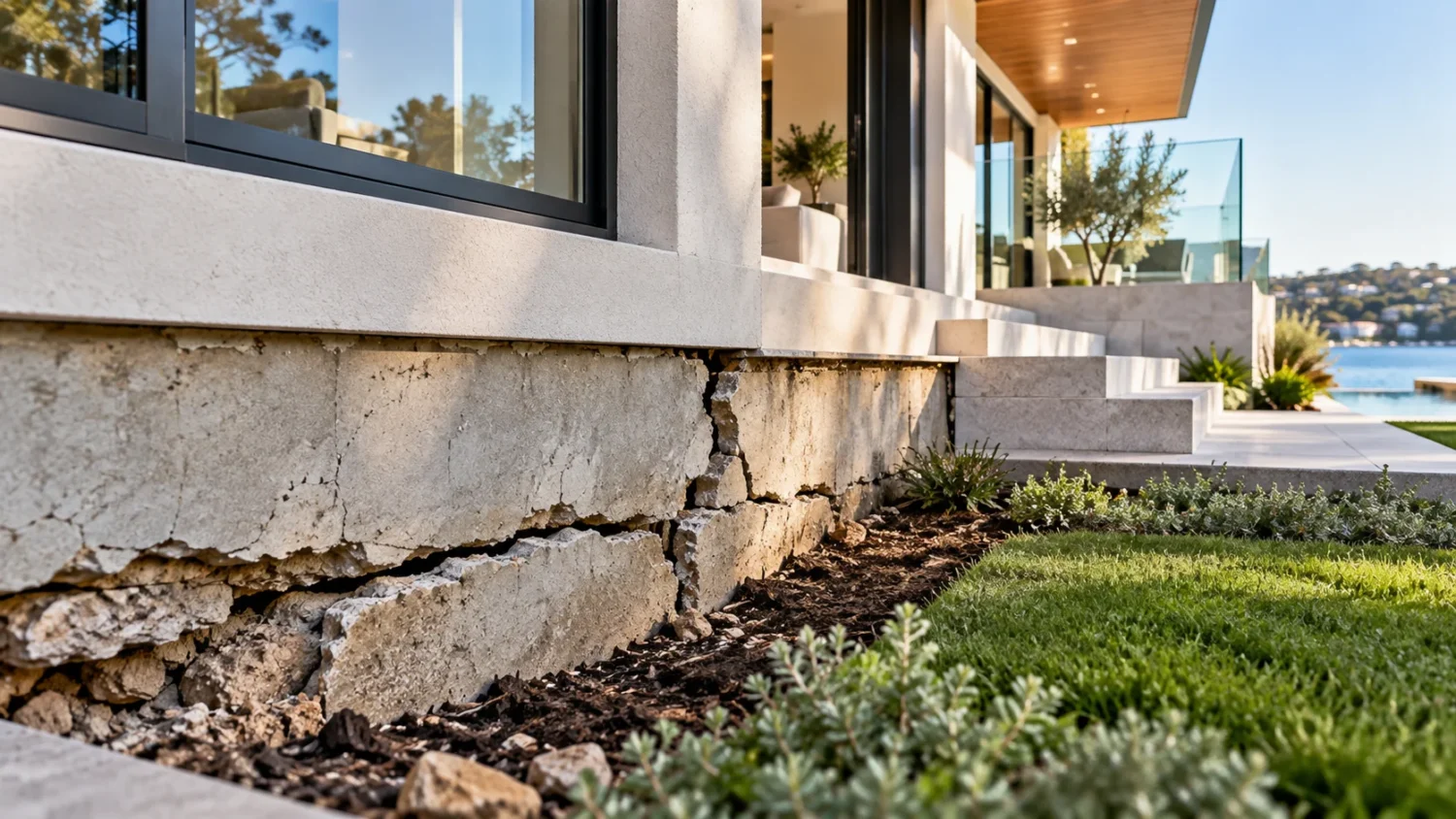

Water is patient. It doesn’t need to flood a basement or crack a wall overnight to cause serious harm. Most foundation problems build slowly, through years of small moisture intrusions that homeowners don’t notice until a door won’t close properly or a hairline crack widens. By the time visible damage shows up, the soil and structure underneath may already need attention from experienced foundation repair contractors, and that’s especially true in regions like Columbia, where clay-heavy soil makes moisture swings more common than in areas with sandier ground.
Why Foundations Are Vulnerable to Water
A foundation isn’t just concrete sitting on dirt. The material is in constant conversation with the soil beneath it, and that soil behaves differently depending on how much water it holds. Properly graded, well-drained soil stays fairly stable and supports the weight of a home evenly across every footing. Add excess water, and the ground beneath a slab or footing can soften or shift unevenly, sometimes swelling more in one corner of a house than another. Builders who plan for this early, including proper drainage and thoughtful site planning, give a foundation a far better shot at staying stable for decades.
Homes built without that foresight tend to pay for it later, sometimes years after the original crew has packed up and left. A foundation poured on poorly compacted soil might look fine for the first five or ten years, then start showing problems once rainfall patterns shift or nearby landscaping changes how water moves across the property. Because the delay can run so long, plenty of homeowners get caught off guard. The real cause of the damage was set in motion long before the first crack ever appeared.
How Expansive Soils Cause Foundation Movement
Certain soil types are far more sensitive to water than others. Clay-rich soils contain minerals that absorb water and expand, then release it and shrink back down as conditions dry out. The Colorado Geological Survey notes that expansive soil causes more property damage nationwide than any other natural hazard, with volume changes of 10% or more common in the most reactive clays. Pressure like that pushes hard against footings and slabs, and it can lift one section of a foundation while leaving the rest untouched.
Season after season, repeated wetting and drying gradually loosen the bond between a foundation and the ground beneath it. A single wet year rarely causes a collapse, but a decade of uneven moisture almost always leaves a mark somewhere in the structure. Damage tends to surface first at the weakest points, often corners or spots near a downspout. Large trees growing close to the house cause a similar effect, since their roots pull moisture unevenly from the surrounding soil.
Common Sources of Water Intrusion Around a Home
A handful of ordinary habits quietly funnel water towards a foundation, and most have nothing to do with major storms. Downspouts that empty right next to the house, instead of a few feet away, dump concentrated water exactly where it shouldn’t go. Yards graded flat, or worse, sloped towards the structure rather than away from it, let rainfall pool against exterior walls after nearly every downpour.
Clogged gutters make things worse, since overflowing water sheets straight down the side of the house and soaks the soil below instead of being carried away through the downspout system. Sprinklers aimed too close to the foundation create a smaller but steadier version of the same problem, adding moisture to the same narrow strip of soil day after day regardless of what the weather is doing. Window wells that fill with debris and paved surfaces that channel runoff towards the house rather than away from it cause similar trouble, just more slowly.
None of these issues looks alarming on their own. A downspout dumping water two feet from the foundation doesn’t seem urgent on a sunny afternoon, and a slightly flat yard rarely draws a second glance during a home inspection. Over a few rainy seasons, though, they can push the moisture content of nearby soil high enough to trigger real movement, and by the time that movement shows up indoors, the fix usually costs far more than the small correction would have.
Plumbing Leaks and Hidden Moisture
Not every source of water damage comes from outside. A slow leak in a pipe running under a slab or behind a wall can saturate soil or masonry for months before anyone catches on. Sometimes the first clue is a patch of lawn that stays greener or softer than the rest of the yard, even during a dry stretch, or mildew that keeps coming back to the same corner of a room no matter how often it’s cleaned.
These are often signs of a damaged drain or supply line leaking below the surface, and moisture from a hidden leak behaves differently than surface water does. It doesn’t dry out between storms, so the soil around it stays in a near-constant state of expansion. Because this kind of moisture builds slowly and stays hidden, it frequently causes more cumulative damage than one obvious flood, mainly since nobody deals with it until the problem is already well established.
Warning Signs You Shouldn’t Ignore
A foundation rarely fails without warning. Diagonal cracks near doors and windows are a common early sign. So are gaps opening up between walls and ceilings, and doors that stick or swing open under their own weight. Floors that feel uneven underfoot, especially if that unevenness crept in gradually over a few months, point to settlement happening beneath the slab.
Exterior brick or block sometimes shows stair-step cracking along the mortar joints, following the direction of soil movement instead of running in a straight vertical line. Windows and exterior doors that used to glide open but now bind or need extra muscle are worth noting too. Any single sign on this list might mean nothing on its own. When more than one shows up together, or things get worse over a few months, water has usually been affecting the foundation for a while.
The Long-Term Structural and Health Risks
Ignoring water intrusion risks more than cosmetic cracks in drywall or brick. Persistent dampness against or beneath a foundation eventually causes wood rot in framing members and corrosion in embedded steel reinforcement, and it keeps soil moving in ways that widen existing cracks instead of letting them settle. Indoor air quality also deserves attention here.
The U.S. Environmental Protection Agency (EPA) points out that mould can begin growing within one to two days after materials get wet, and that controlling moisture remains the most reliable way to stop it from spreading. A foundation that stays damp for long stretches creates exactly the conditions mould needs. For that reason, structural problems and indoor air problems tend to show up together, not as separate concerns that happen to coincide.
Preventing Water Damage to Your Foundation
Most foundation-related water damage can be avoided through routine maintenance rather than major repairs down the road. Cleaning gutters at least twice a year keeps water moving where it belongs instead of spilling over near the walls. Extending downspouts so they discharge a few feet from the house, rather than right at the foundation line, removes one of the most common causes of localised saturation.
Grading matters too. Checking that the ground slopes away from the home on every side, generally about an inch per foot for the first stretch, helps surface water drain naturally instead of pooling near the base of the walls. Older homes benefit from periodic plumbing inspections, since aging pipes are more prone to slow leaks that go undetected for a long time. Trees and large shrubs planted close to a foundation deserve a look as well, because their roots draw moisture unevenly from the soil and can contribute to the same differential movement that expansive clay causes on its own. None of these habits requires specialised tools, and together they handle most preventable moisture problems before they ever start.
When to Call in a Professional
Routine maintenance handles a lot, but not everything. Once cracks widen past a quarter inch or doors refuse to close no matter how they’re adjusted, the soil underneath has likely moved enough to warrant a professional look. Floors that visibly slope in one direction are usually the clearest sign of all. A qualified inspector can figure out whether the problem traces back to drainage or a hidden plumbing leak. Soil composition often plays a part too, and the recommended fix should match the cause, not just the surface symptom.
Catching moisture-related movement early usually means a smaller, cheaper repair. Waiting until a home shows serious symptoms can turn a manageable job into a much bigger structural project, especially once movement has spread across multiple footings rather than staying isolated to one wall. That cost gap is exactly what routine drainage checks and prompt leak repairs are meant to close, and it explains why so many homeowners end up wishing they’d called for an evaluation a year or two sooner.
Foundations rarely fail because of one sudden event. They fail because small, ordinary sources of moisture get overlooked for years at a stretch. Paying attention to grading and plumbing now costs far less, in both time and money, than dealing with a foundation that has already shifted.


